A Cuban Painter Caught Between Two Wars
Wifredo Lam never set out to invent a new visual language. He was pushed into it, first by one war and then by another. Born in 1902 in Sagua la Grande, Cuba, to a Chinese father and a mother of African and Spanish descent, he grew up absorbing Catholic, Chinese and Afro-Cuban traditions at once, long before any of that became material for his art.
That multiplicity hardened into purpose during the Spanish Civil War, when he fought for the Republican side in the Spanish Civil War, fleeing Barcelona for Paris in 1938 with a letter of introduction to Pablo Picasso. The letter worked. In Paris, Picasso became more than a mentor: he would become a lifelong friend and supporter of his work, and introduced him to other established and successful artists, pulling Lam directly into the orbit of European modernism just as that world was about to collapse.
Paris Under Threat: A Second War Arrives
Lam had barely settled into the Parisian avant garde when a second conflict overtook him. World War II broke out within months of his arrival, and his involvement with the Surrealist circle around André Breton deepened under the pressure of the coming occupation. When Nazi Germany took Paris in June 1940, the city that had just given Lam a new artistic home became unsafe for nearly everyone in it, especially foreigners with Republican sympathies and leftist associations.
Like thousands of artists, writers and intellectuals, Lam joined the flight south toward the unoccupied zone, eventually reaching Marseille, where he came to stay at Villa Air-Bel, the real-life safe house that sheltered Breton and other refugee artists while they waited for exit visas. It was there, cut off from his studio and most of his materials, that Lam kept working: Breton was enthusiastic about Lam's Marseille drawings, small, urgent works made with whatever was at hand.
Aboard the Capitaine Paul-Lemerle
In the spring of 1941, with Vichy France tightening its grip, Lam secured passage out of Europe on a crowded cargo ship, the Capitaine Paul-Lemerle. He was far from alone. On 25 March 1941, Lam sailed back to Cuba on board of the Capitaine Paul Lemerle, which took him and other members of the surrealist group, among them André Breton, to Martinique. A scholarly account of the voyage adds that among the roughly 300 passengers were André and Jacqueline Breton, and Claude Lévi-Strauss, alongside Lam's companion at the time, the chemist Helena Holzer.
The ship itself became a kind of floating seminar, an improvised meeting of ethnography, poetry and painting forced together by wartime necessity. For Lam, it meant weeks at sea in the company of some of Europe's most original minds, all of them suddenly stateless, all of them carrying only what they could fit in a suitcase.
Martinique and the Discovery of a Shared Language
The ship's stop in Martinique turned out to be decisive. There Lam met Aimé Césaire, the poet and co-founder of the négritude movement, and Lam was deeply moved by the poetry of Césaire and they became friends. Césaire and his wife Suzanne ran a small but fiercely intellectual journal, Tropiques, that gave Caribbean writers and artists a platform to reclaim African heritage openly, in defiance of the colonial and fascist currents sweeping the Atlantic world.
The connection outlasted the brief layover. In 1945 Pierre Mabille published a long study of Lam's massive painting La Jungle in Tropiques, the journal published by Aimé and Susanne Césaire in Fort-de-France. Martinique gave Lam something he could not have found in Paris: proof that Afro-Caribbean identity could be the subject of serious modern art, not merely its exotic backdrop.
Havana, 1941: Exile Becomes a Hybrid Style
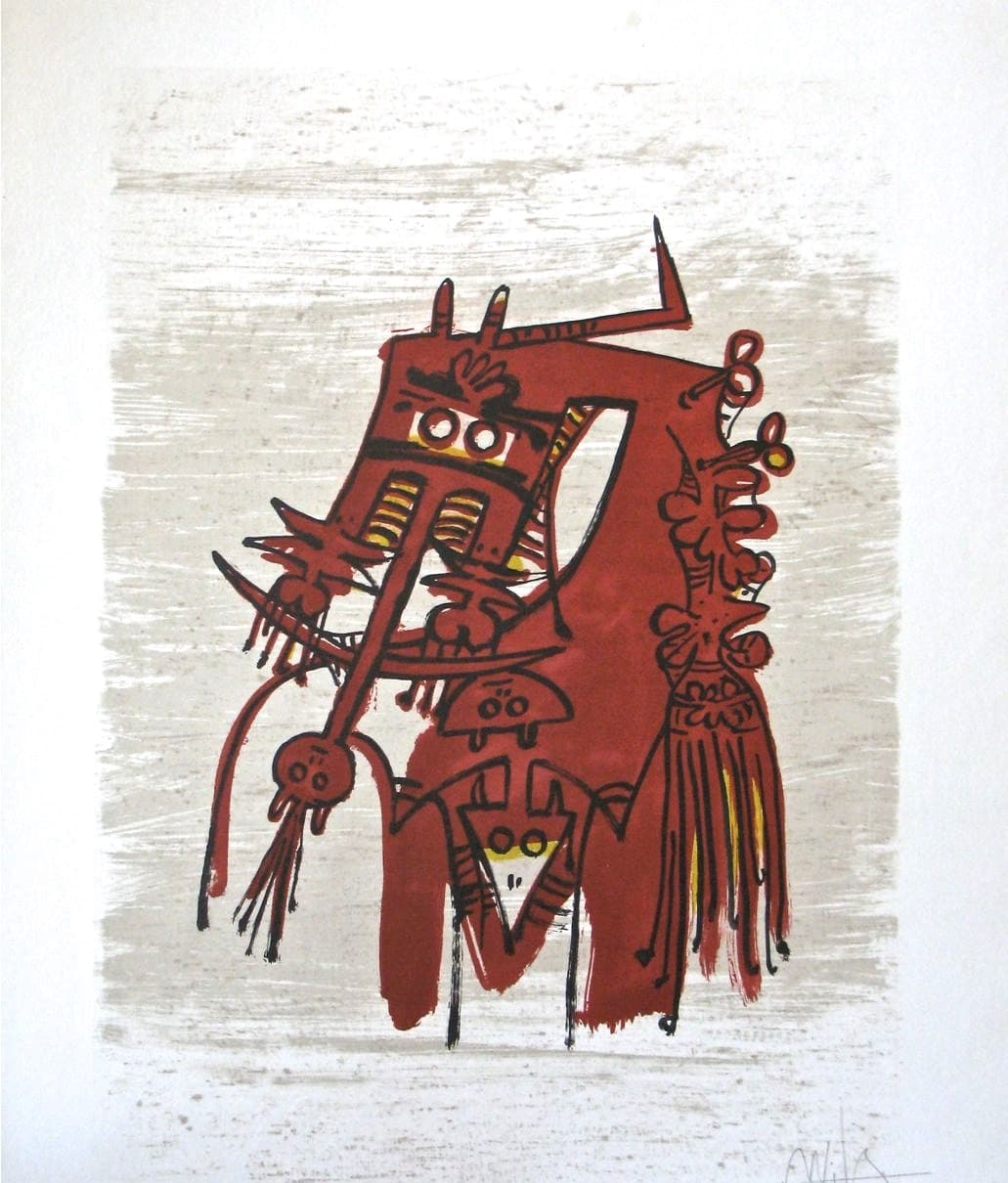
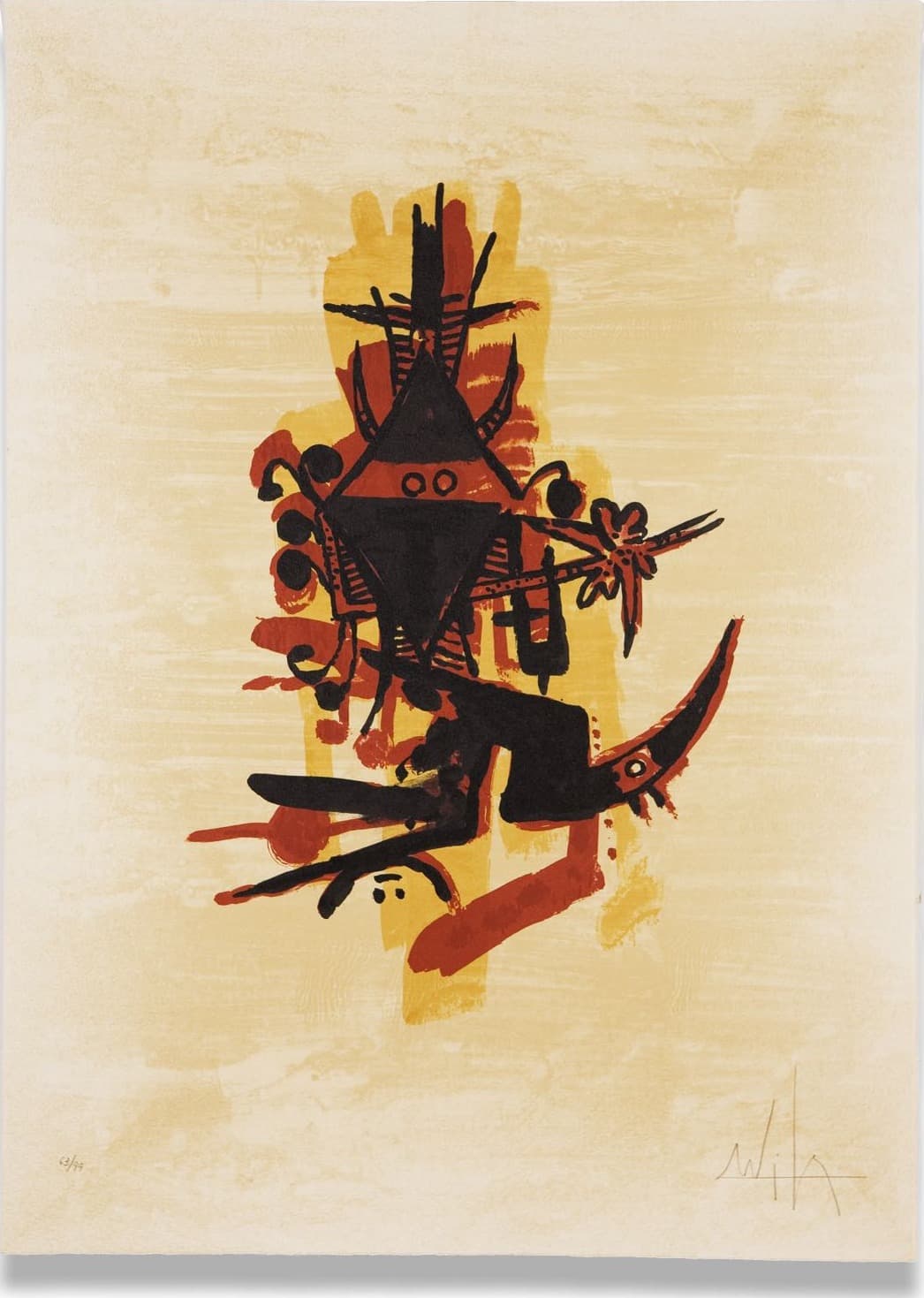
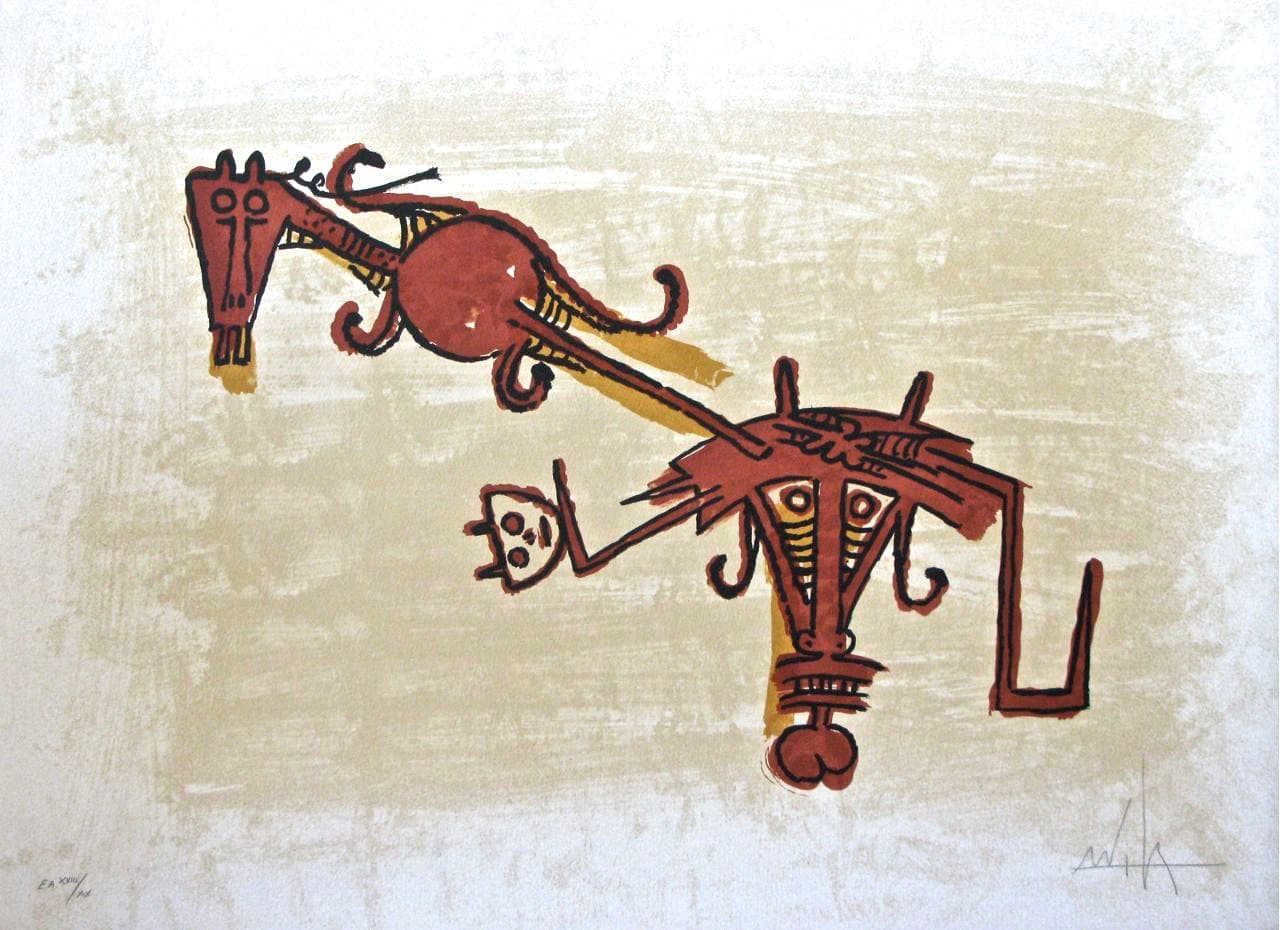
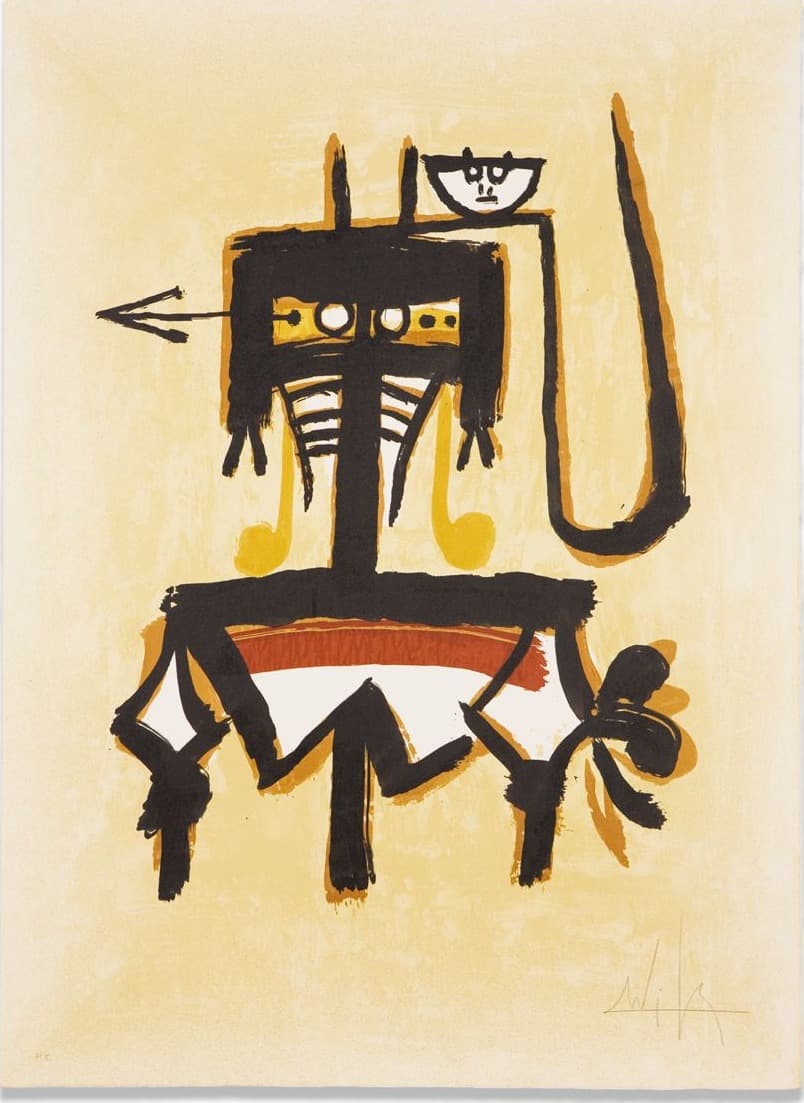
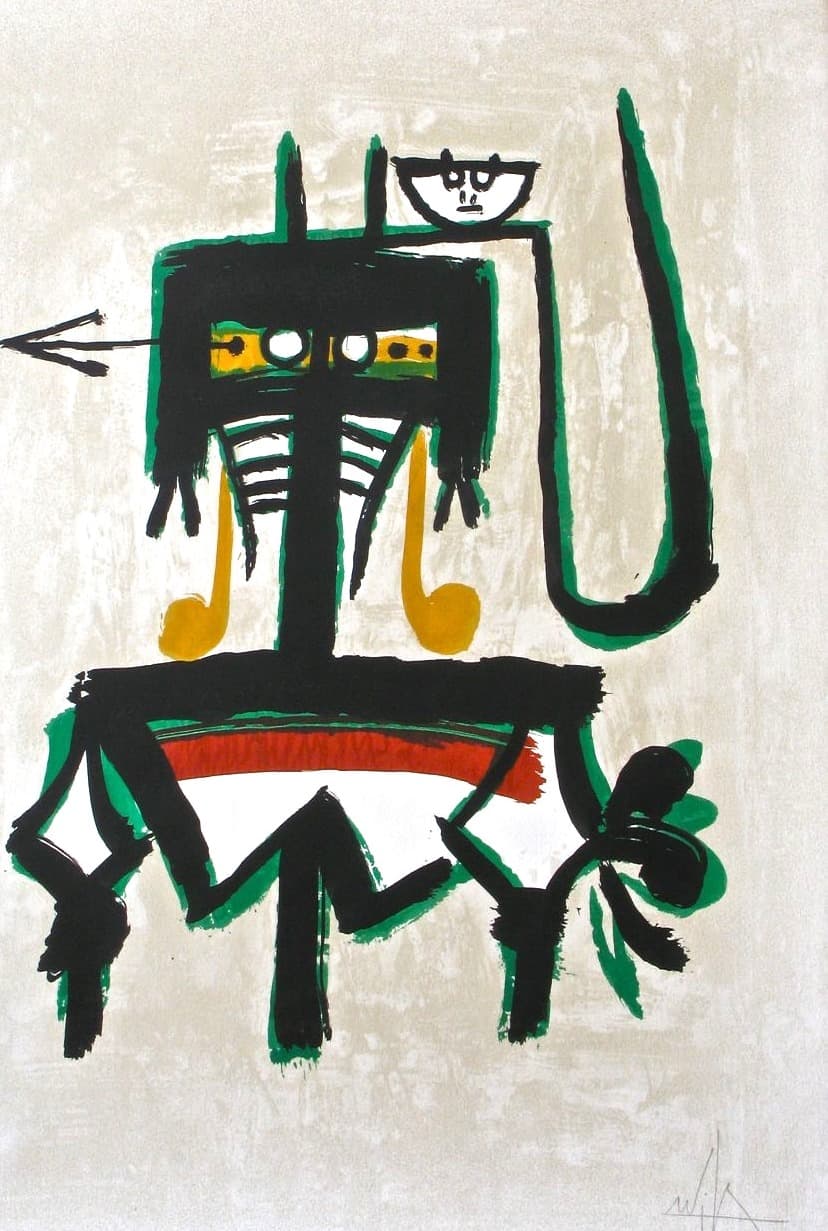
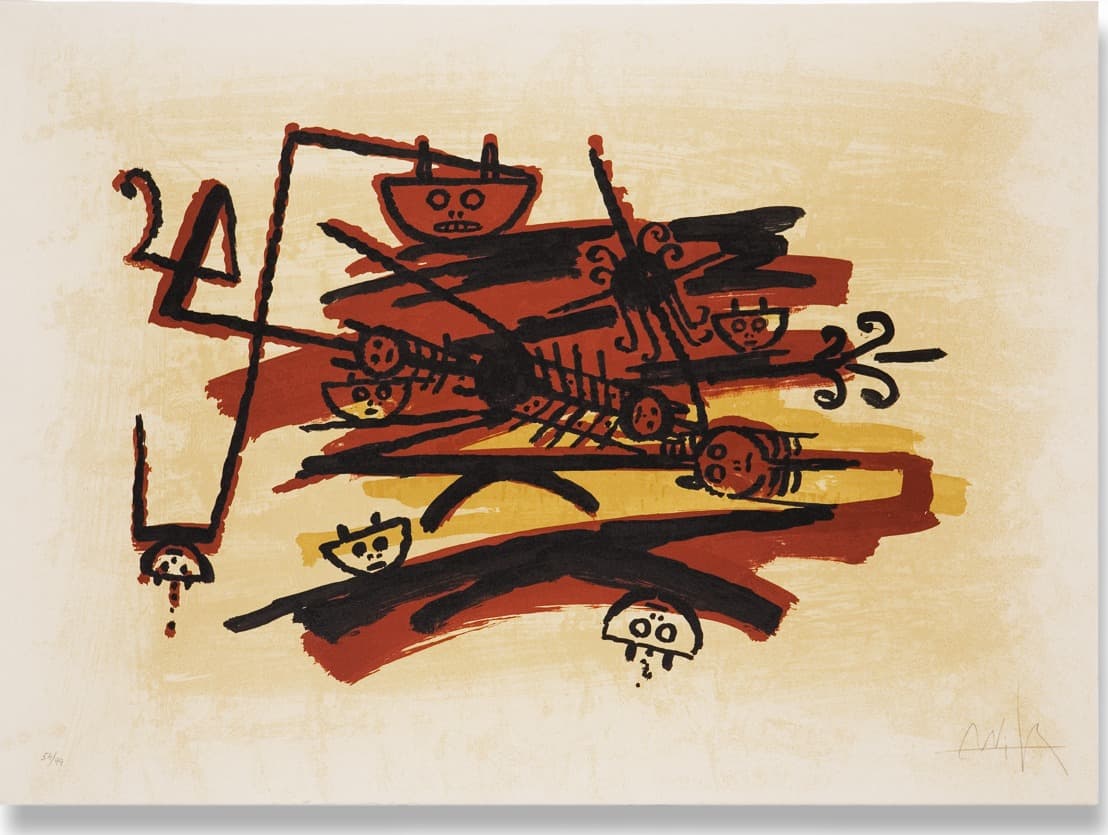
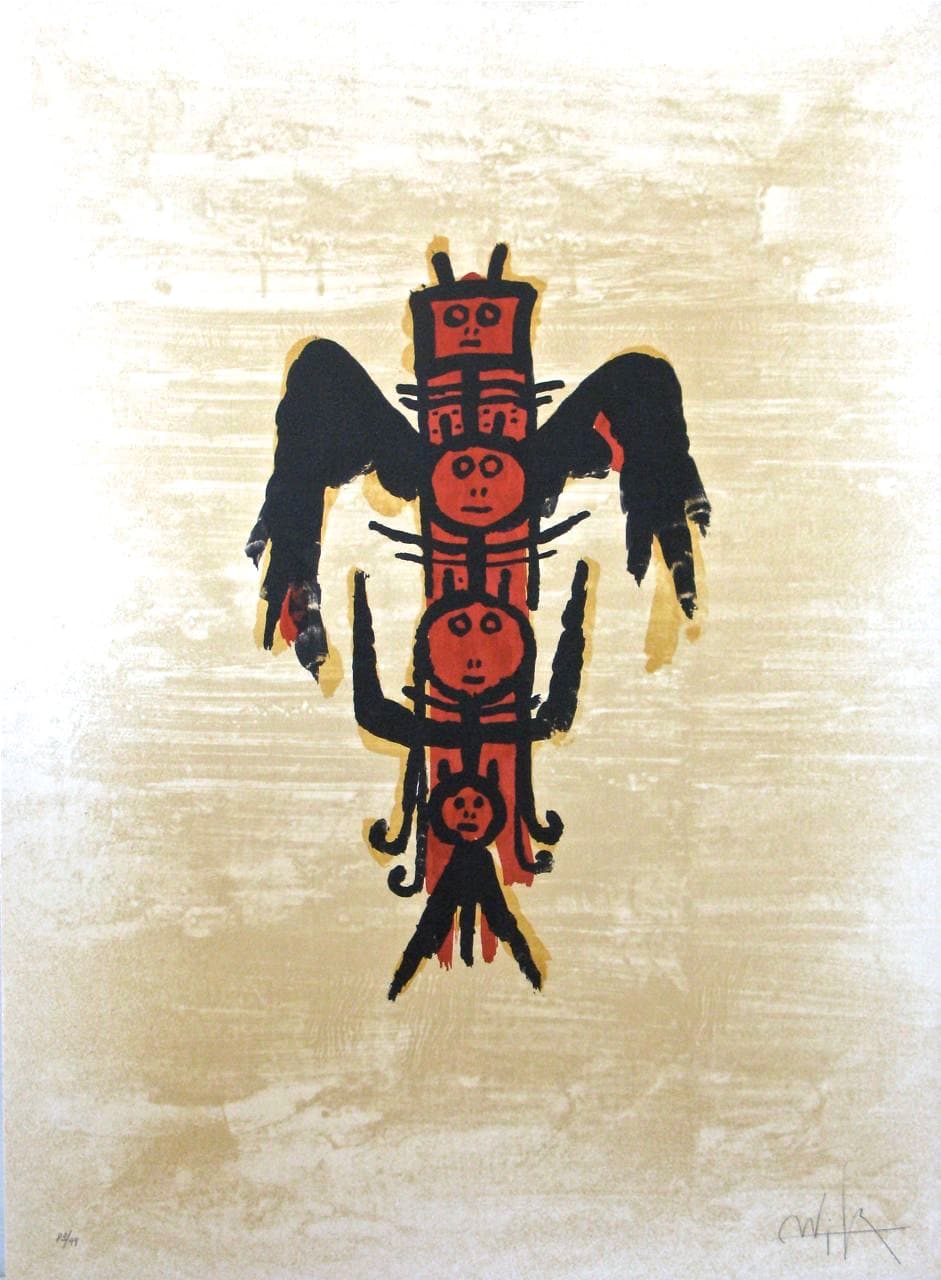
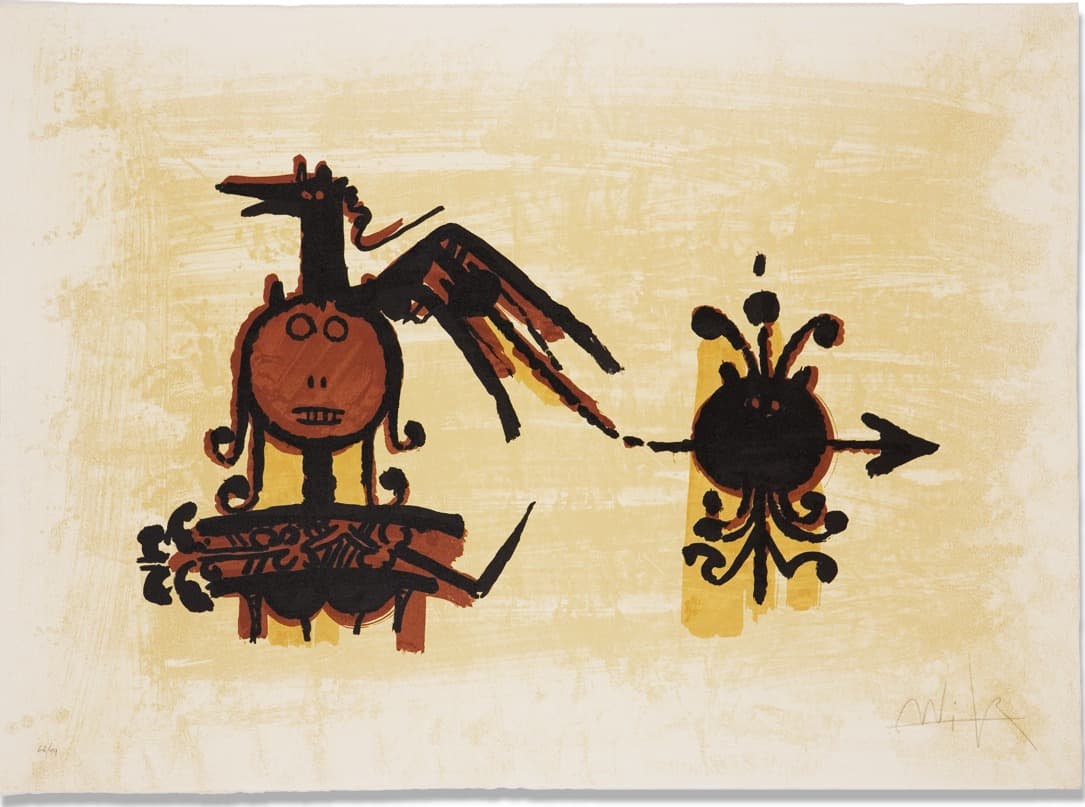
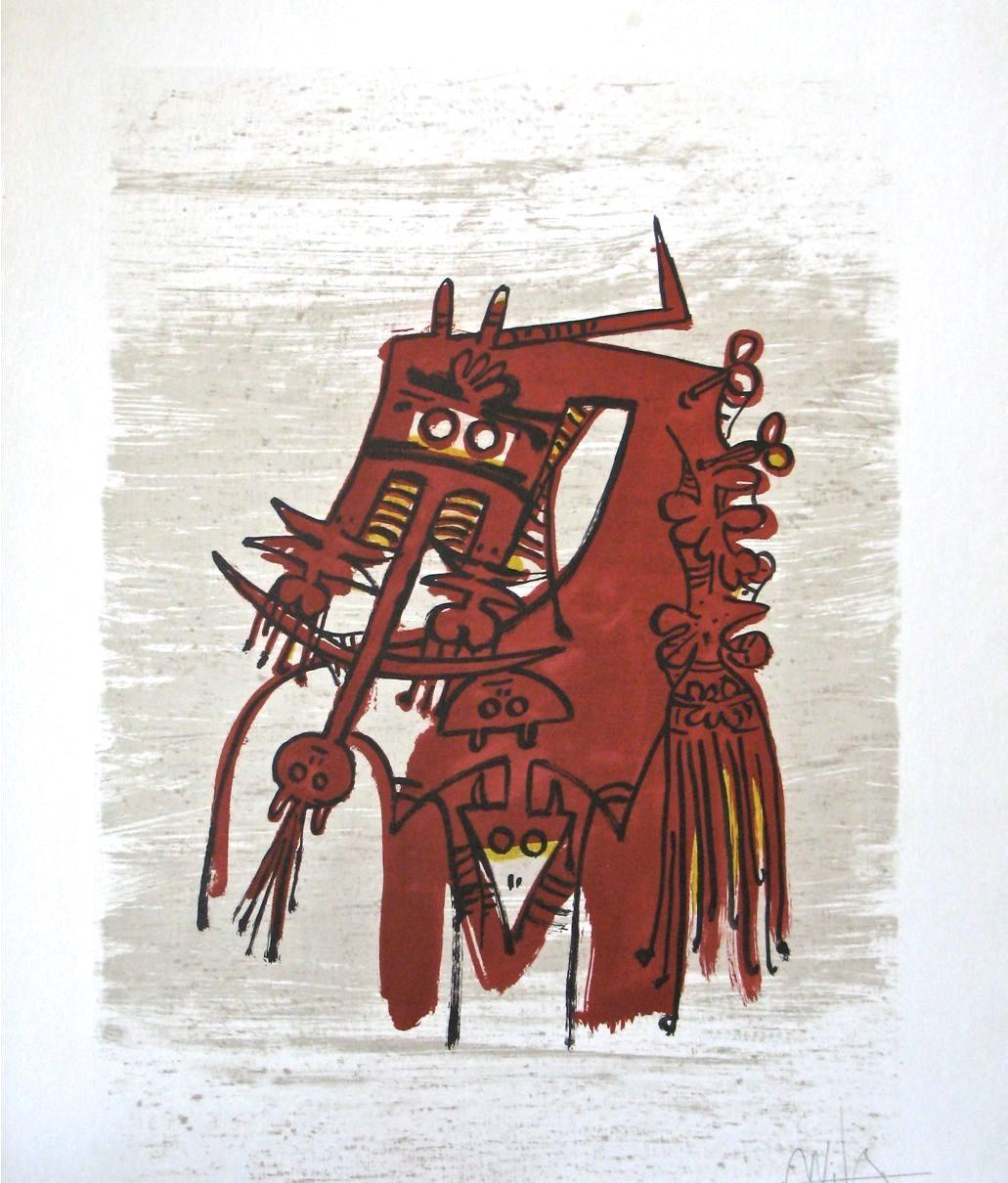
When Lam finally reached Havana later that year, after nearly two decades away, he did not paint Cuba as a tourist would. Returning to Havana in 1941, Lam arrived at his signature hybrid style of painting: a blend of surrealism, magic realism, modernism and postmodernism characterized by a cross-cultural fusion of influences including Afro-Cuban symbolism and imagery. The Cubist fracturing he had absorbed from Picasso and the dream logic he had absorbed from Breton's Surrealists now had to make room for something neither of them had given him: the iconography of Santería, the Afro-Cuban religion his godmother had practiced, with its orishas, masks and plant spirits.
Britannica summarizes the result plainly: in Cuba Lam developed his signature style, which blended aspects of Cubism and Surrealism, African and Afro-Cuban art, and Cuba's colours and vegetation. This was not synthesis for its own sake. It was a Cuban artist using the formal tools of European modernism to paint his own culture back into visibility, after years of being told, implicitly and explicitly, that it belonged in a museum case rather than on a canvas.
The Jungle: Exile Made Visible
The clearest statement of that hybrid language is La Jungla (The Jungle), the enormous painting Lam completed in Havana in 1943. The Jungle is a Cubist gouache, paper and canvas painting created by Wifredo Lam in 1943, and at roughly 239 by 229 centimeters, it confronts viewers at something close to human scale. Dense sugarcane stalks crowd a group of masked, part-human, part-plant figures with elongated limbs and crescent faces, a composition that reads as both celebration and warning.
The painting now hangs at the Museum of Modern Art in New York, where it is frequently cited as the summation of everything Lam's exile had taught him: Cubist structure, Surrealist strangeness, and an unmistakably Afro-Cuban cast of spirits. Lam himself described his larger project in blunt political terms, stating that "my painting is an act of decolonization."
Why Collectors Still Chase Lam's Hybrid Vision Today
Lam's reputation has only grown since his death in 1982, and the market reflects it. In 2017, Sotheby's sold Lam's A Trois Centimetres de la Terre (1962) for a record-breaking $5.24 million, a benchmark that fell again in 2020 when Sotheby's achieved a new auction record for Wifredo Lam at $9.6 million for his Omi Obini. That record was broken once more in November 2026, when Lam's 1943 oil-on-canvas painting broke his global auction record when it sold for $11.61 million at Christie's, a work titled Ogue Orisa that had last changed hands for a fraction of that price decades earlier, since the sellers purchased the work for $1.32 million at Sotheby's New York in 1997.
For collectors and gallery owners, that trajectory underscores a simple point: Lam's wartime years, 1938 to 1941, produced the visual vocabulary that now drives his strongest results at auction. Works that carry the clearest Santería and jungle imagery, the direct descendants of what he developed after Martinique, tend to command the most attention.
Frequently Asked Questions
Why is Wifredo Lam's style called "hybrid"? Because it deliberately fuses sources that rarely met before him: European Cubism and Surrealism learned in Paris, and Afro-Cuban religious imagery, especially Santería symbolism, that he grew up around in Cuba. The result looks like neither tradition on its own.
What role did André Breton play in Lam's career? Breton was both a traveling companion and an early champion. They shared the Marseille refuge and the voyage to Martinique together, and Breton's enthusiasm for Lam's wartime drawings helped cement his standing within the Surrealist movement.
Is The Jungle Lam's most important painting? It is widely considered his signature work and the clearest distillation of his hybrid style, which is why it holds a permanent place at the Museum of Modern Art rather than circulating through private collections.
Did Lam ever return to live in Cuba permanently? No. After his wartime return to Havana in 1941, he split his later life between Cuba, Paris and Italy, though Cuba and its Afro-Caribbean imagery remained the emotional core of his work until his death in 1982.