Who Was Rufino Tamayo?
Rufino Tamayo is the artist who proved Mexican modernism did not have to march in lockstep with the muralist movement. Born in Oaxaca and raised amid Zapotec culture, he built a body of work that fused pre-Columbian form with European avant-garde technique, and in doing so became one of the most collected and studied figures in 20th-century Latin American art. Anyone researching Rufino Tamayo quickly discovers that his reputation rests on a deliberate refusal to follow the crowd, even when the crowd included Diego Rivera, José Clemente Orozco and David Alfaro Siqueiros.
Collectors today encounter his paintings and prints regularly at auction and in museum galleries, and his name remains a benchmark for Latin American modernism. You can see the range of his career, and works currently associated with him, on his Rufino Tamayo artist page.
Early Life in Oaxaca and Mexico City
Tamayo was born on August 26, 1899, in Oaxaca, Mexico, and died on June 24, 1991, in Mexico City. He was a Mexican painter and muralist of indigenous heritage, specifically Zapotec, a lineage that would shape his visual vocabulary for the rest of his life. Orphaned young, he was raised by an aunt in Mexico City, where he later enrolled at the Escuela Nacional de Bellas Artes, though he found the academic curriculum restrictive.
A formative early job shaped his eye more than any classroom: he worked at the National Museum of Archaeology, where daily contact with pre-Hispanic ceramics, masks and figures gave him a personal archive of forms he would draw on for decades. That immersion later hardened into conviction. He eventually became head of the Department of Ethnographic studies tied to that same institution, a role that formalized what had already become a lifelong preoccupation with Mexico's ancient visual culture.
Tamayo Versus the Muralists
To understand why Tamayo matters, it helps to understand what he refused to do. Along with the three great muralists of the time, Diego Rivera, José Clemente Orozco, and David Alfaro Siqueiros, Tamayo brought international attention to the Mexican art scene during the second half of the 20th century. However, unlike his contemporaries, he kept politics out of his canvases.
Where the "big three" used monumental public murals to narrate the Mexican Revolution and champion socialist ideals, Tamayo didn't imprint an evident political agenda on his work nor did he use figurative realism to convey it. Instead, Tamayo offered a credible alternative to the "big three" muralists by refuting the rule that modern Mexican art must serve an overtly socialist agenda. He preferred what one museum resource describes as its poetic and emotional aspects over didactic storytelling.
This stance cost him early recognition at home. Mexican critics in the 1930s, loyal to the muralist project, dismissed Tamayo as insufficiently patriotic. It took acclaim abroad, particularly in New York and Paris, to force a reassessment in his own country.
A Distinct Visual Language
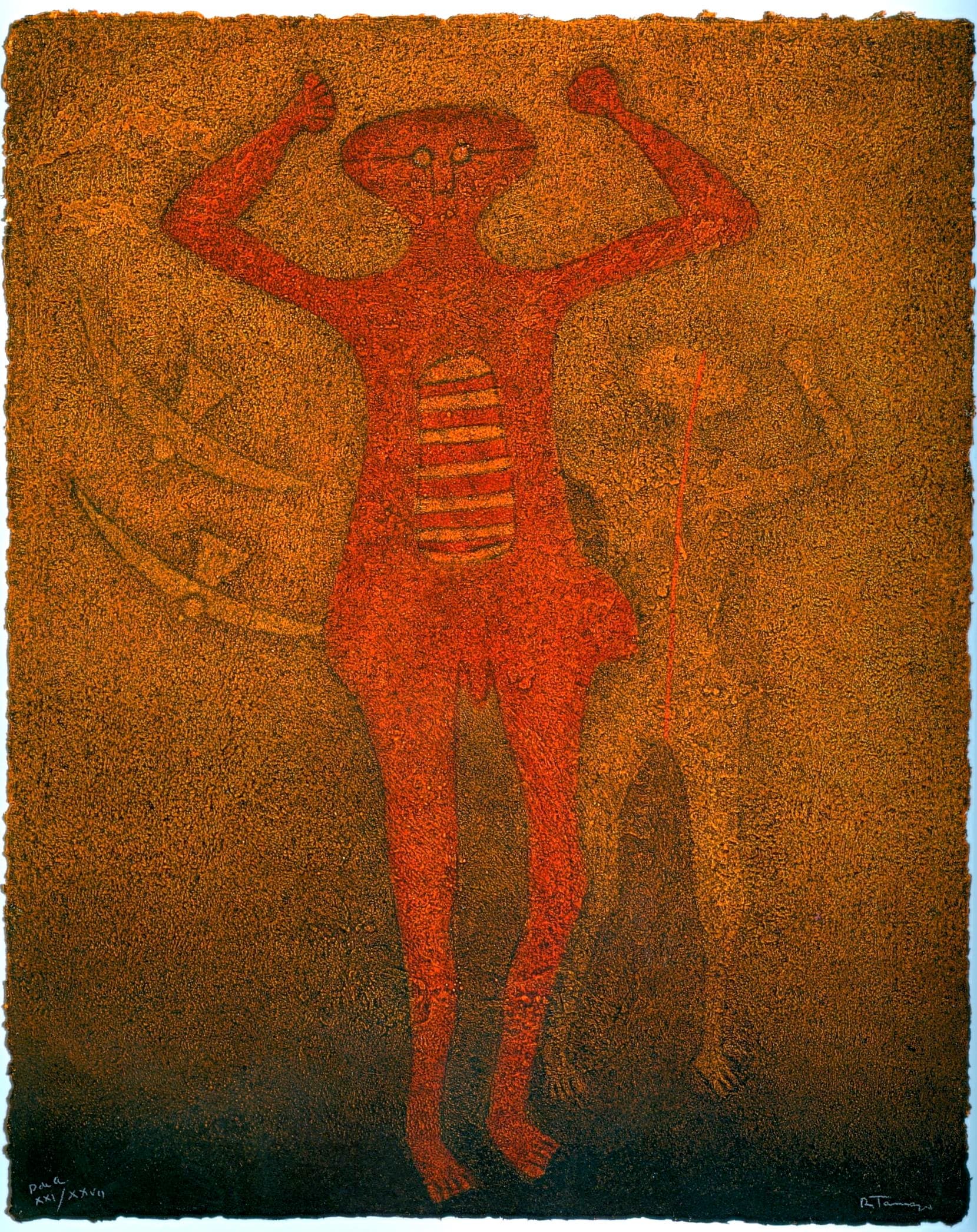
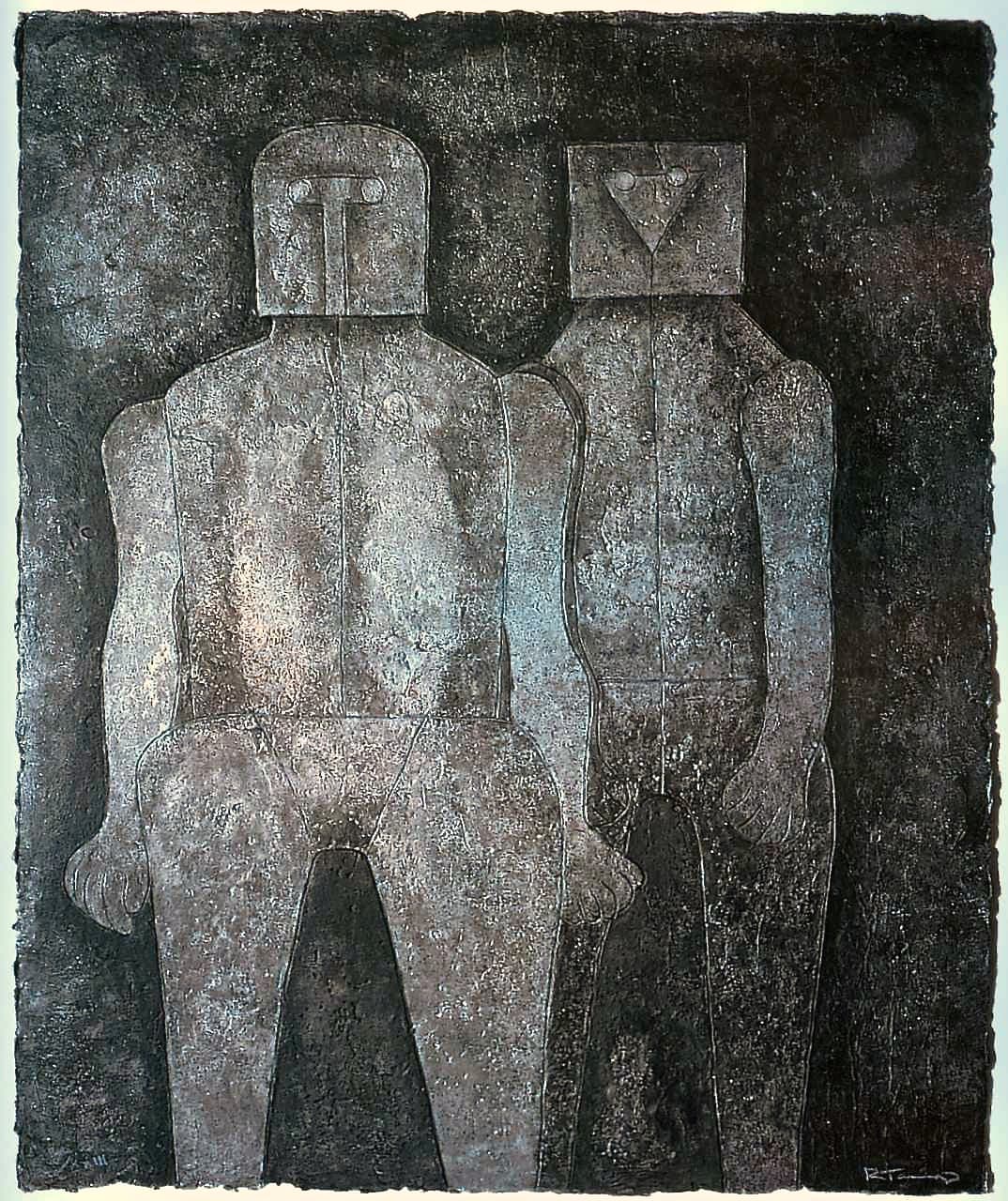
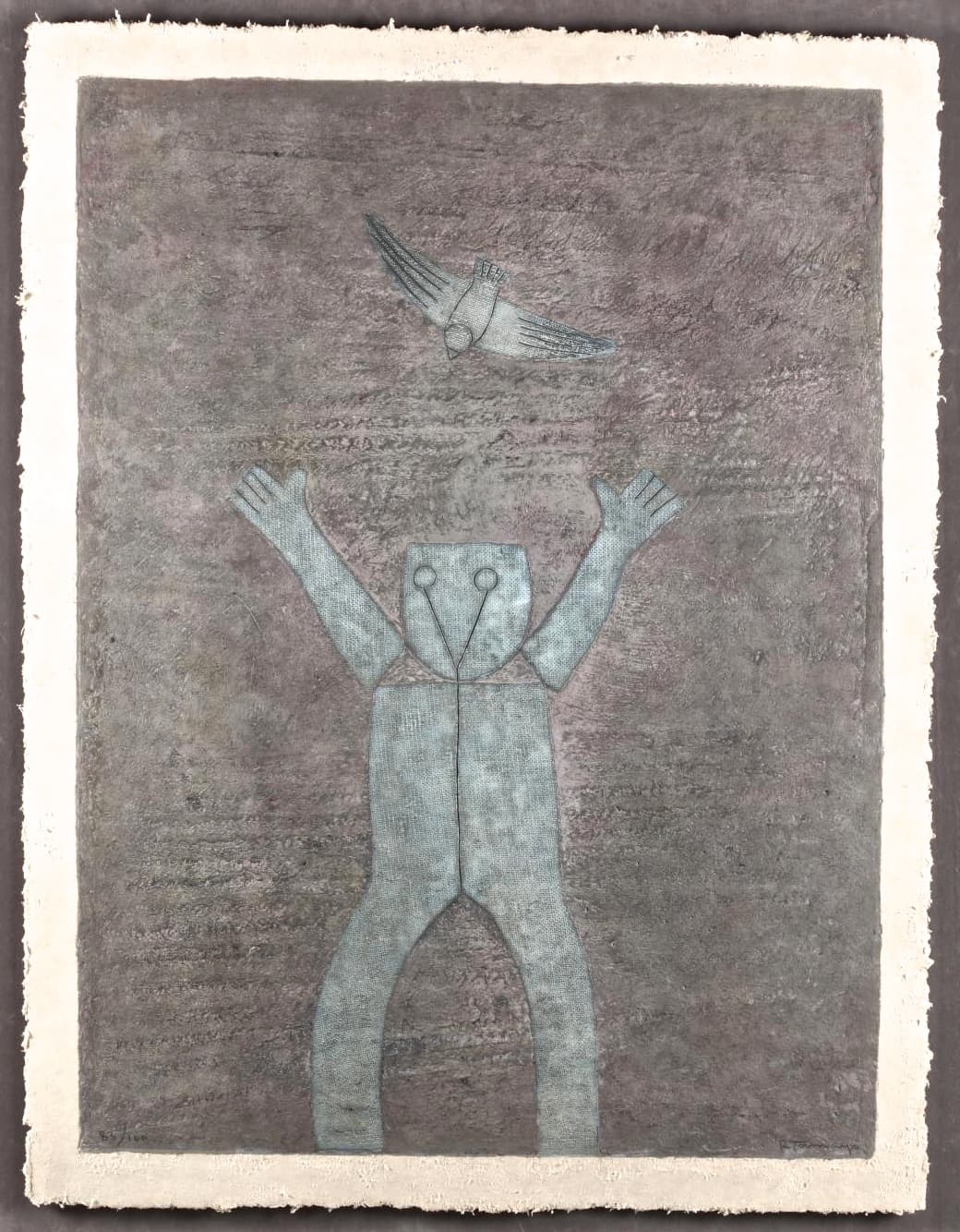
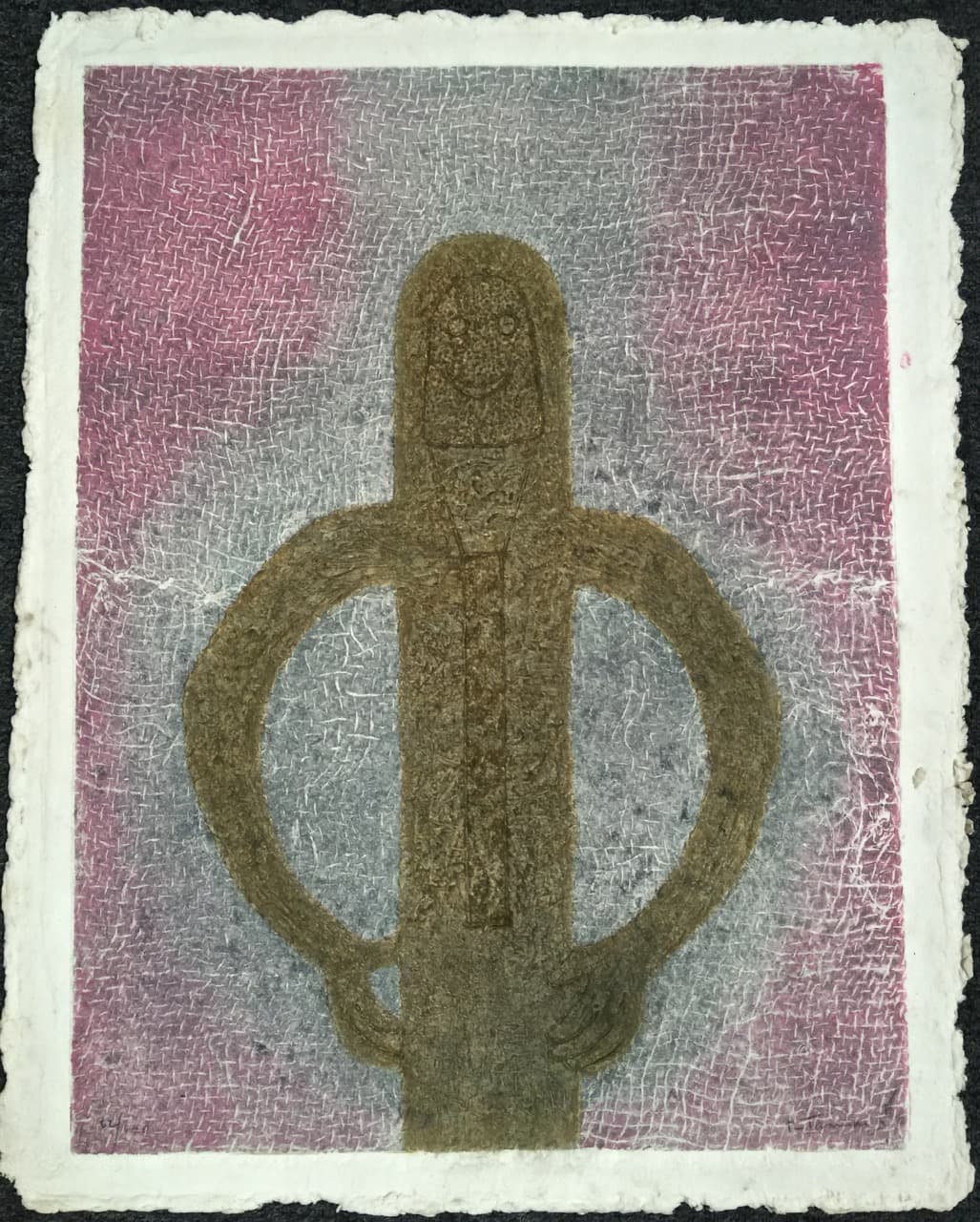
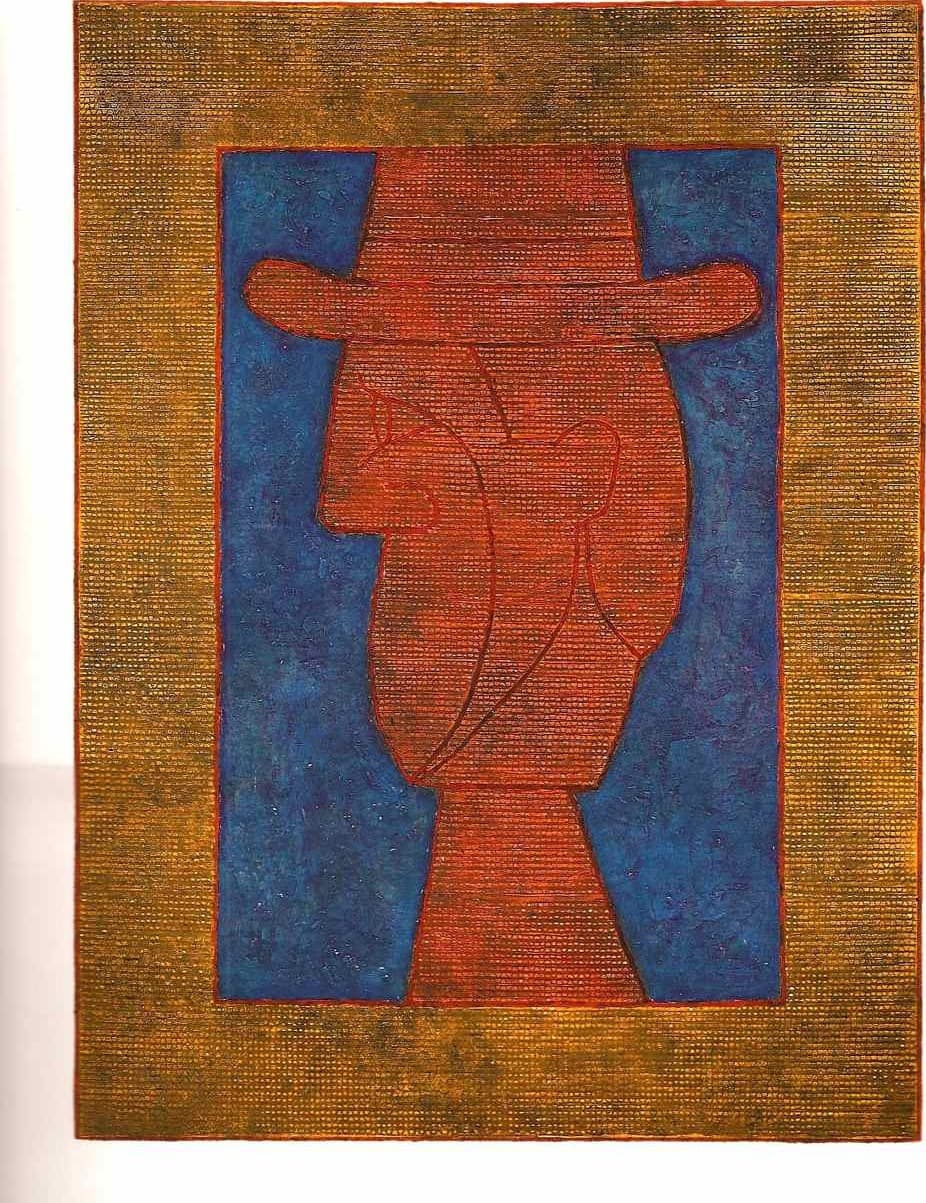
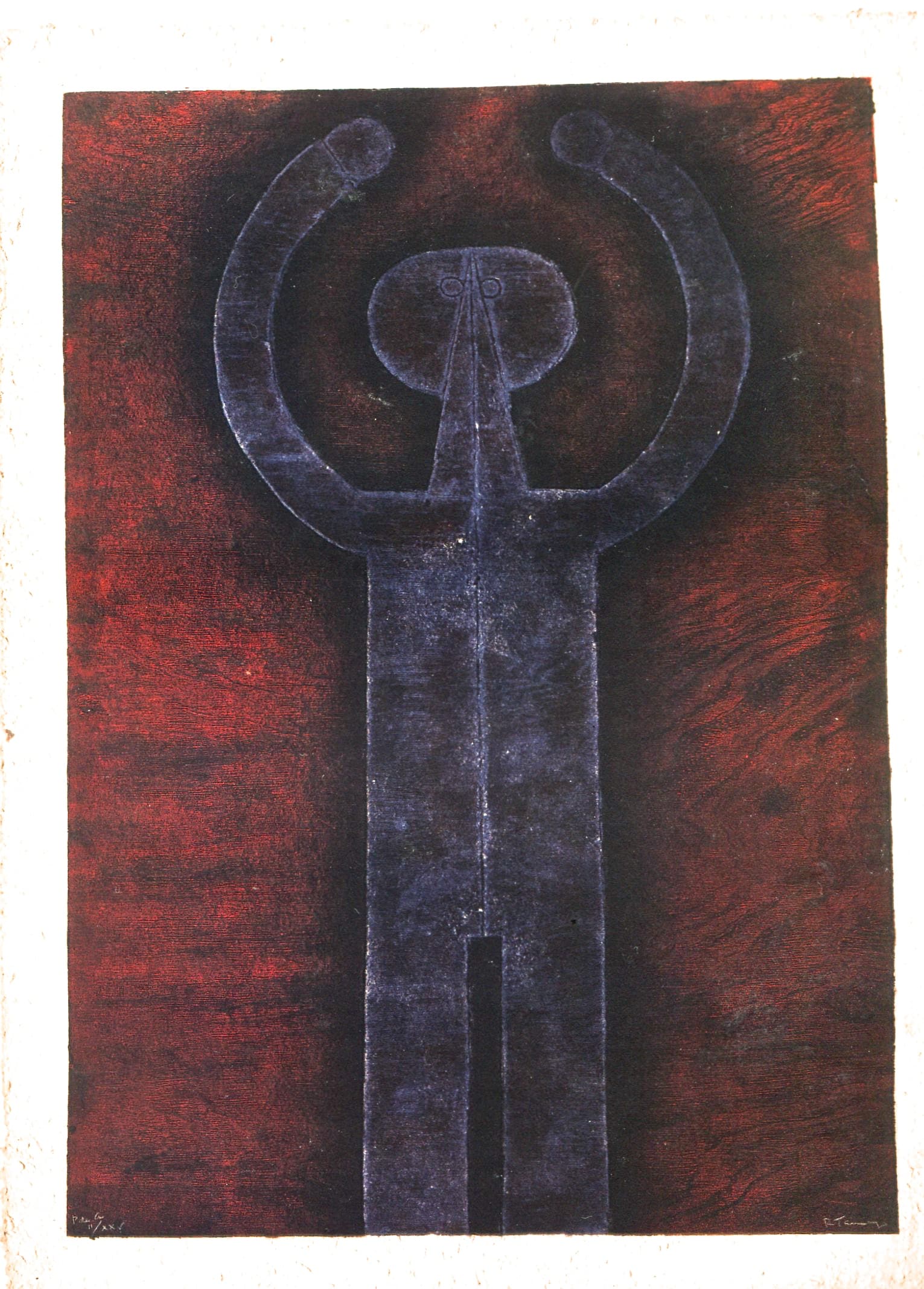
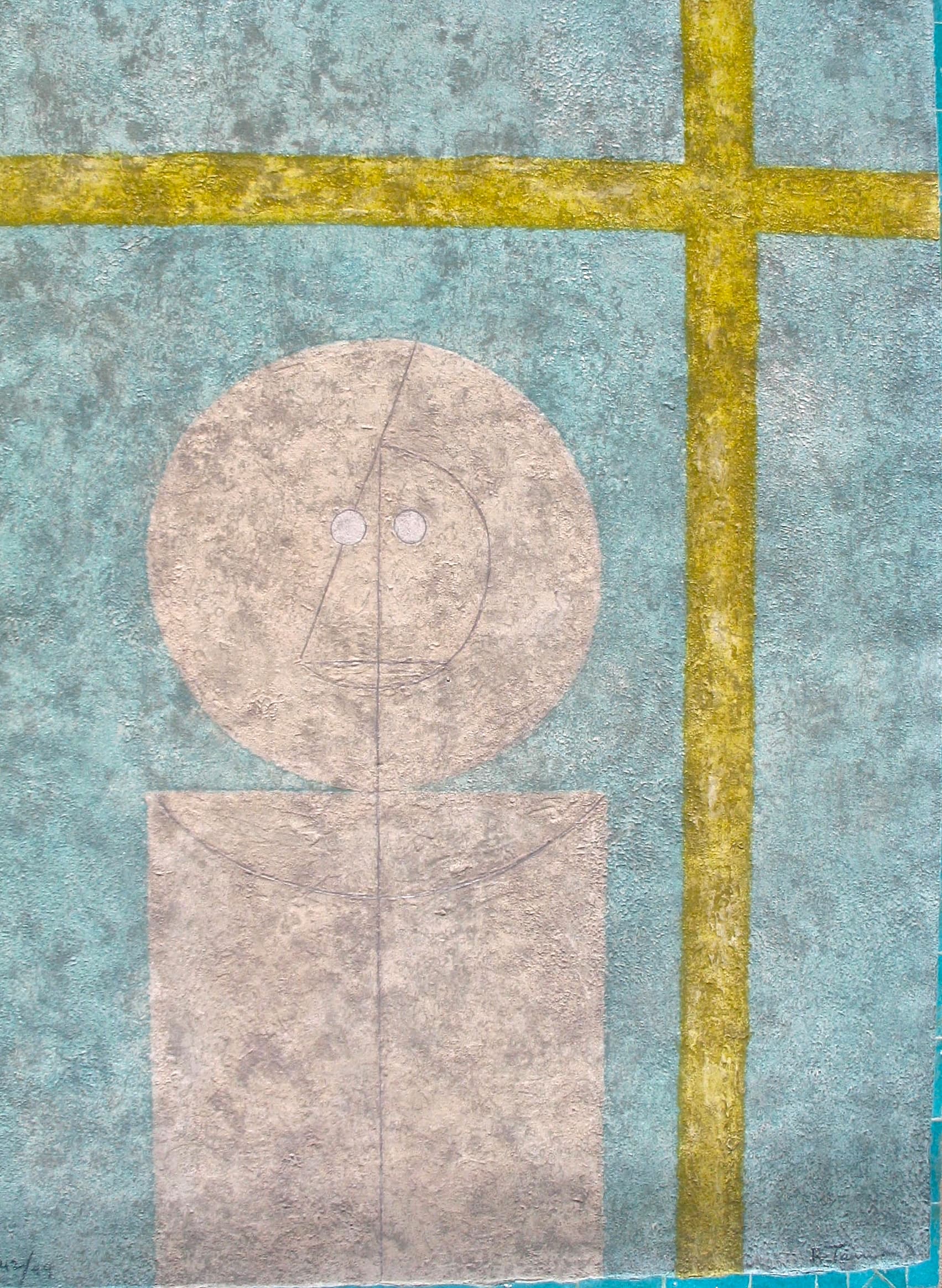
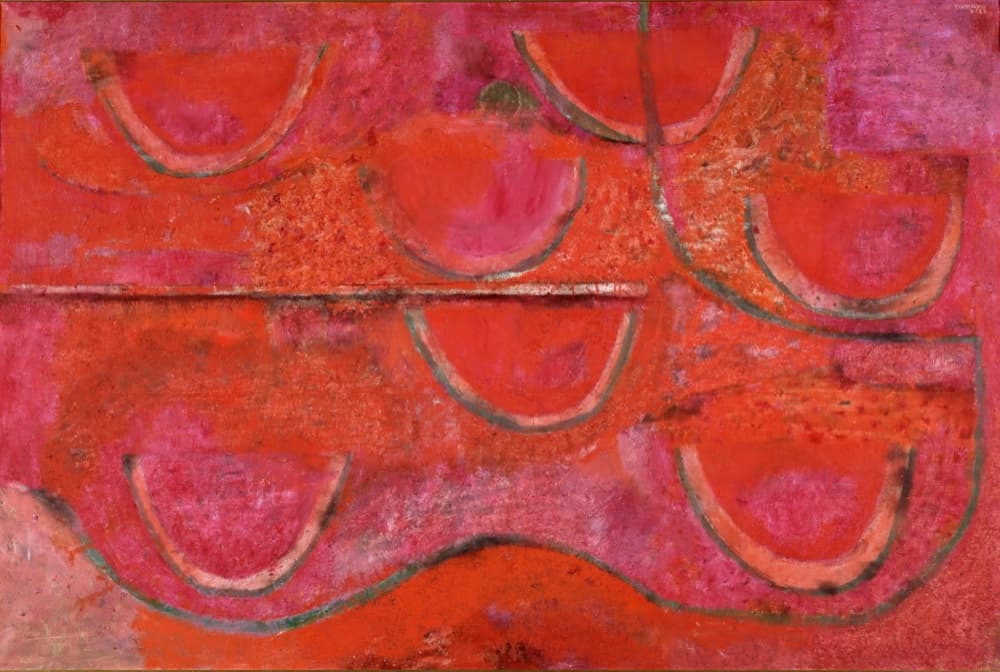
Tamayo's palette and formal choices set him apart immediately. He favored a limited palette of colors, often built from ochres, deep reds, blacks and the burnt siennas associated with Oaxacan earth and pottery, rather than the bright muralist reds and blues used to signal revolutionary energy. His figures, watermelon vendors, women with fruit, dogs howling at the moon, are simplified into geometric masses that echo the rigor and geometry of pre-Hispanic sculpture and its imaginative and magical character, fused with lessons drawn from Cubism and Surrealism absorbed during his years in Paris and New York.
The New York Years and International Reputation
Tamayo's international career took shape gradually through repeated stays abroad. Tamayo traveled to New York for the second time in 1931, and it was there, alongside later trips to Paris, that he tested his work against the era's leading modernists rather than against the muralist establishment back home. The Smithsonian American Art Museum later devoted a full exhibition to this chapter, noting that Tamayo's lushly colored paintings portraying modern Mexican subjects earned him widespread acclaim as an artist who balanced universal themes with his Mexican identity.
His American institutional presence grew steadily from there. In 1943 Tamayo painted his first mural in the United States at the Hillyer Art Library at Smith College, an early sign that US institutions, not just Mexican patrons, were eager to commission him. Major museums followed suit: the Museum of Modern Art holds several key canvases, including Woman with Pineapple from 1941 and Women of Tehuantepec from 1938, along with numerous lithographs from later decades.
Murals in Mexico: Reclaiming Public Space on His Own Terms
Tamayo did not reject mural painting altogether, he simply approached it differently. His most celebrated Mexican commissions are inside the Palacio de Bellas Artes in Mexico City, where his 1954 mural Day and Night joined two others, The Birth of Our Nationality and Mexico Today. Tamayo executed the work in 1954, employing the same technique used for the other murals in the Palacio de Bellas Artes, and the piece contains abstract elements associated with the cosmos and with Mesoamerican architecture, with chromatic contrasts of red and black. Rather than depicting revolutionary crowds, Tamayo reached for cosmology, drawing directly on the same pre-Hispanic sources that had shaped his easel paintings.
The Museums That Bear His Name
Tamayo's legacy is unusually well institutionalized for a single artist, spread across two distinct museums that reflect two sides of his life's work.
Museo Rufino Tamayo, Oaxaca
In his home city, the museum houses the pre-Hispanic objects Tamayo collected over decades rather than his own paintings. Describing the institution, one travel authority calls it a top-class museum, even by Oaxaca's high standards, showing off a wondrous collection of pre-Hispanic art donated by the city's most famous artist. It is a direct, physical record of the archaeological material that first shaped his eye as a young museum worker.
Museo Tamayo, Mexico City
In the capital, the museum he founded looks forward rather than back. The Museo Tamayo was founded in Mexico City in 1981 by the artist Rufino Tamayo and his wife Olga Flores Rivas with the vocation of being a public space that would promote the international art of his time. Today, the Museo Rufino Tamayo, today known as the Museo Tamayo Arte Contemporánea, in Chapultepec Park, regularly produces some of the most important contemporary art exhibitions seen in the city, a legacy Tamayo clearly intended: a living institution rather than a static shrine to his own paintings.
The Auction Market for Tamayo Today
Rufino Tamayo remains one of the most consistently strong names in the Latin American art market, and collectors researching him on marketplaces like this one should know the benchmarks. Rufino Tamayo's "Troubadour" set a world auction record for Latin American art, fetching $7.2 million. The 1945 painting, which depicts a musician strumming his guitar as two women watch, was acquired by an anonymous buyer at Christie's in 2008. That same season, Sotheby's sold "The Bird Charmer" for $4.3 million at its Latin American art auction in New York.
Prices vary enormously depending on medium, period and provenance. Smaller works on paper and later still lifes trade far more modestly: a 1956 still life titled Naturaleza muerta, for example, sold for $204,800, more than twice the low estimate, at Sotheby's in New York on May 20, according to a recent auction recap. That spread, from six figures for a modest still life to seven figures for a major figurative canvas, is typical of an artist whose market spans nearly seven decades of production. Browse current listings and comparable examples in the site's artworks section, or consult a specialized gallery before committing to a major purchase.
Why Tamayo Still Matters to Collectors and Students
Tamayo's insistence on separating aesthetic ambition from political messaging gave later generations of Latin American artists permission to do the same. He demonstrated that a painter could draw on indigenous heritage without illustrating a nationalist program, and that Mexican art could engage directly with Paris and New York without imitating either. For students of the region's art history, he is essential precisely because he complicates the neat story of muralism as the only serious 20th-century Mexican movement.
For collectors, his combination of institutional validation (MoMA, the Art Institute of Chicago, the Smithsonian) and auction liquidity makes him a relatively safe entry point into serious Latin American modernism, provided buyers verify provenance carefully given his market value. Readers wanting more context on the wider movement he both belonged to and resisted can explore related profiles in the site's editorial archive.
FAQ
Was Rufino Tamayo one of the Mexican muralists? He painted murals, including major commissions at the Palacio de Bellas Artes, but he is not usually grouped with the "big three" muralists Rivera, Orozco and Siqueiros because he didn't imprint an evident political agenda on his work nor did he use figurative realism to convey it.
What is Tamayo's most famous painting?Trovador (The Troubadour), from 1945, is widely considered his signature work and holds his auction record, having set a world auction record for Latin American art, fetching $7.2 million in 2008.
Where can I see Tamayo's pre-Columbian art collection? It is housed at the Museo Rufino Tamayo in his native Oaxaca, a collection he donated to the city.
Is the Museo Tamayo in Mexico City the same as the one in Oaxaca? No. The Mexico City museum, founded in 1981, focuses on contemporary art exhibitions rather than his personal collection, while the Oaxaca museum displays the pre-Hispanic objects Tamayo gathered over his lifetime.
How much do Rufino Tamayo paintings sell for today? Prices range widely: smaller works and still lifes can sell in the low six figures, as with a 1956 piece that sold for $204,800, more than twice the low estimate, while major figurative canvases have reached into the millions.