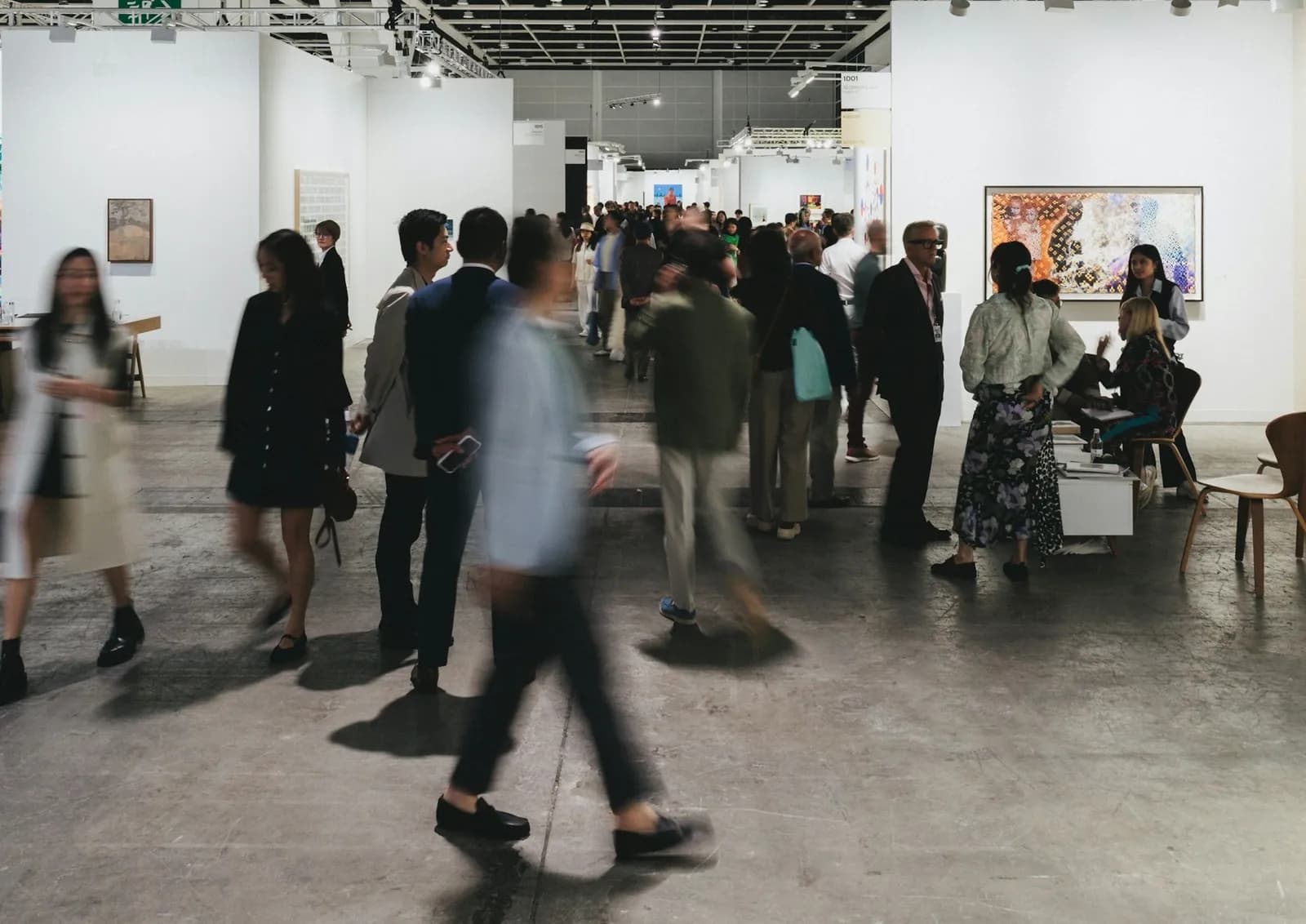
Participating in a major art fair can easily cost a gallery $50,000 to $275,000 once booth fees, shipping, travel and entertainment are added up, and a meaningful share of exhibitors still go home having lost money. The honest answer to "are art fairs worth it" is: sometimes, and mostly for reasons that don't show up on an invoice.
For galleries representing Latin American artists, that math is even trickier. Shipping from Bogotá, São Paulo or Mexico City to Basel or Miami costs more than shipping from a gallery two miles from the convention center, and currency swings can erase a sale's profit before the wire transfer clears. Understanding the real cost of art fairs, line by line, is the only way to decide whether a given fair belongs on a gallery's calendar.
What a Booth Actually Costs
Booth fees are the most visible expense, and they vary enormously depending on the fair's tier, the section a gallery is placed in, and how much floor space it books.
Flagship Fairs: $50,000 and Up
At the top end of the market, costs climb fast. As of 2024, the cost for a gallery booth in the main section of Art Basel Miami Beach generally ranged from $60,000 to $80,000, with additional costs for a corner booth or other prime placement on the show floor. Smaller, curated sections are cheaper but still substantial: the Nova section, for works made in the past three years, cost $24,500, while the Survey section was $31,000 and Meridians, devoted to monumental works and installations, was $25,000.
Once travel, shipping, and staffing are layered on, galleries surveyed by artnet News with staff sizes ranging from five to 35 people estimated that the cost of participation in Art Basel Miami Beach, including everything from shipping to renting furniture and hosting dinners, ranged from $120,000 to over $275,000. A recent industry survey found similar numbers across the wider fair circuit: nearly half of the galleries surveyed spent over £30,000 ($40,000) to attend a single fair, and nearly one in five spent between £50,000 and £100,000.
Smaller Sections and Satellite Fairs
Not every booth is six figures. Booths in the Statements sector of Art Basel cost roughly $13,000, among the cheapest at the fair, and several discounted programs exist specifically to lower the barrier for younger galleries. The best deal at Art Basel Miami Beach's 2024 edition was the Positions section: a flat fee of $11,000 for a small booth featuring work by a single emerging artist. Regional fairs run cheaper still, though the gap narrows once travel and shipping are added.
The Hidden Costs Beyond the Booth Fee
The booth fee is rarely the whole story, and dealers consistently say the extras are where budgets blow up. Adding a few wall washers or spotlights can easily cost $1,000 to $2,000, electrical outlets range from $200 to $600, and building extra walls can run anywhere from a few hundred to tens of thousands of dollars. Furniture is another surprise expense: many fairs don't include it in the booth fee, and a gallerist told Artsy that "hiring from fair partners can be extremely expensive" while shipping a gallery's own furniture back and forth can cost even more.
Shipping and insurance for the artwork itself, staff flights and hotels, client dinners, and art handling at both ends of the trip typically double or triple the headline booth cost. This is why Tribeca gallerist Margot Samel told Artsy that "at most fairs, small galleries are paying the same per square foot as larger galleries," and "often, the margins are so slim that even if you sell everything you bring to the fair, you barely make a profit."
Why the Math Is Harder for Latin American Galleries
Galleries based outside the United States and Western Europe carry extra costs that don't show up in a standard fair budget: longer, more expensive freight routes, customs paperwork, currency conversion, and visa logistics for staff. Catalina Casas, founder of Bogotá's Casas Riegner gallery, put the tension plainly to ARTnews, explaining that South American galleries still need to do the major international fairs "because that activates our market, in a way," even as the costs make it harder to compete with galleries from wealthier markets.
José Kuri, cofounder of Mexico City and New York gallery Kurimanzutto, described the squeeze on margins even for a gallery with a strong fair record. He noted that shipping costs are "way higher than two, three years ago, and so the margins are way lower," a pattern dealers across the Global South describe more acutely than their counterparts based near a fair's host city. These pressures help explain why galleries sometimes consolidate their presence into a single flagship fair each year rather than spreading thin across several.
Do Art Fairs Actually Pay Off?
Despite the costs, fairs remain the backbone of gallery revenue. The biggest expenditures for galleries are rent, salaries and art fairs, and more than a quarter of all galleries generate 20% or more of their yearly revenue at art fairs. More recent data from the Art Basel and UBS market report found that art fairs remain crucial sales channels, accounting for 31 percent of dealer revenue, up 2 percent from 2023, though the expense of participation has become increasingly prohibitive, especially for smaller galleries.
Interestingly, the same report found the pain isn't evenly distributed. Smaller galleries with annual turnover under $250,000 saw sales increase by 17 percent in 2024, while blue-chip dealers with turnover exceeding $10 million experienced a 9 percent decline, suggesting the market is rebalancing toward smaller, more frequent transactions rather than single blockbuster sales.
Not every outcome is positive. Surveys show that galleries fail to turn a profit at up to half of the art fairs they participate in, and for many galleries, these top fairs present a significant existential risk. Paris and Los Angeles dealer René-Julien Praz closed his gallery, Praz-Delavallade, after concluding that the high total cost for exhibiting in the international fair circuit contributed to the decision. San Francisco's Altman Siegel pulled out of Art Basel Miami Beach after deciding to close, and was later left facing a $22,000 bill from a collection agency for a booth it never used, a reminder that fair contracts carry financial obligations even when a gallery withdraws.
When Art Fairs Are Worth the Risk
The calculus improves when galleries choose fairs strategically rather than chasing every invitation. Some smaller fairs like NADA, Spring Break, or the Affordable Art Fair can be profitable for galleries, precisely because booth costs are lower and overhead doesn't scale with prestige. Fair organizers have also started responding to the pressure. Art Basel Miami Beach introduced a wider range of stand sizes for its 2024 edition after what director Bridget Finn called "a challenging year for galleries," a move that helped produce a record number of 34 first-time exhibitors across all of its sections in the fair's 22-year history.
Subsidized sections aimed at younger galleries, discounted stipends, and sliding-scale pricing based on booth size are becoming more common across the circuit, though as Artsy's reporting notes, these programs remain the exception rather than the rule for most exhibitors.
The Latin American Fair Circuit: ZONAMACO, SP-Arte and ArtBO
Collectors and galleries don't need a European or North American address to find serious fairs. Mexico City's Zona Maco, founded in 2002 by Zélika García, is now the largest art and design fair in Latin America, drawing more than 220 galleries from over two dozen countries each February.
São Paulo's SP-Arte holds a similar status for contemporary art specifically: the fair, held in Oscar Niemeyer's Ibirapuera Park pavilion, is widely described as Latin America's largest art fair, and its latest editions each drew well over 150 exhibitors spanning Brazilian and international galleries.
Bogotá's ARTBO, organized by the city's Chamber of Commerce, has grown steadily since its 2007 founding and is now recognized as one of the largest art fairs in Latin America, bringing together galleries, curators and collectors from across the region. All three fairs charge far less than Art Basel or Frieze for a booth, but still carry the same hidden costs in freight, staffing and hospitality that make or break a gallery's bottom line.
How to Decide if a Fair Is Worth It for Your Gallery
There's no universal formula, but a few questions consistently separate a worthwhile fair from a costly mistake:
What's the all-in cost, not just the booth fee? Add shipping both ways, insurance, staff travel, booth build-out, and at least one client dinner before comparing fairs.
Does the fair match your price point? A gallery selling $3,000 works at a fair full of $300,000 booths is competing for the wrong collectors.
Is there a subsidized section available? Programs like Art Basel's Positions or Frieze's Focus section exist specifically to lower risk for younger galleries.
What's the realistic sales target to break even? If covering costs requires selling out the booth, the risk may outweigh the exposure.
What does the fair do for relationships, not just sales? New collector contacts, press coverage, and introductions to curators can pay off over several years even when a single fair doesn't.
FAQ
How much does it cost to exhibit at a major international art fair? Costs vary widely by fair and section, but total participation at a fair like Art Basel Miami Beach, including shipping, furniture and dinners, has ranged from $120,000 to over $275,000 for mid-sized galleries, while smaller subsidized sections can run closer to $11,000 to $25,000.
Do galleries usually make a profit at art fairs? Not always. Surveys show that galleries fail to turn a profit at up to half of the art fairs they participate in, which is why many dealers treat fairs as long-term brand investments rather than guaranteed sales events.
Are smaller or regional art fairs a safer bet for new galleries? Often, yes. Booth fees at regional fairs and satellite events are typically a fraction of flagship fair prices, and fairs like NADA, Spring Break, or the Affordable Art Fair can be profitable for galleries precisely because overhead stays proportionate to the gallery's size.
Why is it harder for Latin American galleries to participate in fairs like Art Basel? Longer shipping routes, customs costs and currency conversion add expenses that galleries based near a fair's host city don't face, a pressure Bogotá dealer Catalina Casas described when explaining why South American galleries still attend despite the cost, since participation "activates our market, in a way."
What should a gallery budget beyond the booth fee? Plan for shipping and insurance, staff travel and lodging, booth lighting and furniture (often not included in the base fee), client entertainment, and a contingency fund, since extras like wall washers or spotlights can add $1,000 to $2,000, and custom walls can run into the tens of thousands.