Who Was Fernando Botero?
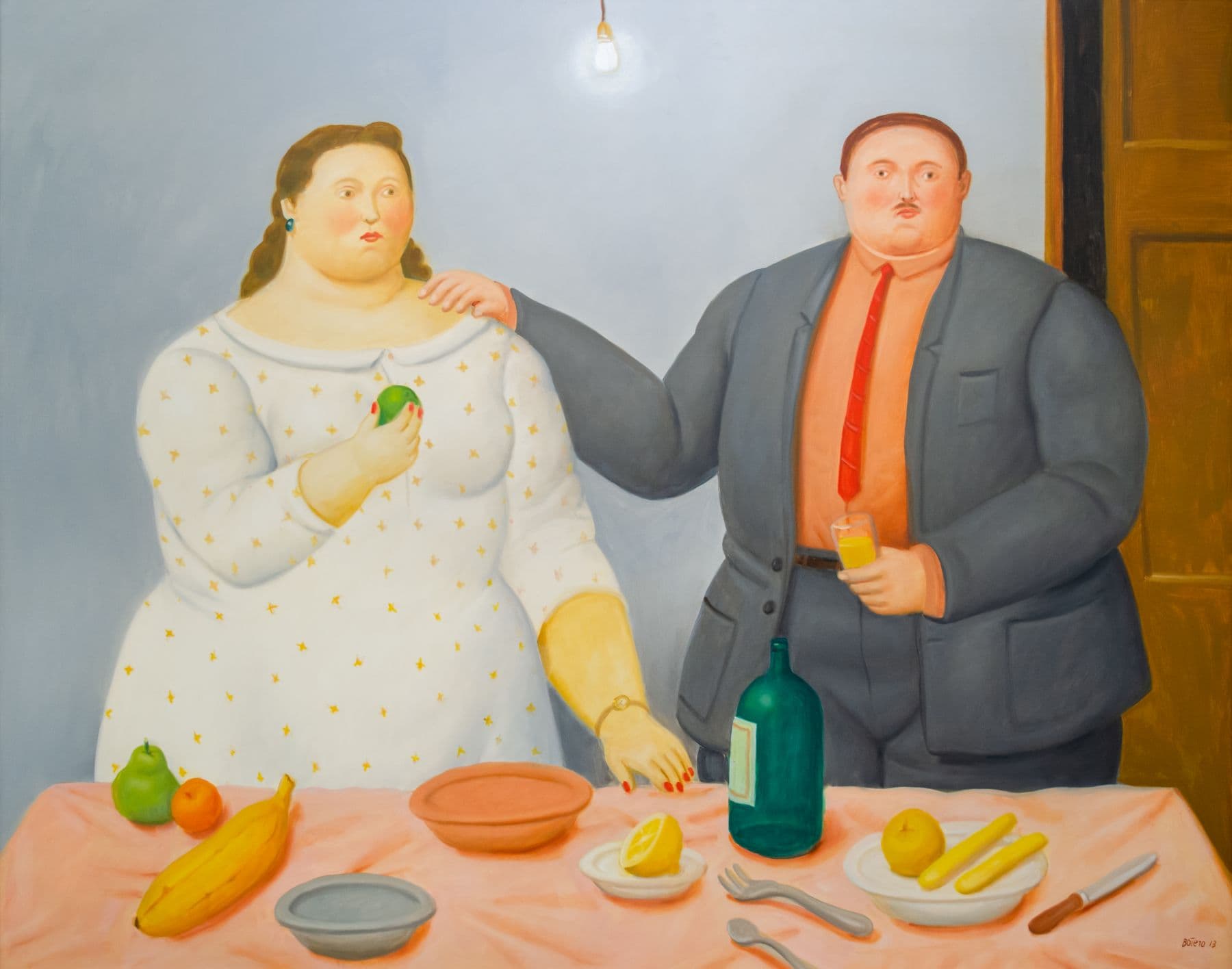
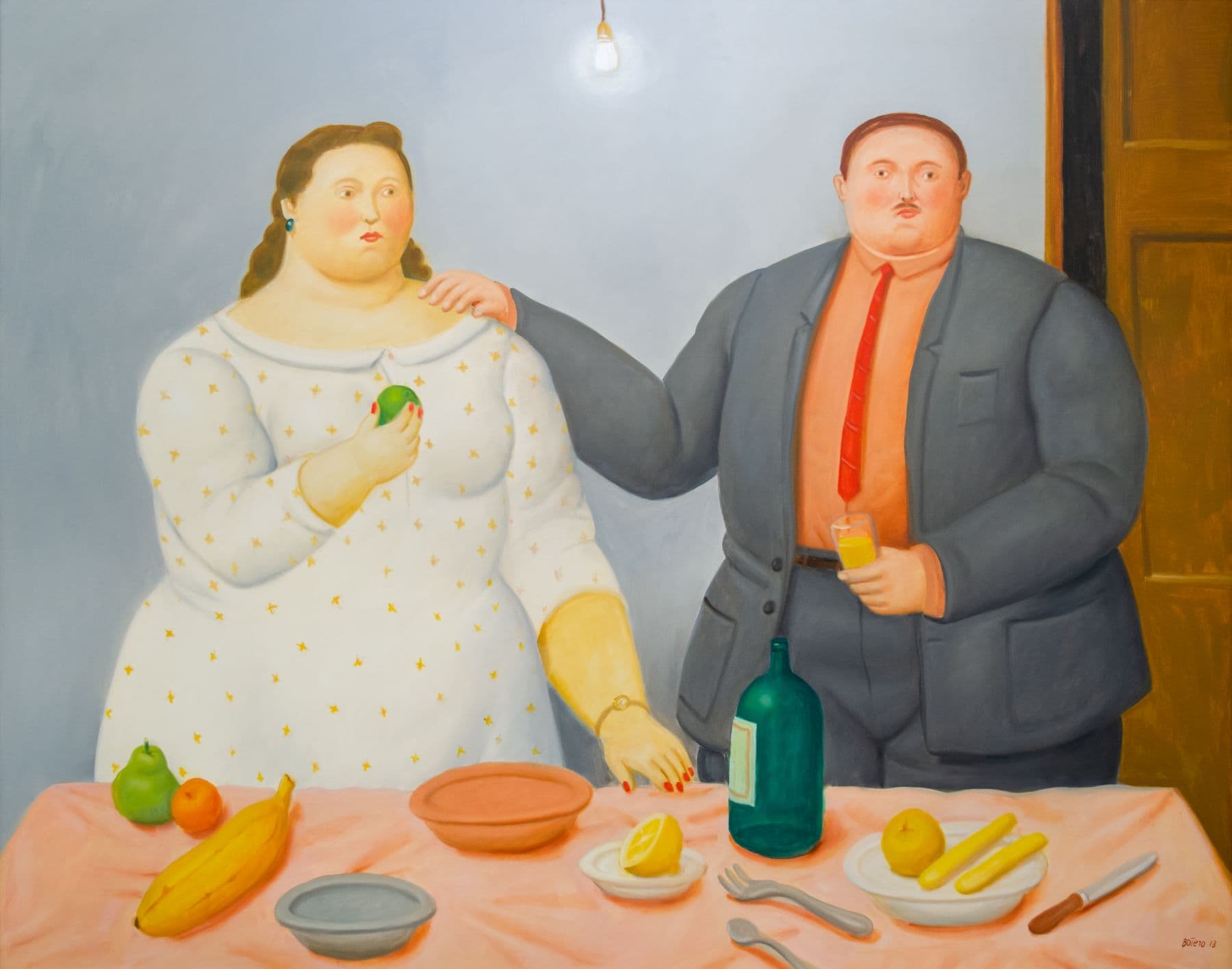
Fernando Botero is the artist most people picture when they hear "Colombian art." Born in Medellín on April 19, 1932, and working until his death on September 15, 2023, at his home in Monaco, he spent more than seven decades painting and sculpting people, animals and objects in the same unmistakable form: swollen, rounded, monumental. He called it a search for volume. Everyone else calls it Boterismo.
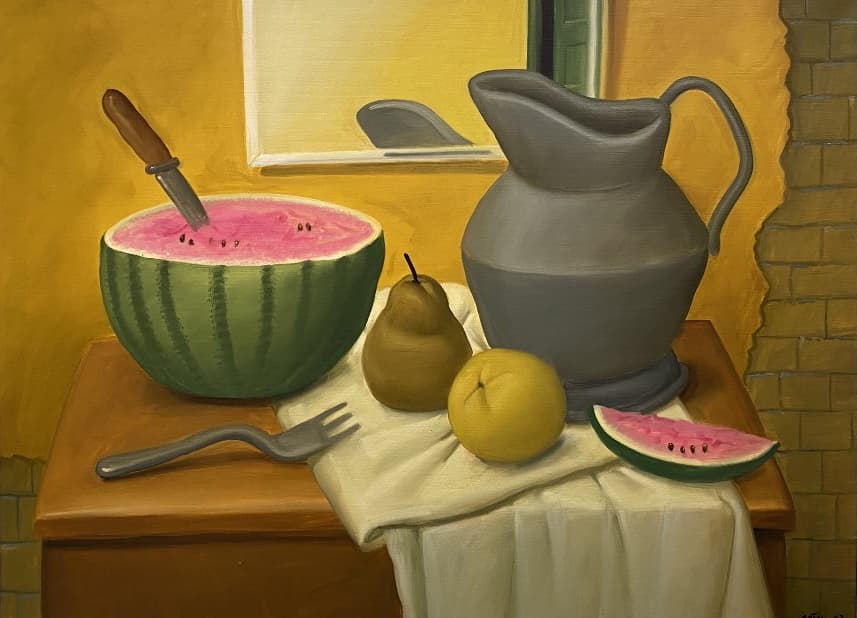
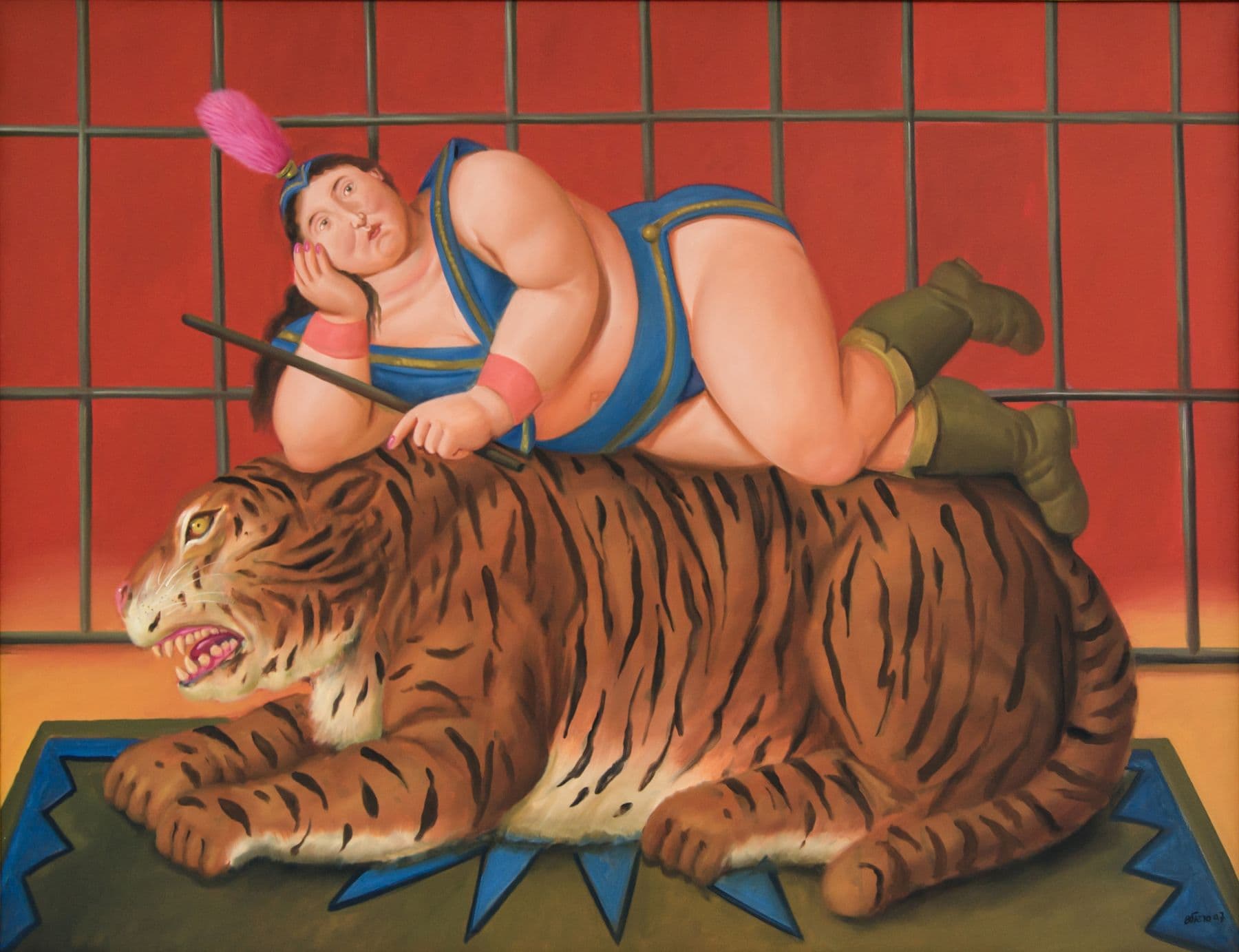
Fernando Botero was a Colombian artist known for his paintings and sculptures of inflated human and animal shapes. What makes him unusual among 20th-century figurative painters is how completely he owned a single visual idea. A Botero bishop, a Botero fruit basket and a Botero horse all share the same swollen geometry, and that consistency, sustained across paintings, drawings and bronze sculpture, is exactly what made his work so recognizable in galleries, plazas and living rooms around the world.
Early Life and the Road Away From Bullfighting
Botero's beginnings gave no hint of the fame to come. He was born in Medellín, Colombia in 1932, the second of three sons, and his father, a traveling salesman, died of a heart attack when Botero was only four, leaving his mother, a seamstress, to raise the boys. As a child he was sent to a bullfighting school, a detail that shows up decades later in his art through matadors and bulls rendered with the same generous curves as everything else he painted.
He abandoned the bullring for the easel early. He gained recognition for his distinctive paintings and sculptures depicting inflated human and animal figures, influenced by pre-Columbian and Spanish colonial art as well as the works of Mexican muralist Diego Rivera. By his late teens he was already exhibiting: he had his first solo show in Bogotá around age 18, and by 1958 he had won first prize at Colombia's national Salón de Artistas, a turning point that established him as a serious figure at home before he had built any reputation abroad.
Finding Boterismo in Paris and New York
Botero's signature style did not arrive all at once. In the late 1950s he began experimenting with proportion and volume, an approach that led to the creation of his signature style, "Boterismo," featuring subjects with inflated forms that let him explore themes of beauty, power and satire. He refined and hardened this language over the following decade while dividing his time between Colombia, Europe and New York. By the 1960s, the Botero style, characterized by enlarged figures and balanced compositions and named Boterismo, was fully established.
It's worth being precise about what Boterismo actually does, because "fat paintings" undersells it. The style represents a meditation on proportion, sensuality and the visual weight of things, and through this lens Botero reimagines human figures, animals, objects and still lifes, giving them a sculptural, monumental presence on canvas. He populated this world with a full cast of characters. His paintings are populated by musicians, dancers, soldiers, families and bishops, each rendered with fullness and dignity, and despite their exaggerated shapes these figures are treated with tenderness and irony, embodying both the humor and tragedy of human existence.
He also turned the technique on art history itself, repainting old masters in his own proportions. One well-known example reworks a Renaissance masterpiece: he recreated the composition of Jan van Eyck's Arnolfini Portrait, staying faithful to the original color scheme and symbolic details such as the dog and the fruit on the windowsill, but presenting the wedded couple and their dog as rounded and plump in accordance with his "Boterismo" style.
From Canvas to Bronze: Botero the Sculptor
Painting made Botero famous in Colombia; sculpture made him a fixture of public space worldwide. Botero began sculpting seriously in the 1970s, after years of international recognition for his paintings, and the transition into three-dimensional forms let him expand his exploration of volume, a formal concern that had fascinated him since the early days of his career.
The results are hard to miss if you have ever walked through certain city centers. Rather than merely amplifying the proportions of the human body, Botero sculpted space itself, creating pieces that occupied their environment with a commanding, yet serene, presence. His sculptures gained international recognition with exhibitions worldwide in the 1990s. Today his bronzes stand on Park Avenue in New York, the Champs-Élysées in Paris, and in plazas from Madrid to Jerusalem to Yerevan, turning ordinary sidewalks into open-air galleries.
The Plazas of Medellín and Bogotá
Botero's generosity toward his home country is part of his story, not a footnote to it. In Medellín, Plaza Botero, surrounded by the Museum of Antioquia and the Rafael Uribe Uribe Palace of Culture, is a 7,000 square meter outdoor park that displays 23 sculptures Botero donated for the museum's renovation in 2004, and he also donated 119 pieces to the Museum of Antioquia. Not every gift was welcomed peacefully: in 1995 a guerrilla group blew up a sculpture of a dove that he had donated to the city, calling him a symbol of oppression, and Botero cast a replacement dove for the plaza while insisting the damaged original remain on display as a memorial to the attack.
In Bogotá, the gift was on paper and canvas rather than bronze. In 2000, Botero donated an art collection of 208 pieces to Banco de la República, 123 of them his own artwork and 85 from his private collection of internationally renowned artists, and this collection became the founding gift of the Museo Botero. The museum, housed in a restored colonial mansion in the La Candelaria district, has one unusual condition attached to the gift: Botero insisted the artwork be hung at eye level, unobstructed and free to all people, and it has remained free to visit since it opened. You can read more about the collection on the Banco de la República's Museo Botero page.
Politics, Violence and the Abu Ghraib Series
Botero is often described as a gentle satirist of Latin American bourgeois life, but he never shied away from Colombia's darker history. He painted drug lord Pablo Escobar's death, massacres tied to the country's decades-long conflict, and other scenes of political violence long before his most confrontational body of work appeared.
That work arrived in his seventies and shocked audiences who thought they knew what a Botero painting looked like. In 2003, scenes from the Abu Ghraib prison outside Baghdad led Botero to the most politically charged subject of his career, the torture of Iraqi prisoners by the U.S. Army, and in 2005 he unveiled nearly 200 drawings and paintings depicting these human rights violations. The origin of the series was almost instantaneous: Botero read journalist Seymour Hersh's article on the abuses while flying to Paris, and before the plane landed he had already begun sketching the scenes he imagined from the reporting, then continued drawing and painting for fourteen months.
He was blunt about his intent. In his own words, quoted by curators, he wanted to "visualize the atmosphere described in the articles, to make visible what was invisible." The series broke from his usual approach in a specific way: whereas his characters usually have inscrutable faces, Botero gave the Abu Ghraib prisoners expressions of pain, anguish and humanity, while hiding the torturers from view, granting the prisoners the dignity of being the paintings' subjects. Much of the series now lives permanently on the West Coast. A group of fifty-six paintings and drawings from the series returned to Berkeley as a gift from the artist to the permanent collection of the Berkeley Art Museum and Pacific Film Archive. You can see the museum's own account at BAMPFA's Abu Ghraib series page.
The Market for Botero
Few Latin American artists have as deep and liquid a secondary market as Botero, and his prices have kept climbing since his death. Collectors researching value should know the top figures on both sides of his output.
Category | Work | Price | Sale |
|---|---|---|---|
Painting record | The Musicians (1979) | $5,132,000 (also reported as $5.1 million) | Christie's New York, 2023 |
Sculpture record | Horse (black bronze) | $4.9 million | Sotheby's New York, November 2024 |
Prior sculpture record | Man on a Horse (1999) | $4.3 million | Christie's, 2022 |
Botero's auction record stands at $5.1 million, achieved for his 1979 painting The Musicians at Christie's, while the most expensive sculpture is Man on a Horse, an 11-foot-tall bronze that fetched $4.3 million in 2022, also at Christie's. That sculpture record did not last long. A monumental black bronze Horse, standing 10 feet tall and extending 7.5 feet across, sold at Sotheby's New York on November 20, 2024, for $4.9 million, making it the most expensive sculpture by the artist to sell at auction and his second-highest auction price overall.
Beyond the headline lots, the market has been remarkably stable for buy-and-hold collectors. According to Sotheby's Mei Moses index, the average compound annual return for Botero works resold at auction between 2003 and 2017 was 4.6%, and 82.2% of the 73 works tracked increased in value. For prospective buyers, that consistency, paired with strong institutional demand, is a large part of why Botero remains one of the most searched names on LatinAmericanArt.com's artworks listings.
Legacy
When Botero died in September 2023, Colombia's president captured the scale of the loss in a single public remark, describing him as "the painter of our traditions and our defects, the painter of our virtues," a line widely reported at the time. That tribute reflects something true about Botero's career: he made Colombian subject matter, and by extension Latin American art broadly, instantly legible to audiences who had never set foot in Medellín or Bogotá. His bronzes in public plazas from Manhattan to Jerusalem functioned as ambassadors for an entire regional art tradition long before "Latin American art" became a recognized category in major auction houses.
He also proved that popularity and seriousness are not opposites. A painter whose fruit bowls and dancing couples decorate hotel lobbies and coffee-table books is the same painter who spent fourteen months confronting American torture at Abu Ghraib, and both bodies of work came from the identical visual language. That range, more than the exaggerated proportions themselves, is what separates Botero from the many imitators his style inspired.
Frequently Asked Questions
Why did Fernando Botero paint everything so round and inflated? Botero described it as an exploration of volume and proportion rather than a comment on body size. He treated the style as a meditation on proportion, sensuality and the visual weight of things, applying it equally to people, fruit, animals and even historical artworks he reinterpreted.
Where can I see Botero's work in person? The largest concentrations are in Colombia: the Museo Botero in Bogotá and Plaza Botero in Medellín. His work has also been exhibited at institutions including the Museum of Modern Art in New York, the Hermitage Museum in Saint Petersburg and the Moderna Museet in Stockholm.
Is the Museo Botero in Bogotá free to visit? Yes. Since it opened on November 1, 2000, the museum has been accessible to the public free of charge, a condition Botero attached to his original donation.
What is Botero's most expensive artwork? His auction record for a painting is $5,132,000, set by The Musicians, sold at Christie's New York in 2023, while his sculpture record is the bronze Horse, which sold for $4.9 million at Sotheby's in November 2024.
Did Botero make political art, or only playful figurative work? Both, often within the same decade. Alongside lighthearted domestic and circus scenes, he produced some of his career's most politically charged work in the Abu Ghraib series, as well as earlier paintings addressing drug violence and massacres in Colombia.