Alejandro Santiago is the Oaxacan painter and sculptor who answered an emptied village with an army of clay bodies. Born in the Zapotec town of Teococuilco de Marcos Pérez on April 22, 1964, he returned home after years in Europe to find the streets nearly deserted, then spent the rest of his short life making 2,501 life-size figures to stand in for the people who had gone north. He died in Oaxaca de Juárez on July 22, 2013, at 49.
That single project, 2501 Migrantes, made him one of the most widely discussed Mexican artists of his generation. But he was a serious painter and printmaker first, trained in the same Oaxaca City circles that produced Francisco Toledo and Rodolfo Nieto, and his canvases are what most collectors actually encounter at auction.
From Teococuilco to the Tamayo Workshop
Santiago was born about 60 kilometers northeast of Oaxaca City, in the Sierra Norte, and moved with his family to the state capital when he was nine. That move is the hinge of his biography: a village childhood remembered from the city, which is the same distance the migrant figures would later describe.
He studied at the Centro de Educación Artística and was among the first graduates of the Taller de Artes Plásticas Rufino Tamayo, the free workshop founded in Oaxaca City by Rufino Tamayo. There he came into contact with Tamayo himself and with Francisco Toledo, and encountered the work of Rodolfo Nieto. He later enrolled in the fine arts school of the state university in Oaxaca, where he worked with the Japanese-born printmaker Shinzaburo Takeda, a teacher who shaped two generations of Oaxacan engravers.
A Decade Abroad, and the Return
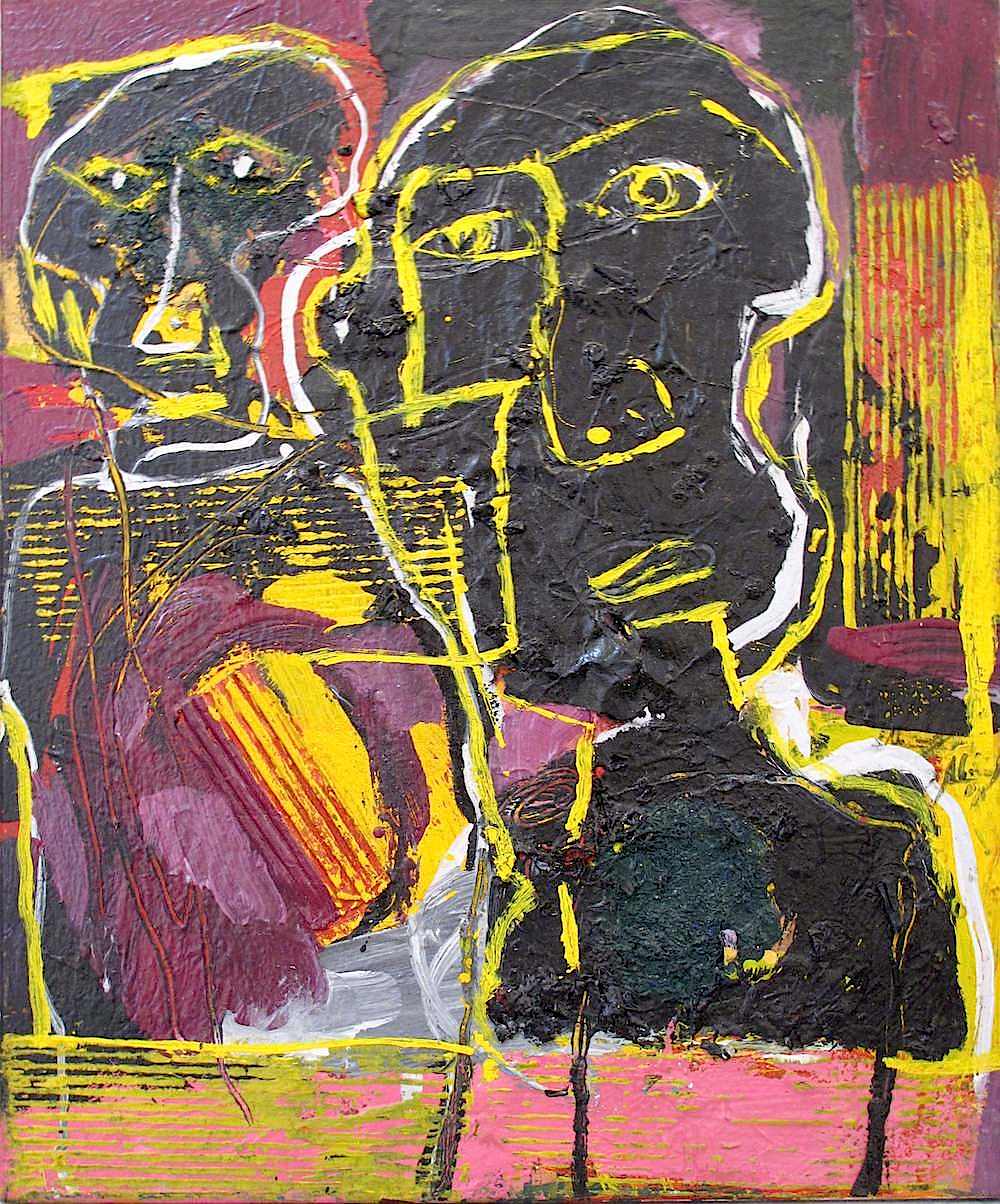
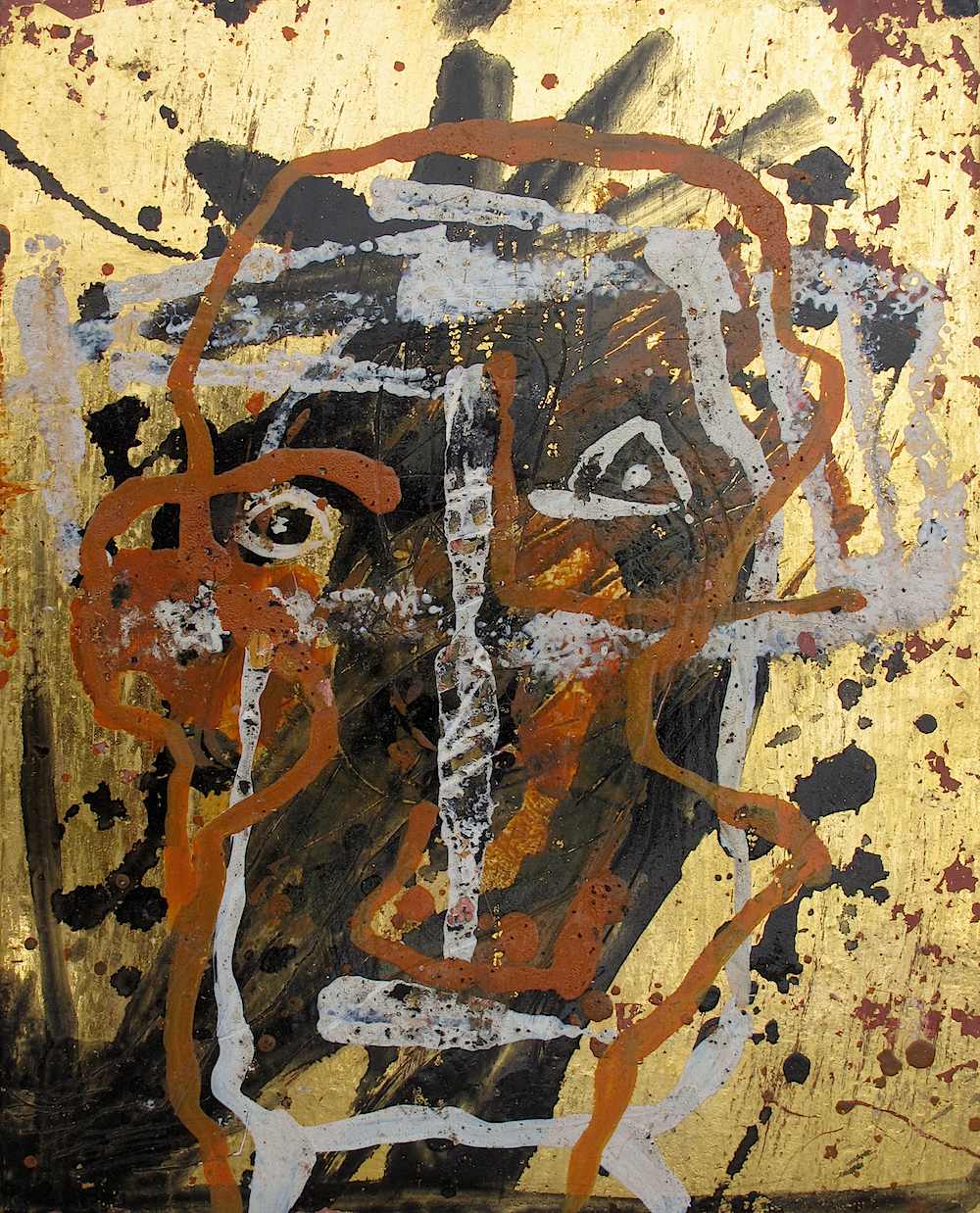
Santiago spent roughly a decade working between the United States and Europe, including a stay in Paris. Catalog notes from the Mexico City auction house Morton Subastas describe Antonio Saura and Basquiat as two decisive influences from those years, which explains the scraped, aggressive surfaces and heavy black contours of his mature painting.
He came back to Oaxaca around 2001. Accounts differ slightly on the sequence: the Associated Press obituary places the shock of the empty village in 2001, after a three-year stay in Paris, while other tellings date his decision to act to 2003. What is consistent is that the working-age men and women of Teococuilco had left, and that grandparents and children remained.
2501 Migrantes: How the Project Actually Worked
Before he began sculpting, Santiago went to the border himself. In late 2002 he flew to Tijuana and hired a coyote, a paid human smuggler, to cross into the United States, so the work would come from experience rather than sympathy. He was detained and questioned, an episode he later cited as the reason his figures are naked: permanently exposed, permanently in the act of crossing.
The sculptures are unfired and fired clay figures at human scale. The AP reported each one at about 4 feet 4 inches tall and roughly 150 pounds, with no two figures alike, many faces modeled to register the wear of migrant life on both sides of the line. The forms borrow from pre-Hispanic ceramic traditions while keeping a deliberate anonymity, so that a viewer reads a crowd and an individual at the same time.
Financing an army of clay people is not a normal studio problem. Santiago worked with a grant from the Rockefeller Foundation and with commercial support from his galleries, including Galería Quetzalli in Oaxaca City and, in the United States, Bond Latin Gallery, which had represented him since his twenties. The series took about six years of continuous production and first went on view in Teococuilco in 2007.
Why the Number Is 2,501
Santiago gave two explanations over the years, and it is worth being honest that they do not fully agree. One version ties 2,500 to the crosses he saw fixed to the border fence, one for each person who had died trying to cross. Another ties it to the scale of emigration from his own town.
The extra figure is the part everyone remembers. The 2,501st stands for the next person who will risk the crossing anyway, so the count can never close.
Familias Migrantes
With the clay left over, Santiago began a second body of work, Familias Migrantes, arranging figures into family groups in which one member is turned toward the north while the others look back. A portion of that series has been installed in the central courtyard of the Museo Rufino Tamayo in Oaxaca City, with a few of the original migrantes watching from the upper level.
The Mexican writer Cristina Rivera Garza visited his studio and wrote about it in an essay collected in Dolerse: Textos desde un país herido (2011). Her account, available in English as 2501 Migrants by Alejandro Santiago, reads the figures as bodies caught in an "eternal gerund," always crossing, never arrived.
Painting, Printmaking and the Rest of the Work
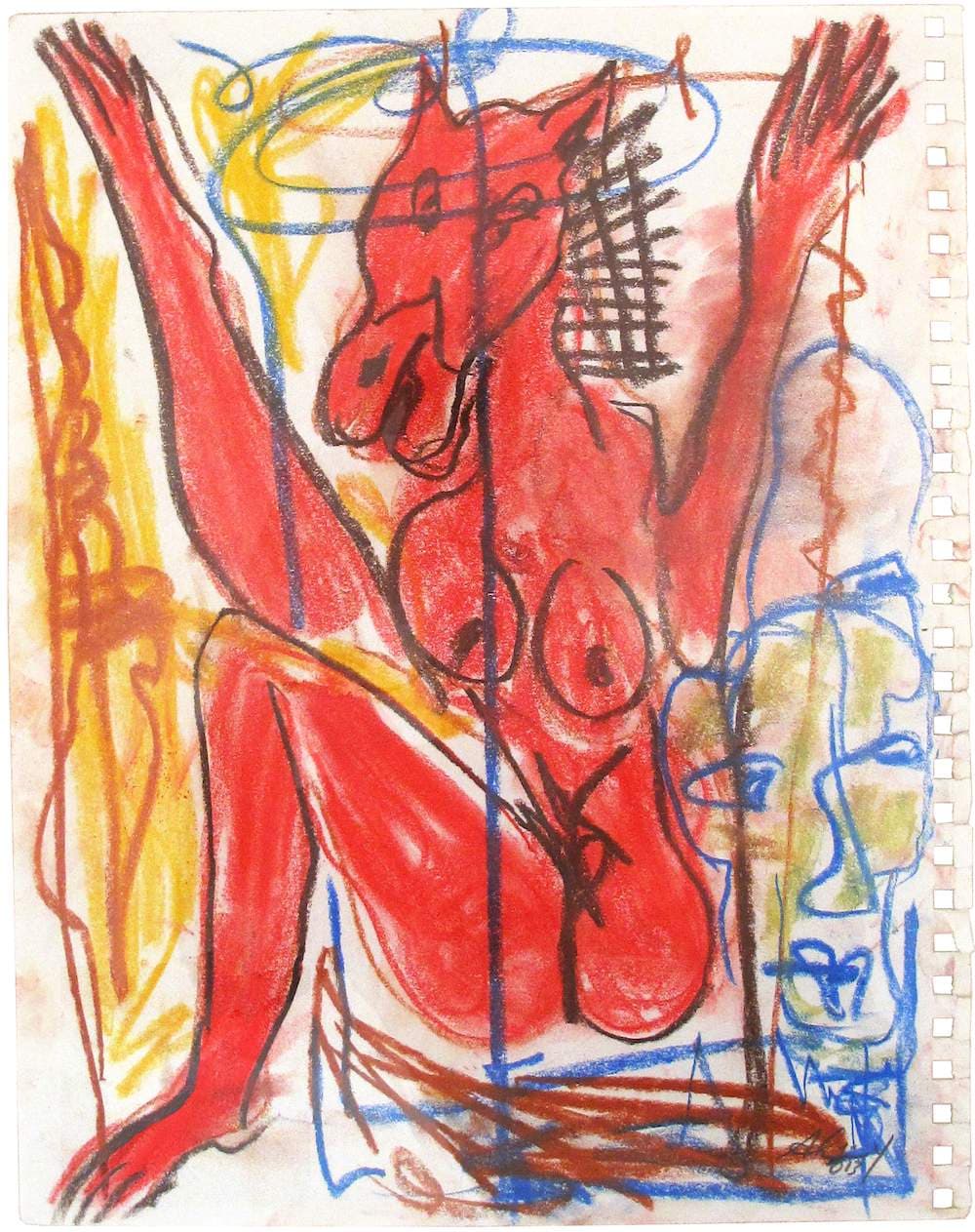
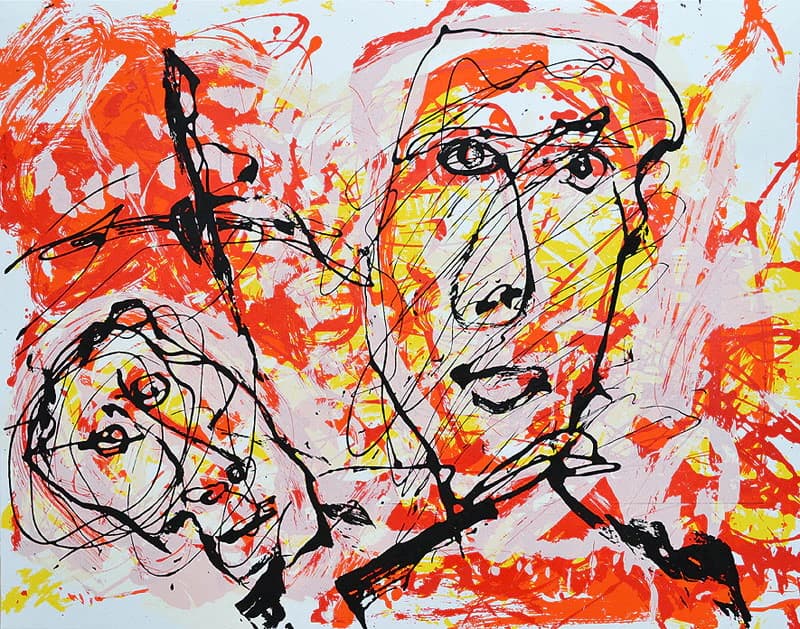
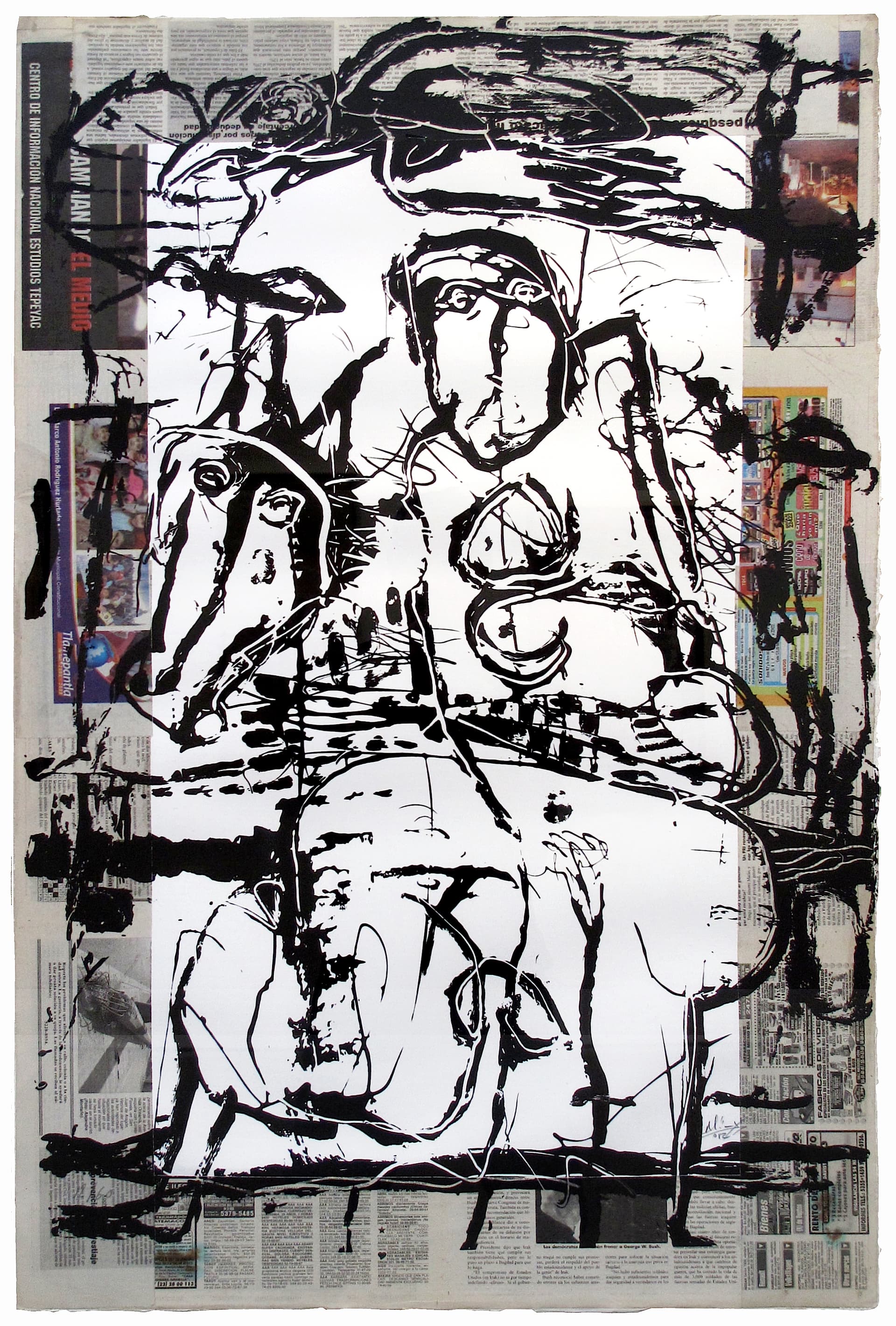
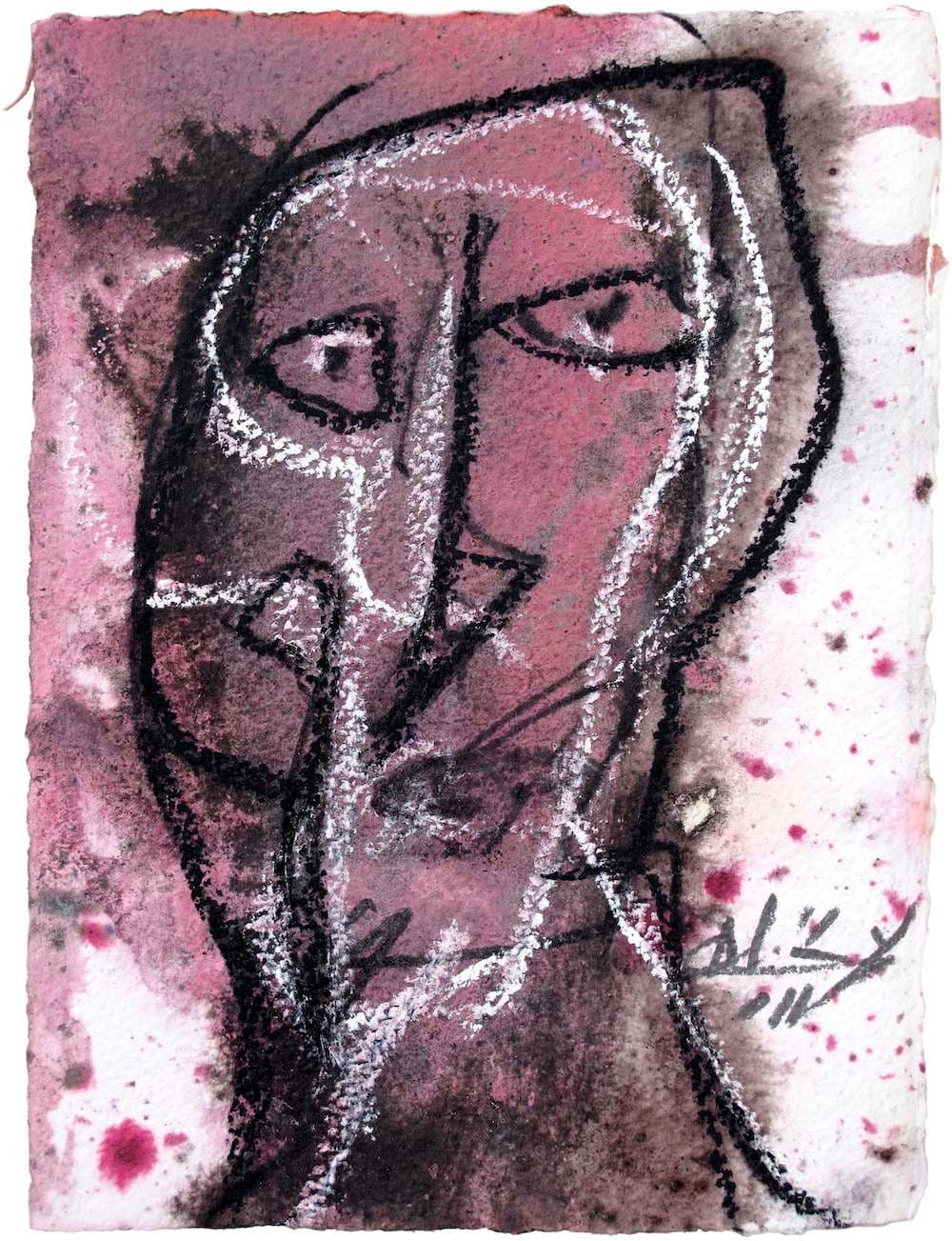
Reducing Alejandro Santiago to the migrantes misses most of his output. He painted in oil on canvas at large scale, made lithographs and screenprints, drew constantly, and worked in bronze and ceramic. Recurring motifs include masked or dissolving faces, couples, birds and skeletal figures, handled with the color intensity that outsiders label "Oaxacan school" and that he treated as a starting point rather than a formula.
His print portfolios are worth knowing about because they are the accessible end of his work. A signed 2010 screenprint from the portfolio Transparencias del incierto futuro actual, for example, has appeared at Morton Subastas at a fraction of the price of a canvas.
Where to See Alejandro Santiago's Work
Museo de Arte Contemporáneo de Oaxaca (MACO), Oaxaca City: groups of migrantes have been installed here, including figures placed along an interior balcony.
Museo Rufino Tamayo, Oaxaca City: the courtyard installation of Familias Migrantes.
Public and private collections in Mexico, the United States, France and several South American countries, according to Morton Subastas catalog research.
Two documentaries also survive as primary sources: 2501 Migrants: A Journey, directed by the Oaxacan filmmaker Yolanda Cruz, and Twenty Five Hundred & One, by Patricia Van Ryker, produced as the project's official documentary.
The Market: What Alejandro Santiago Costs Now
Most of his auction activity happens in Mexico City rather than New York, which is the single most useful thing a new buyer can know. Morton Subastas is the house that handles him most consistently, and its estimates are quoted in Mexican pesos, so a figure that looks startlingly low in a database aggregator is usually a peso estimate, not a dollar one.
Type of work | Typical size | Where it trades |
|---|---|---|
Signed screenprints, portfolio sheets | 50 x 70 cm and smaller | Morton Subastas, Oaxaca and Mexico City galleries |
Drawings, works on paper | 30 x 25 cm range | Mexican auction, secondary market |
Large oils on canvas | up to about 170 x 150 cm | Morton Subastas, private sale |
Clay migrantes and bronzes | life-size | Rare; mostly held by institutions and the estate |
Authenticity deserves attention. Santiago's family has verified individual works for sale: a large untitled 2010 oil offered by Morton Subastas carried a note thanking the artist's family for confirming it in September 2021. Ask for that kind of documentation, and check the sold price history before agreeing to a gallery figure. Available works and comparable Oaxacan artists can be browsed on Alejandro Santiago's artist page and across our artworks listings.
Why He Matters
Santiago made migration legible as a hole in a place rather than a number in a report. The work does not depict the crossing; it depicts the absence left behind, which is why standing among the figures unsettles people who have never thought about Oaxacan labor migration at all.
He died during the Guelaguetza festivities in July 2013, of a heart attack linked to long-standing diabetes, and Oaxaca held a public homage within days. The state's governor at the time, Gabino Cué, called the loss a blow to Oaxaca. The figures are still standing, which was the point.
Frequently Asked Questions
What is Alejandro Santiago best known for?
2501 Migrantes, a series of 2,501 life-size clay figures made to symbolically repopulate his hometown of Teococuilco de Marcos Pérez after most residents emigrated to the United States. It was first shown in the village in 2007 and remains his defining work.
Did Alejandro Santiago study with Rufino Tamayo?
He was among the first graduates of the Taller de Artes Plásticas Rufino Tamayo in Oaxaca City, the workshop Tamayo founded, and met Tamayo and Francisco Toledo there. Describing him as Tamayo's personal student overstates the relationship; the accurate claim is that he came out of Tamayo's workshop.
Are individual figures from 2501 Migrantes for sale?
Rarely. Much of the series stayed in Oaxaca and in institutional hands, and the clay is fragile and heavy, which limits circulation. Collectors are far more likely to find his paintings, drawings and prints.
Where can I see the sculptures today?
Groups have been on view at the Museo de Arte Contemporáneo de Oaxaca and in the courtyard of the Museo Rufino Tamayo in Oaxaca City. Displays rotate, so confirm with the museum before traveling, and check our events calendar for related exhibitions.
How do I verify a work by Alejandro Santiago?
Look for a signature and date, a clear ownership history, and written confirmation from the artist's family or estate, which has authenticated works consigned to Mexican auction houses. Buying through an established gallery or a recognized auction house is the safest route.