A New Way Through MASP
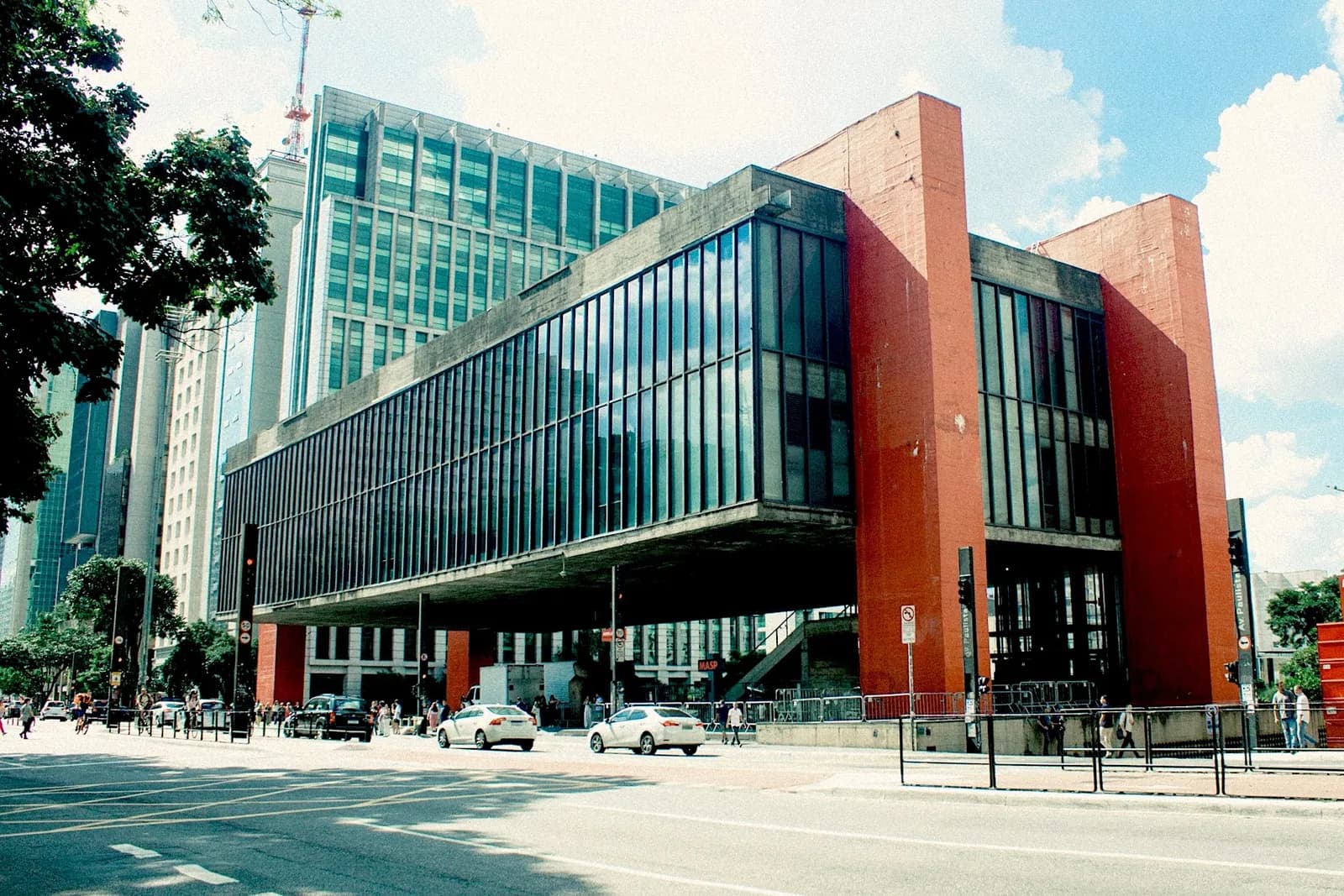
MASP, the Museu de Arte de São Paulo Assis Chateaubriand, has opened a 50-meter underground passageway that connects the museum's two buildings on Avenida Paulista, and it did so with an unusual flourish: the tunnel's walls are now a permanent, site-specific painting by Brazilian artist Beatriz Milhazes. The passage links the museum's original Lina Bo Bardi building, the red concrete landmark suspended above the avenue since 1968, to the Pietro Maria Bardi building, MASP's new 14-story annex that opened in March 2025. The MASP underground passageway had been under construction since 2023 and is described by the museum as the first structure of its scale inside a Latin American museum.
The corridor solves a practical problem (moving artworks and equipment safely between the two buildings) while doing something more ambitious: turning a utilitarian route into part of the visitor's experience. Anyone walking from one MASP building to the other now passes through what amounts to an immersive artwork, a striking example of how the museum has approached its recent expansion with an eye toward architecture and art working together rather than one simply housing the other.
Pietrolina: A Mural Named for MASP's Founders
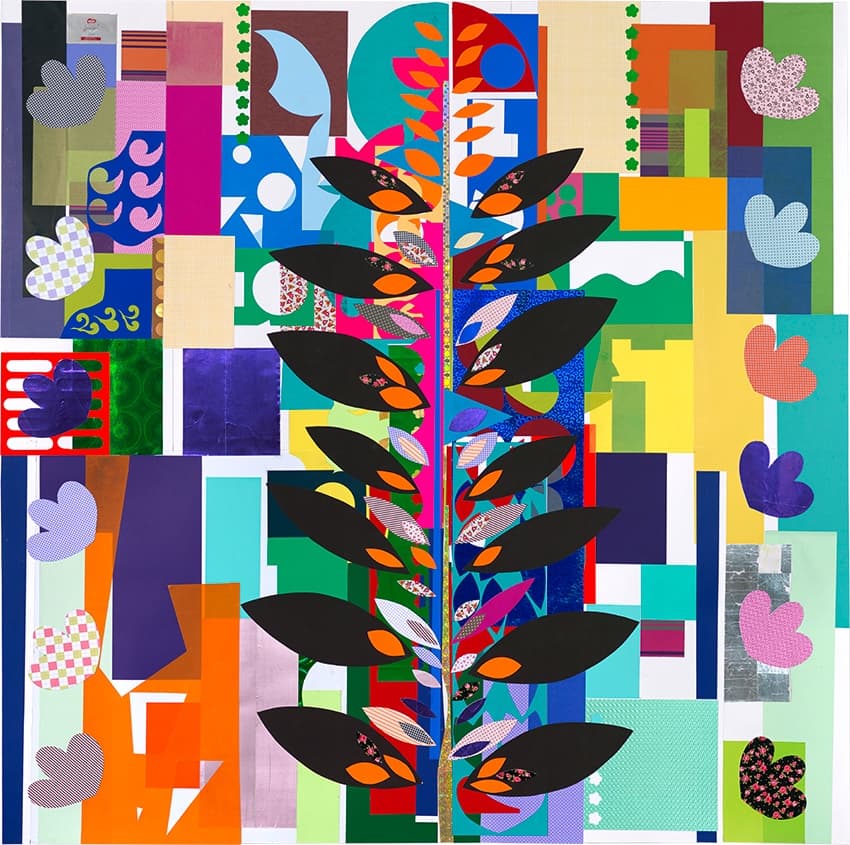
Milhazes titled the new piece "Pietrolina," a name she built by fusing Pietro Maria Bardi and Lina Bo Bardi, the couple who founded MASP and whose names already mark the museum's two buildings. The painting itself is large even by Milhazes's standards: it totals 98 meters across the passageway, made up of a 60-meter painted section that runs parallel to reflective elements installed along a 38-meter wall.
The project took shape over more than two years of planning, though the physical execution of the painting on site took roughly three months to complete. The result leans hard into the visual language Milhazes has spent four decades refining: dense arrangements of arabesques, stripes, organic curves and floral motifs in saturated color, arranged with a rhythm that recalls a Carnival parade moving through the space. Above ground, the passageway sits beneath the concrete and traffic noise of Avenida Paulista, one of São Paulo's busiest streets; below, visitors get a quieter, more contemplative encounter with color and pattern before re-emerging into the museum.
MASP's artistic director, Adriano Pedrosa, invited Milhazes to take on the commission, and the artist has described the project as a rare and demanding opportunity. Speaking with Forbes Brasil ahead of the opening, she called it "an unrefusable invitation, it's a sensational project, and it wasn't very simple". Pietrolina is a permanent installation and, according to the museum, the largest work the Rio de Janeiro-born artist has produced to date.
Why the Name Matters
For longtime visitors, the reference in the title is not incidental. Pietro Maria Bardi and Lina Bo Bardi shaped MASP from its founding: Lina Bo Bardi designed the original museum building that still defines the Avenida Paulista skyline, while Pietro Maria Bardi served as the museum's first director and helped assemble its founding collection. Naming the corridor that finally, physically joins the museum's two structures after both of them gives the passageway a symbolic weight that goes beyond decoration.
Who Is Beatriz Milhazes
Beatriz Milhazes, born in 1960 in Rio de Janeiro, is one of Brazil's most internationally recognized contemporary painters, and she still lives and works in the city where she was born. She studied Social Communication before training in art at the Escola de Artes Visuais do Parque Lage in Rio de Janeiro from 1980 to 1983, later teaching and developing painting programs there between 1986 and 1996. She emerged alongside a generation of Brazilian painters in the 1980s who renewed painting in Brazil while engaging critically with international modernism.
Her visual vocabulary draws on Rio's architecture, tropical flora, textiles, folk traditions and Carnival, along with the influence of artists such as Henri Matisse, Piet Mondrian and Bridget Riley. Working primarily in painting but also across collage, printmaking and sculpture, she has developed a distinctive transfer technique, painting motifs on plastic and then collaging them onto canvas. Large paintings from the 2000s, including works like Meu Limão (2000), helped cement her market presence and her reputation as one of Brazil's leading contemporary artists. Her work has been the subject of institutional attention abroad as well, including a collection focus at the Guggenheim built around her long-running engagement with Carnival's visual traditions.
Readers who want to explore more of her practice, or the work of her contemporaries, can browse profiles in our artists directory.
The Pietro Maria Bardi Building and MASP's Expansion
The passageway is the final piece of a larger expansion that has reshaped MASP's presence on Avenida Paulista. The Pietro Maria Bardi building, designed by the São Paulo firm Metro Arquitetos Associados under architects Martin Corullon and Gustavo Cedroni, opened to the public on March 28, 2025. Rather than compete with Lina Bo Bardi's iconic red structure, the new building was conceived to sit quietly beside it: a black aluminum-clad tower whose perforated, pleated facade controls sunlight and heat gain while echoing the scale of the original museum. Inside, materials such as steel, concrete, terrazzo and black wood flooring were chosen to stay in dialogue with Bo Bardi's original design language rather than break from it.
With the underground passageway now open, the two buildings function as a single connected complex for the first time, letting curators move works and installations between spaces without exposing them to the street, and giving visitors a continuous, uninterrupted route through the museum. Coverage from CNN Brasil described the corridor as establishing MASP more firmly as a cultural complex in the middle of Avenida Paulista, a description that captures how much the museum's footprint has grown over the past two years.
Visiting Pietrolina
Pietrolina opened to the public on Friday, September 11, 2026, and visitors can now walk through it as part of a regular MASP visit, moving between the Lina Bo Bardi and Pietro Maria Bardi buildings without leaving the museum. There is no separate ticket for the passageway; it is included in general museum admission. MASP offers free entry every Tuesday, and on Fridays after 6 p.m., which is a practical way to see both the permanent collection and the new mural without an entrance fee.
Collectors and gallery visitors planning a trip around the opening can check current exhibitions and programming through MASP's own listings, and follow related coverage in our editorial section or upcoming museum programming under events. Those curious about acquiring works in a similar geometric-abstract tradition can also browse listings under artworks.
Frequently Asked Questions
What is Pietrolina, and why is it called that? Pietrolina is the immersive mural Beatriz Milhazes created for MASP's new underground passageway. The name combines Pietro Maria Bardi and Lina Bo Bardi, the founding couple of MASP, honoring the two figures whose names already mark the museum's two connected buildings.
How big is the artwork? The mural spans 98 meters in total: a 60-meter painted section runs parallel to reflective elements set into a 38-meter wall inside the 50-meter passageway.
Which two MASP buildings does the passageway connect? It links the original Lina Bo Bardi building, the museum's landmark suspended structure on Avenida Paulista, to the Pietro Maria Bardi building, the museum's newer annex designed by Metro Arquitetos Associados that opened in March 2025.
Is Pietrolina a temporary installation? No. MASP has described the work as permanent, meaning it will remain part of the museum's fabric rather than being removed after a limited run, much like the buildings it connects.
Do I need a separate ticket to see the passageway? No separate ticket is required. The passageway is part of the general visitor route through MASP, and it is covered by regular museum admission, including the museum's free-entry hours on Tuesdays and Friday evenings after 6 p.m.