Most original paintings, drawings, prints and sculptures from Mexico, Central America and South America cross the US border without paying a cent in import duty. That surprises a lot of first-time buyers, who assume "importing art" automatically means a tariff bill. The real costs of importing Latin American art come almost entirely from shipping, crating, insurance and, above a certain value, customs-broker paperwork, not from taxes on the artwork itself.
This guide breaks down exactly what US Customs and Border Protection (CBP) charges (and doesn't charge), how the 2025 tariff changes affected art specifically, and what shipping and handling realistically cost depending on where the piece is coming from.
The Short Answer: Most Original Art Enters Duty-Free
Under the Harmonized Tariff Schedule (HTS), fine art gets its own chapter, and it's a generous one. Original works of art, including paintings, drawings, pastels and collages, with or without their frames, are duty-free under Chapter 97 in the Harmonized Tariff Schedule. The same treatment extends beyond paintings: original engravings, prints and lithographs are duty free under heading 9702, and sculptures of any material are duty free under heading 9703.
This is not a special break for Latin American work. It applies to original art from any country, whether it's an oil painting from Oaxaca, a bronze from Buenos Aires, or a print from Bogotá. The relevant HTS codes collectors and brokers use are 9701 (paintings, drawings, pastels), 9702 (original engravings, prints, lithographs) and 9703 (original sculpture and statuary).
Genuine antiques get similar treatment through a different door. For CBP purposes, an antique must be over 100 years of age at the time of importation, and antiques classified under Chapter 9706 are duty-free, provided the importer has proof of the item's age. That documentation matters: without a bill of sale, provenance letter, or other proof of manufacture date, CBP has no reason to treat a colonial-era retablo any differently than a modern reproduction.
How the 2025 Tariff Changes Affected (and Didn't Affect) Art
Throughout 2025, new US tariffs reshaped costs for many imported goods, including a baseline tariff and country-specific "reciprocal" rates. Collectors reasonably worried this would sweep in fine art. It mostly didn't. Original fine art, including paintings, drawings, prints, and sculpture, remains duty-free when imported, continuing a long-standing US policy of exempting cultural works understood as expressive and informational.
The exemption is narrower than it sounds, though. It covers fine art and true antiques, not decorative or functional objects that merely happen to be old or handmade. Antiques, decorative arts, and functional art, which can include most antique furniture, are now subject to a new set of US import tariffs. Decorative objects with a functional component, and furniture and lamps, are also subject to tariffs even when aesthetically significant or from notable historical periods. This matters for Latin American collectors specifically, because colonial furniture, carved chests, decorative silver and lamps sourced alongside a painting purchase can now carry duty even though the painting itself does not. Read the full breakdown at Cultural Property News before assuming an entire shipment is duty-free.
Mexico and the USMCA Wrinkle
Because original fine art is already duty-free under HTS Chapter 97 regardless of origin, the US-Mexico-Canada Agreement (USMCA) rarely changes anything for a painting or sculpture bought in Mexico. Where USMCA does matter is for the "gray area" items mentioned above, colonial furniture, decorative ceramics, framed mirrors and similar pieces that fell outside the fine-art exemption. USMCA-qualifying goods are exempt from the newer IEEPA tariffs, while non-qualifying goods from Mexico pay the IEEPA rate, typically 25 percent, in addition to any standard duty. If you're importing anything beyond fine art from a Mexican seller, ask whether a USMCA certificate of origin applies.
What You Actually Pay: A Cost Breakdown
1. Import Duty: Usually $0
For a correctly classified original painting, drawing, print or sculpture, duty is zero no matter whether it ships from Mexico City, San José, Lima, or Buenos Aires.
2. The $2,500 Formal Entry Threshold
Value, not duty, is what triggers extra paperwork. For shipments valued over $2,500, a formal entry through a customs broker and an ACE manifest are required. Below that threshold, most shipments clear as an informal entry, meaning less documentation and typically no broker required, though you should still keep a commercial invoice describing the artist, medium, dimensions, and year. Above $2,500, expect to hire a licensed customs broker, who will file CBP Form 7501 on your behalf.
3. The Merchandise Processing Fee
Even when duty is zero, formal entries carry CBP's Merchandise Processing Fee (MPF), a small, ad valorem fee with a set minimum and maximum that CBP adjusts periodically. It's not a tariff on the art; it's a processing charge for the entry itself. Ask your broker for the current rate at the time you ship, since it does change.
4. Customs Broker Fees
For formal entries, brokers typically charge a flat filing fee on top of any government fees. This is a service fee, not a government charge, so it varies by broker and shipment complexity; get a quote before committing to a shipping route.
5. Shipping and Crating
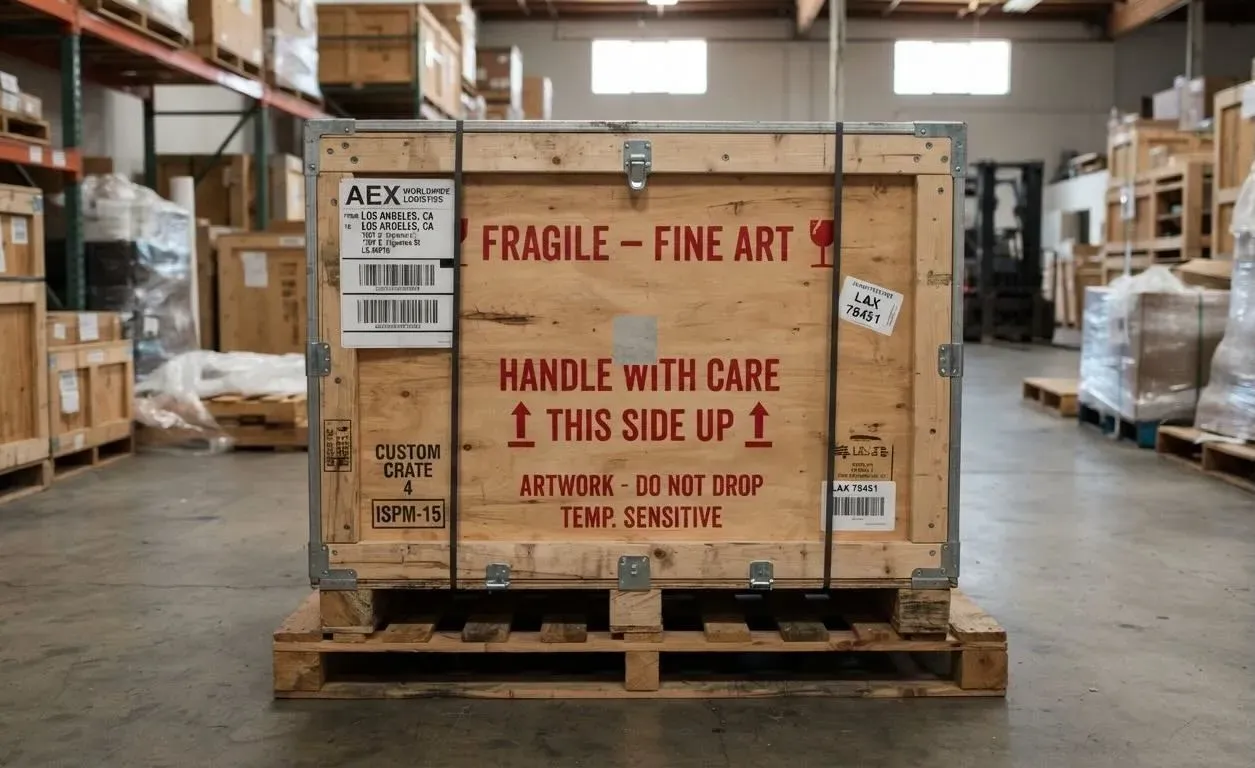
This is where most of the real cost lives. Fine art logistics companies price by size, weight, distance, and level of handling, and the range is wide. Shipping a large painting typically costs between $150 and $2,000 domestically, while international shipments of the same size can range from $500 to $2,500, and premium white-glove handling with full insurance and climate control can push costs to $3,000 or more. Custom crating adds its own line item: some paintings require wood crates, which can cost $100 to $500 per piece. Full white-glove service, where handlers pack, transport, and install the work, runs higher still: with crating included, white-glove service typically costs between $900 and $1,000, while packing the piece yourself and using consolidated freight can bring costs as low as $375.
Geography changes the math. Shipments from Mexico can often move by truck across a land border, which tends to be cheaper and faster than air freight from South America. Shipments from Central and South America almost always move by air (fast, more expensive) or ocean freight in a crate (slower, cheaper per piece for larger works). As a rough planning guide:
Artwork size | Typical shipping range (international, crated) |
|---|---|
Small, unframed work (under 18 inches) | $75–$300 |
Medium framed painting (roughly 24x36 in.) | $300–$900 |
Large painting or crated sculpture | $900–$3,000+ |
Treat these as planning ranges, not quotes. Always get a written estimate from a fine art shipper that lists crating, freight, and any door-to-door handling separately.
6. Insurance
Expect to pay about 1 percent to 3 percent of the artwork's value for transit insurance. For a $10,000 painting, that's roughly $100 to $300, money well spent given how fragile canvas, ceramics and works on paper are in transit.
7. State Sales or Use Tax
This one is not a customs charge, but collectors often confuse it with import duty. If you buy from a US gallery, sales tax is usually collected at the point of sale. If you buy directly from an artist or foreign gallery and import it yourself, many states expect you to self-report and pay a use tax on the purchase price, separate from anything CBP collects. Rules and rates vary by state, so check with your state's department of revenue or a tax advisor before assuming you owe nothing.
Special Cases That Add Real Cost or Risk
CITES-protected materials. The United States is a party to the Convention on International Trade in Endangered Species (CITES), a treaty regulating trade in endangered species of wildlife, plants, and their products, and international trade in CITES-listed species is illegal without a permit. Items prohibited without a permit include articles made from whale teeth, ivory, tortoise shell, reptile skin, fur, coral, and bird parts. This matters directly for Latin American folk art and colonial religious pieces that sometimes incorporate feather work, tortoiseshell inlay, coral, or restricted tropical hardwoods. A permit to import or export CITES-listed species is issued by the Office of Management Authority of the US Fish and Wildlife Service. Check the CBP guidance on importing wildlife and protected materials before buying anything that incorporates animal or exotic-wood components.
Pre-Columbian and archaeological pieces. Many Latin American countries treat pre-Columbian archaeological objects and certain historic religious art as national cultural patrimony, meaning they cannot legally leave the country without an export permit. Cultural property and other articles that were stolen, smuggled into the United States, or not declared to CBP are subject to seizure and forfeiture under federal law. If a piece looks pre-Hispanic or archaeological, ask the seller for documented, legal export history before you buy, not after it's already shipped.
A Realistic Example
Say you buy a $9,000 original oil painting from a gallery in Mexico City. Duty: $0, because it's classified under HTS 9701. Because the value exceeds $2,500, you'll need a formal entry: a modest MPF charge, plus a broker's filing fee. Trucked across the border and delivered by a specialized art carrier, crating and shipping might run $400 to $900. Insurance in transit adds roughly $90 to $270. Total overhead, excluding any state use tax, typically lands somewhere between 6 percent and 15 percent of the purchase price, almost none of it duty.
A comparable $9,000 sculpture shipped by air from Lima or Buenos Aires will usually cost more on the freight side, since ocean crating for one piece is rarely economical and air freight is priced by weight and volume, but the duty and broker-fee math stays the same.
Step-by-Step Checklist for Collectors
Get a detailed invoice from the seller listing artist name, title, medium, dimensions, and year.
Confirm the correct HTS code (9701, 9702 or 9703 for most original work; 9706 for qualifying antiques).
Check the total shipment value against the $2,500 formal-entry threshold.
Hire a licensed customs broker if you're above that threshold, or if the piece involves protected materials or possible cultural-patrimony issues.
Get shipping quotes from at least two fine art logistics providers, itemized by crating, freight, and insurance.
Ask the seller for export documentation if the piece is more than roughly 50 to 100 years old or incorporates feathers, shell, coral, or exotic wood.
Confirm your state's use-tax rules if you're buying directly from a foreign gallery or artist.
Once your piece has cleared, you can browse verified galleries and artworks currently available on the site to compare what similar pieces are selling for, or read more collector guidance in our editorial section.
Frequently Asked Questions
Do I have to pay customs duty on a painting bought in Mexico, Peru or Brazil? Almost always no, as long as it's an original painting, drawing, print or sculpture correctly classified under HTS Chapter 97. Reproductions, decorative objects and antique furniture are different and may be dutiable.
What happens if my shipment is worth less than $2,500? It generally clears as an informal entry, which means less paperwork and often no requirement to hire a customs broker, though you should still keep a clear invoice describing the work.
Are antiques from Latin America duty-free too? Yes, if they qualify as antiques for customs purposes: genuinely over 100 years old with documented proof. Decorative or functional antique items like furniture and lamps have become subject to newer tariffs even when old, so check the classification carefully.
Do I need a permit for folk art with feathers, shell or exotic wood? Possibly. If a piece incorporates materials covered by CITES, such as tortoiseshell,