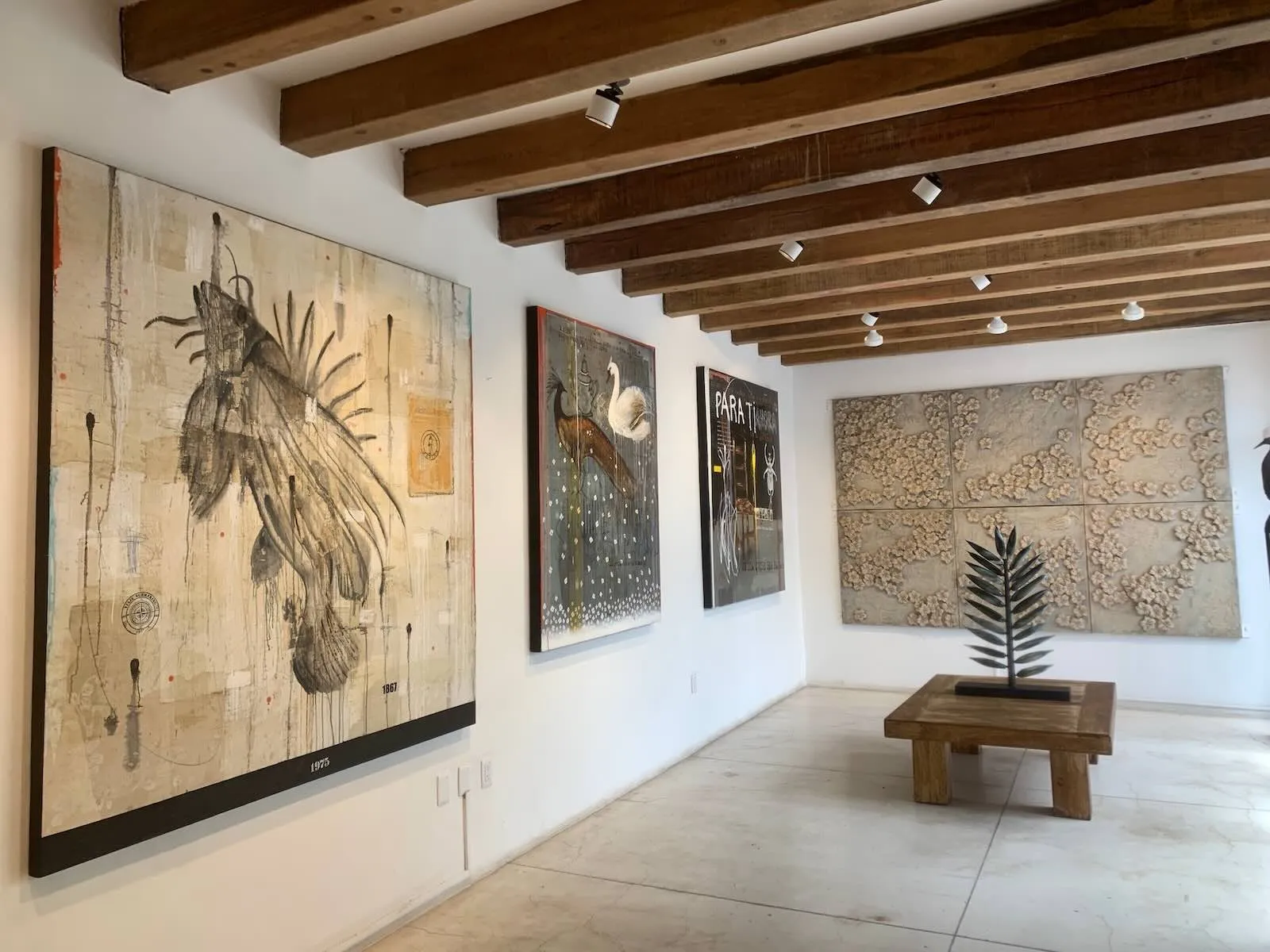
Amador Montes is one of the most recognizable voices in contemporary Mexican art, and his connection to Oaxaca is central to how many viewers experience his work. Born in Huajuapan de León, Oaxaca, Montes belongs to a generation of Latin American artists whose practice is deeply rooted in place while remaining fully contemporary in language and intent. His paintings, drawings, and mixed-media works often balance figuration and abstraction, creating images that feel intimate, lyrical, and carefully unresolved.
For collectors, curators, and readers following Latin American art, Montes offers a strong example of how regional identity can shape a practice without limiting it. Oaxaca is not simply a biographical detail in his story; it is part of the visual and emotional structure of the work. The land, light, memory, and cultural density associated with the region help define the atmosphere of his compositions.
Why Amador Montes matters in contemporary Mexican art
Montes has built a reputation through a body of work that is visually immediate but formally nuanced. His images often suggest human presence, landscape, or symbolic objects without reducing them to straightforward narrative. That ambiguity is one reason his work resonates with both experienced collectors and new viewers.
In the broader context of Mexican art, Montes occupies an interesting position. He is not tied to a single school or rigid aesthetic program. Instead, his work reflects a contemporary sensibility shaped by drawing, painting, and an attention to material surfaces. That flexibility allows his practice to speak across themes that matter in Latin American art today: identity, memory, place, and the persistence of cultural imagery.
Collectors often respond to artists who can maintain consistency without repetition. Montes has done that by developing a recognizable visual language while continuing to refine scale, texture, and mood.
Oaxaca as a visual and cultural reference
Oaxaca has long been one of the most important cultural centers in Mexico, with deep traditions in craft, painting, printmaking, and communal artistic life. For an artist like Montes, the region is not only geographic but also cultural and emotional. The state’s visual traditions, landscape, and local atmosphere help frame how his work is seen.
This matters because many contemporary artists from Oaxaca navigate between local memory and international exhibition contexts. Montes is compelling precisely because his work feels grounded in the specificity of his origin while remaining legible in contemporary galleries and collections. His paintings do not present Oaxaca as a postcard image. Instead, they suggest the lived complexity of place: fragments of form, symbolic resonance, and a quiet intensity that rewards close viewing.
For readers researching Latin American artists from Oaxaca, Montes is part of a wider conversation that includes artists who work across painting, sculpture, drawing, and new media while maintaining strong ties to regional identity. If you are exploring that context further, see related coverage of Mexican artists.
Style, materials, and visual language
One of the strengths of Montes’s work is the way it uses restraint. Rather than relying on overt spectacle, many of his compositions build meaning through softened edges, layered surfaces, and carefully modulated color. This creates a sense of depth that is emotional as much as formal.
Figure and abstraction
Montes often moves between recognizable forms and near-abstraction. A figure may appear partially dissolved, or a composition may hint at an object without naming it directly. This approach invites interpretation, but it also prevents the work from becoming overly literal. The result is a painting that feels open-ended and contemporary.
Surface and atmosphere
Collectors should pay close attention to surface handling in Montes’s work. Whether the medium is paint, drawing media, or a mixed approach, the tactile quality of the image matters. Layering, transparency, and variation in mark-making contribute to the emotional tone. In many cases, the atmosphere of the work is as significant as the subject matter.
Color and restraint
Montes’s palette often supports quiet tension rather than loud contrast. Earth tones, muted accents, and controlled transitions help create a sense of intimacy. For curators and private collectors, this makes his work adaptable to both minimalist and richly textured interiors, while still retaining a distinct identity.
How to read an Amador Montes work
If you are encountering Amador Montes for the first time, begin with the question of what the work withholds as much as what it shows. His images tend to resist instant explanation. That is part of their value.
Look first at composition: where does the eye enter, and what is left unresolved? Then study the surface. Does the artist build the image in layers or allow marks to remain visible? Finally, consider the emotional register. Montes’s work often produces a sense of quiet concentration rather than dramatic narrative, and that controlled mood is central to its impact.
This reading method is useful in Latin American art more broadly. Many contemporary artists from the region work in ways that blend memory, symbolism, and material experimentation. A successful interpretation depends on close looking, not just thematic labeling.
Collecting and exhibiting Montes
From a collecting perspective, Montes is appealing because his work offers both aesthetic clarity and conceptual depth. That combination matters in contemporary art markets, where collectors increasingly look for artists with a coherent practice and strong regional significance.
When evaluating a work by Montes, consider the following:
Provenance and exhibition history
As with any serious purchase, ask for clear documentation. Exhibition records, gallery history, and publication references help establish context and support long-term value.
Medium and condition
Because surface and material handling are central to his practice, condition is especially important. Examine the work carefully for signs of damage, restoration, or deterioration that could affect both appearance and value.
Scale and placement
Montes’s work can read differently depending on size. Smaller pieces may feel intimate and meditative, while larger works can create a stronger architectural presence. Think about how the work will function in relation to light, wall color, and neighboring pieces.
If you are building a collection focused on regional Latin American art, Montes can sit effectively alongside artists working in contemporary Mexican art and Oaxacan artists. These groupings help create a more coherent curatorial narrative across a private or institutional collection.
Why Amador Montes remains relevant
Amador Montes matters because he demonstrates how an artist can remain rooted in place while speaking to wider contemporary concerns. His connection to Oaxaca gives the work depth, but the art itself is not limited by regionalism. It is thoughtful, visually disciplined, and open to interpretation.
For audiences interested in Latin American art, that balance is especially important. Montes offers work that is accessible without being simple, specific without being closed, and contemporary without losing contact with cultural memory. In a crowded field, that clarity of voice is what gives his practice lasting relevance.
For more artist-focused coverage, explore Latin American artists and gallery events.