Victor Brecheret
Brazil, b. 1894, d. 1955
Victor Brecheret, born Vittorio Breheret on December 15, 1894, was an Italian-Brazilian sculptor whose work became closely associated with the rise of modern art in Brazil. Although born in Italy, Brecheret lived most of his life in São Paulo, where he developed his mature artistic identity and became one of the leading figures in Brazilian modernist sculpture. He died in 1955, leaving behind an important legacy as an artist who helped shape the visual language of modern sculpture in Brazil.
Brecheret’s life and career were marked by movement between cultures. His European birth and Brazilian life gave him a dual artistic foundation. São Paulo became his primary home and the central setting for his career, but Paris played a decisive role in his artistic formation. Like many ambitious artists of the early twentieth century, Brecheret traveled to Paris in his early twenties to study and absorb the new artistic currents transforming European sculpture. At the time, Paris was a major center of modernist experimentation, where artists were moving away from strict academic realism and toward simplified forms, expressive surfaces, and new ideas about structure, volume, and symbolic presence.
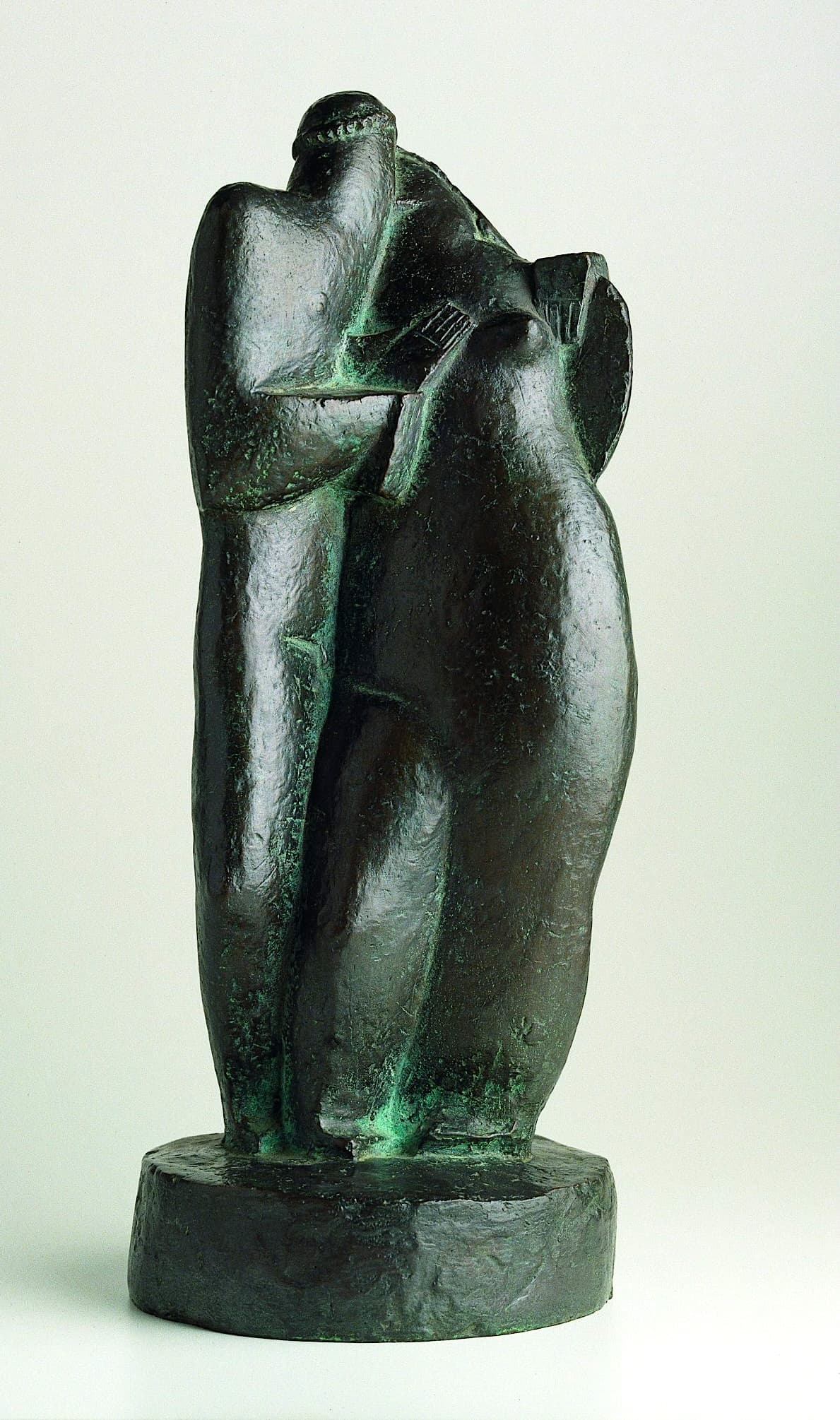
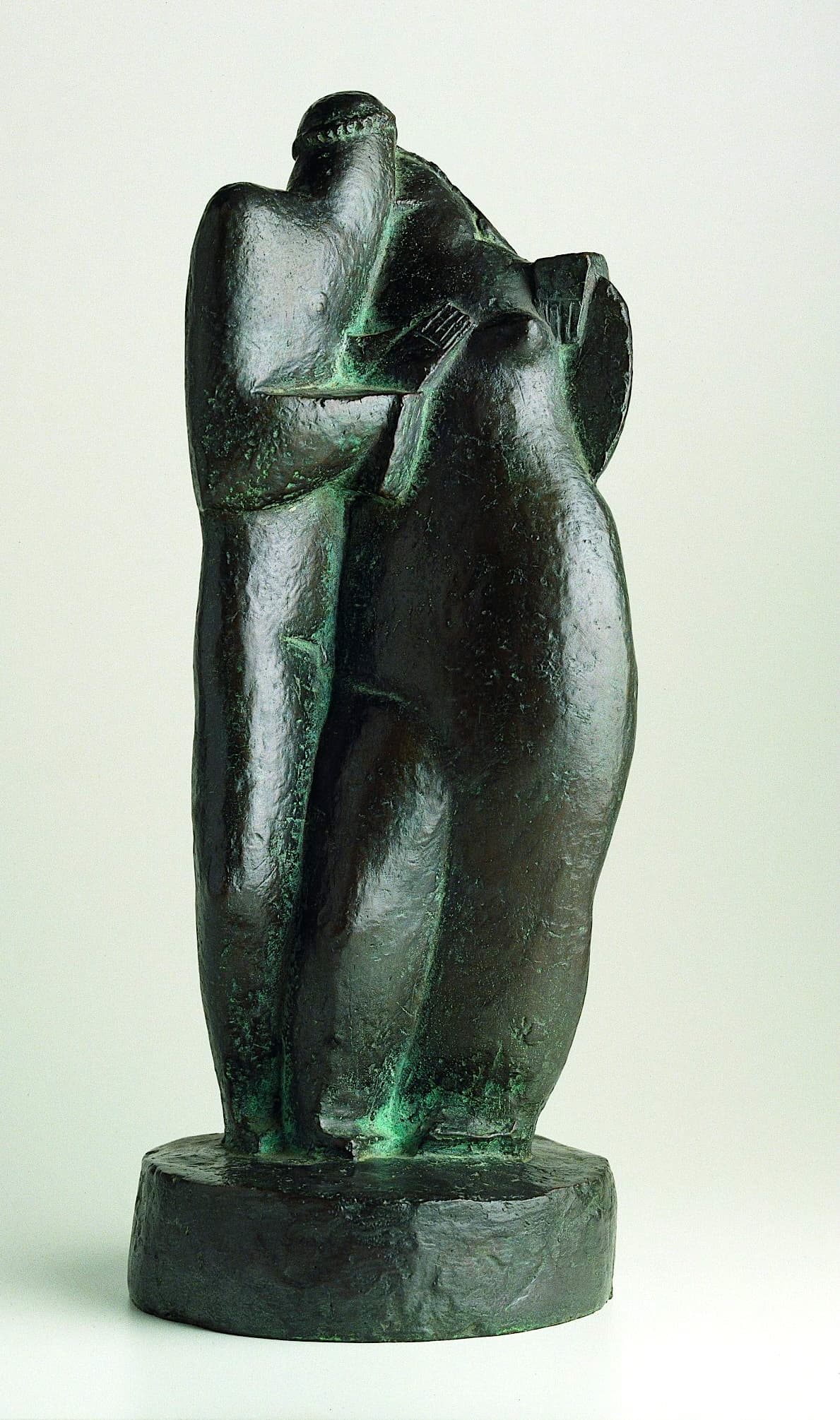
Brecheret’s sculpture reflects this modernist education, but it does not simply imitate European models. His work combines the techniques and formal innovations of European modernist sculpture with references to Brazil, particularly through the physical qualities of his human figures and through motifs connected to Brazilian folk art. This combination gave his art a distinctive character. His figures often possess a sculptural solidity and stylized force that connect them to modernist principles, while also suggesting a search for a specifically Brazilian identity within the language of modern art.
The human figure was central to Brecheret’s work. He often treated the body not as a purely realistic subject, but as a form capable of carrying symbolic and emotional meaning. His figures could appear simplified, monumental, and highly composed, emphasizing rhythm, mass, and silhouette rather than fine anatomical detail. This approach allowed him to create works that felt both ancient and modern, connected to classical and religious traditions while also participating in the new sculptural language of the twentieth century.
Many of Brecheret’s subjects came from the Bible or classical mythology. These themes gave his work access to universal narratives of sacrifice, creation, heroism, suffering, and transformation. At the same time, his use of Brazilian visual references prevented his work from becoming detached from place. By joining biblical and mythological subjects with modernist form and Brazilian cultural elements, Brecheret created sculpture that moved between the universal and the local. His art belonged to an international modernist conversation, but it also helped define how modernism could take root in Brazil.
Brecheret’s importance lies in this synthesis. He was not only a sculptor trained in European techniques, and he was not only an artist interested in national identity. He was a bridge between those worlds. His work showed that Brazilian modern art could be sophisticated, formally ambitious, and internationally aware while still drawing strength from local culture, folk motifs, and the physical presence of Brazilian life.
Victor Brecheret remains an important figure in the history of Brazilian sculpture. His career reflects the broader transformation of Latin American art in the twentieth century, when artists adapted modernist ideas to their own cultural realities. Through his figures, materials, and themes, Brecheret helped establish a sculptural language that was modern, symbolic, and deeply connected to Brazil.
Represented By
Artworks by Victor Brecheret