Vicente do Rego Monteiro
Brazil, b. 1899, d. 1970
Vicente do Rego Monteiro (December 19, 1899 – June 5, 1970) was a Brazilian painter, illustrator, poet, and designer whose distinctive style combined European modernism with imagery inspired by Indigenous Brazilian cultures. He became an important figure in the development of Brazilian modern art during the early twentieth century.
Born in Recife, Pernambuco, into an artistic family, Rego Monteiro moved to Paris while still young and studied at institutions including the Académie Julian. Exposure to Cubism, Art Deco, and other European avant-garde movements influenced his approach to simplified forms, geometry, and composition.
Returning to Brazil, he became associated with the country's emerging modernist movement. His work was included in the influential Semana de Arte Moderna held in São Paulo in 1922, although he was in Paris at the time. Throughout his career, he moved between Brazil and France, participating in artistic circles in both countries.
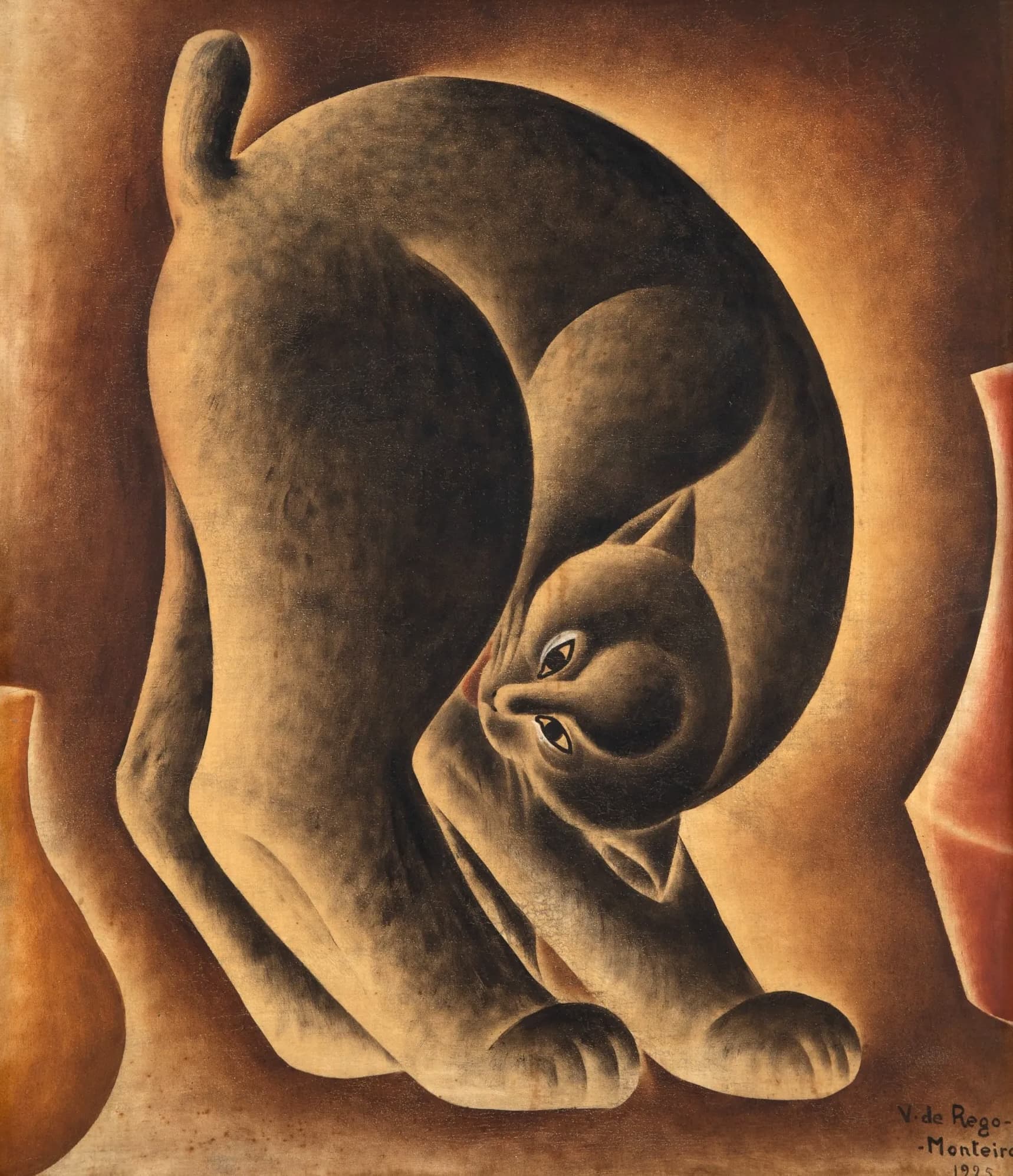
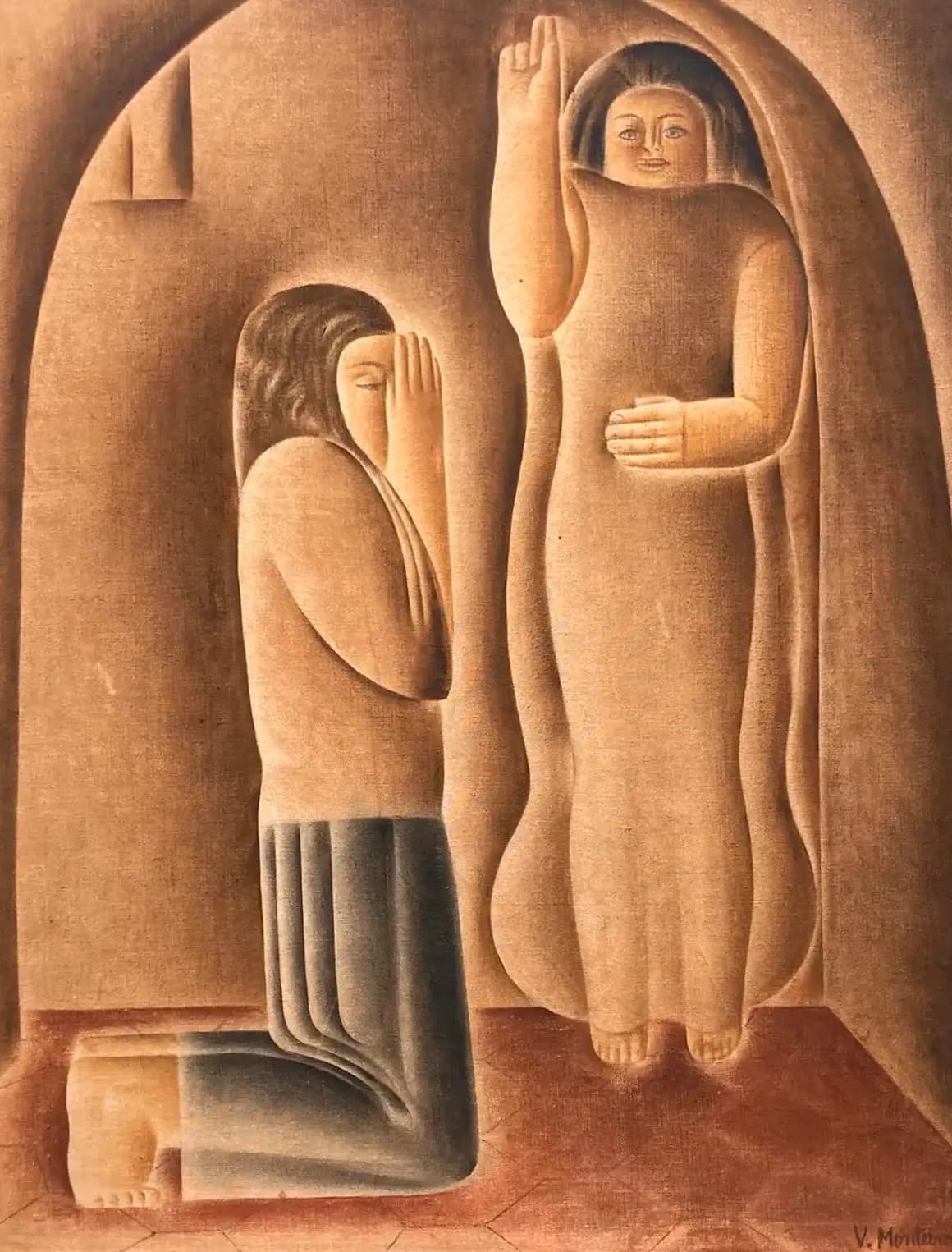
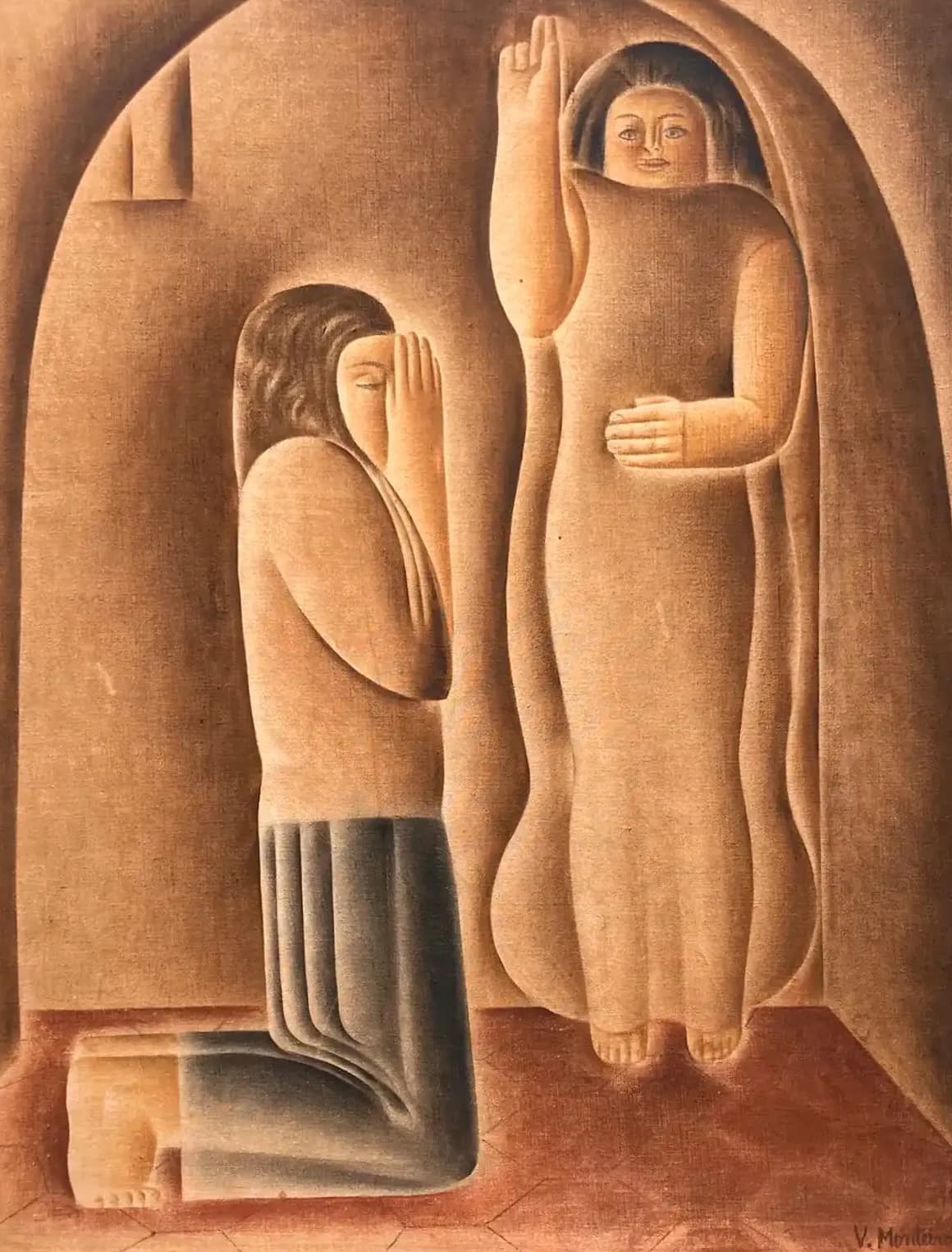
Rego Monteiro developed a highly recognizable visual language characterized by sculptural figures, flattened space, restrained color, and strong geometric organization. Indigenous myths, Amazonian traditions, religion, and Brazilian identity frequently appeared in his work. Rather than reproducing Indigenous imagery literally, he incorporated these influences into a modernist vocabulary that distinguished his paintings from those of many contemporaries.
Beyond painting, Rego Monteiro worked extensively with illustration, typography, publishing, and poetry. His ability to combine Brazilian cultural references with international modernism helped establish his place within the history of Latin American modern art.
Vicente do Rego Monteiro died in Recife in 1970 at the age of 70.
Represented By
Artworks by Vicente do Rego Monteiro