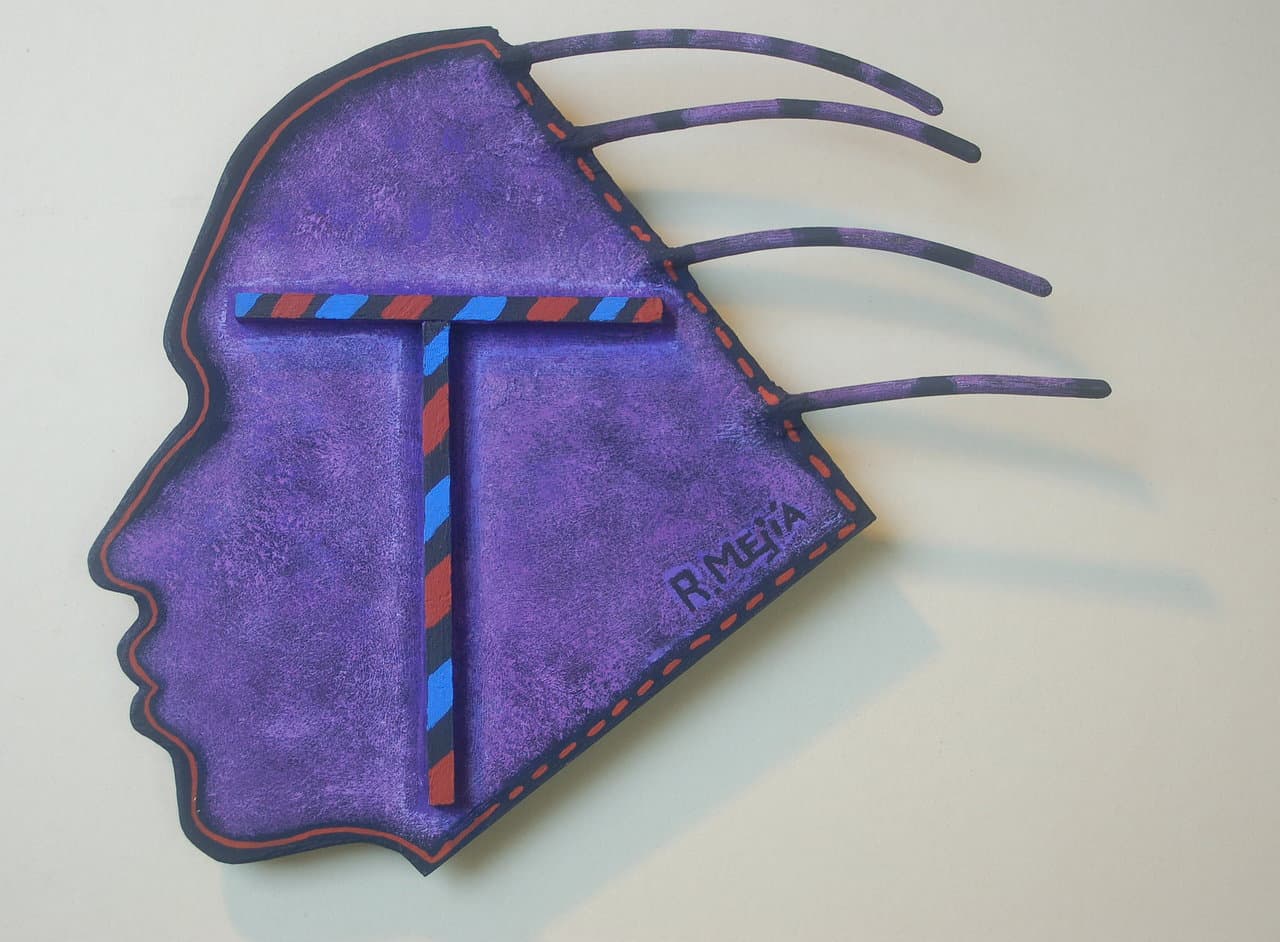
Radhames Mejia
Dominican Republic, b. 1960
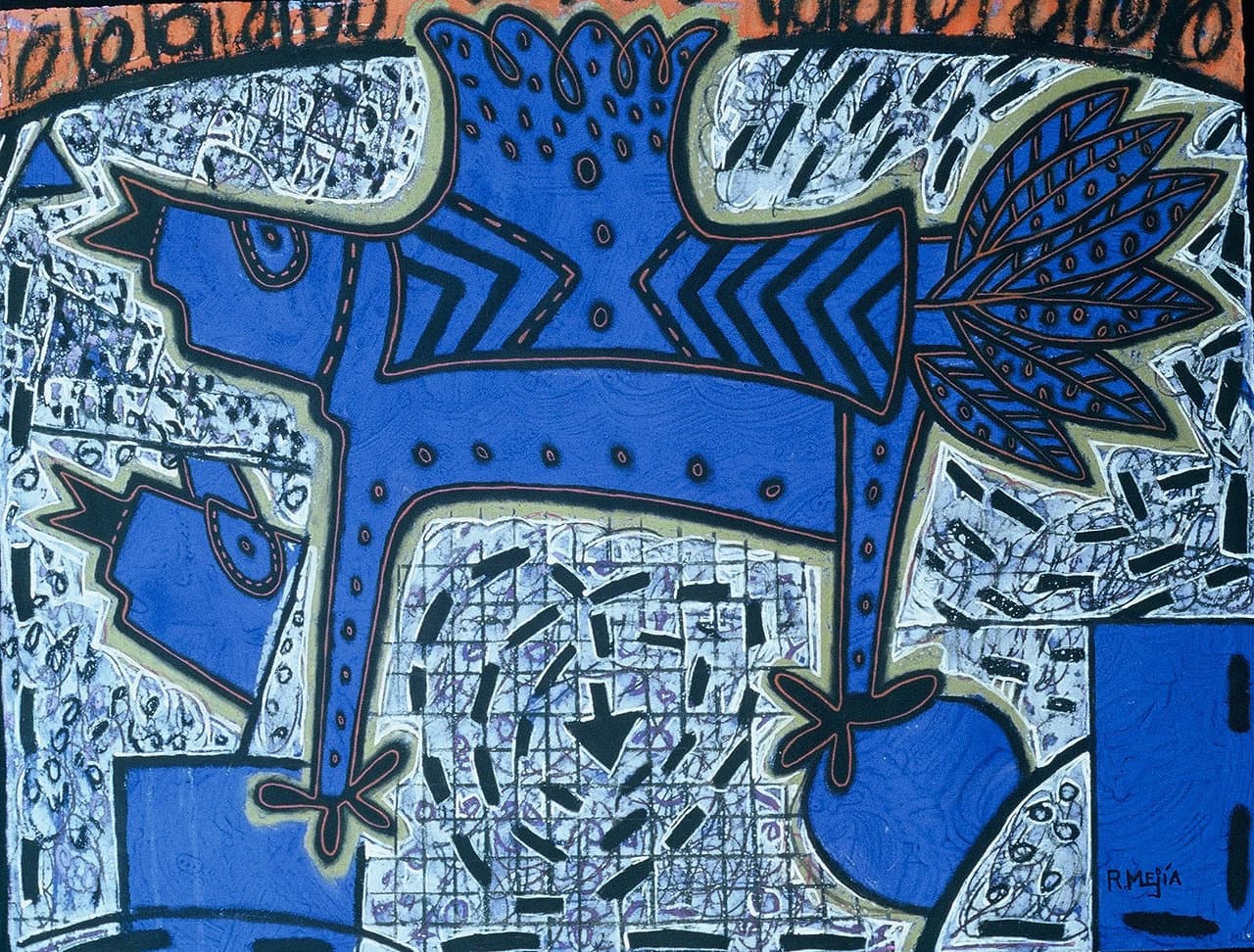
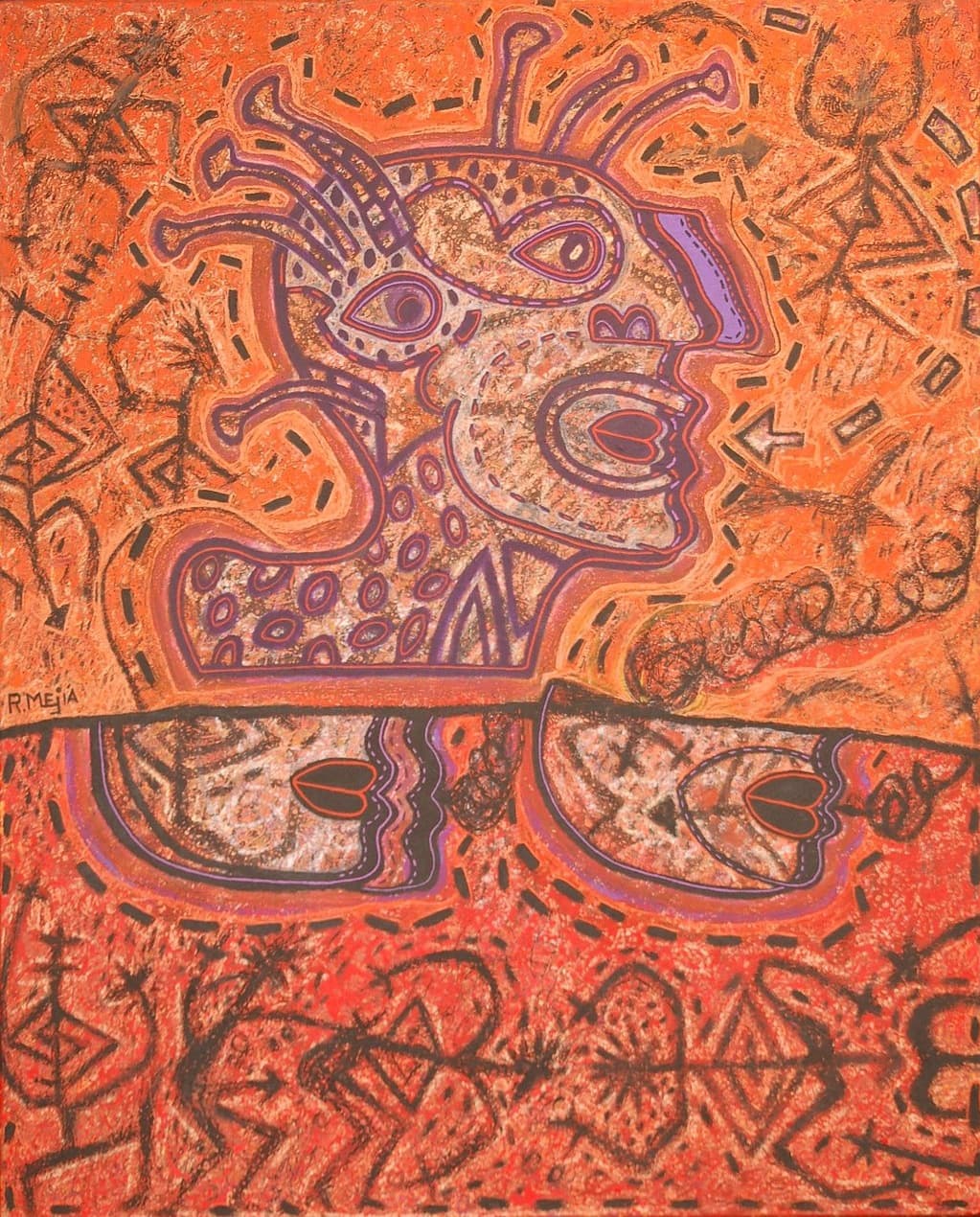
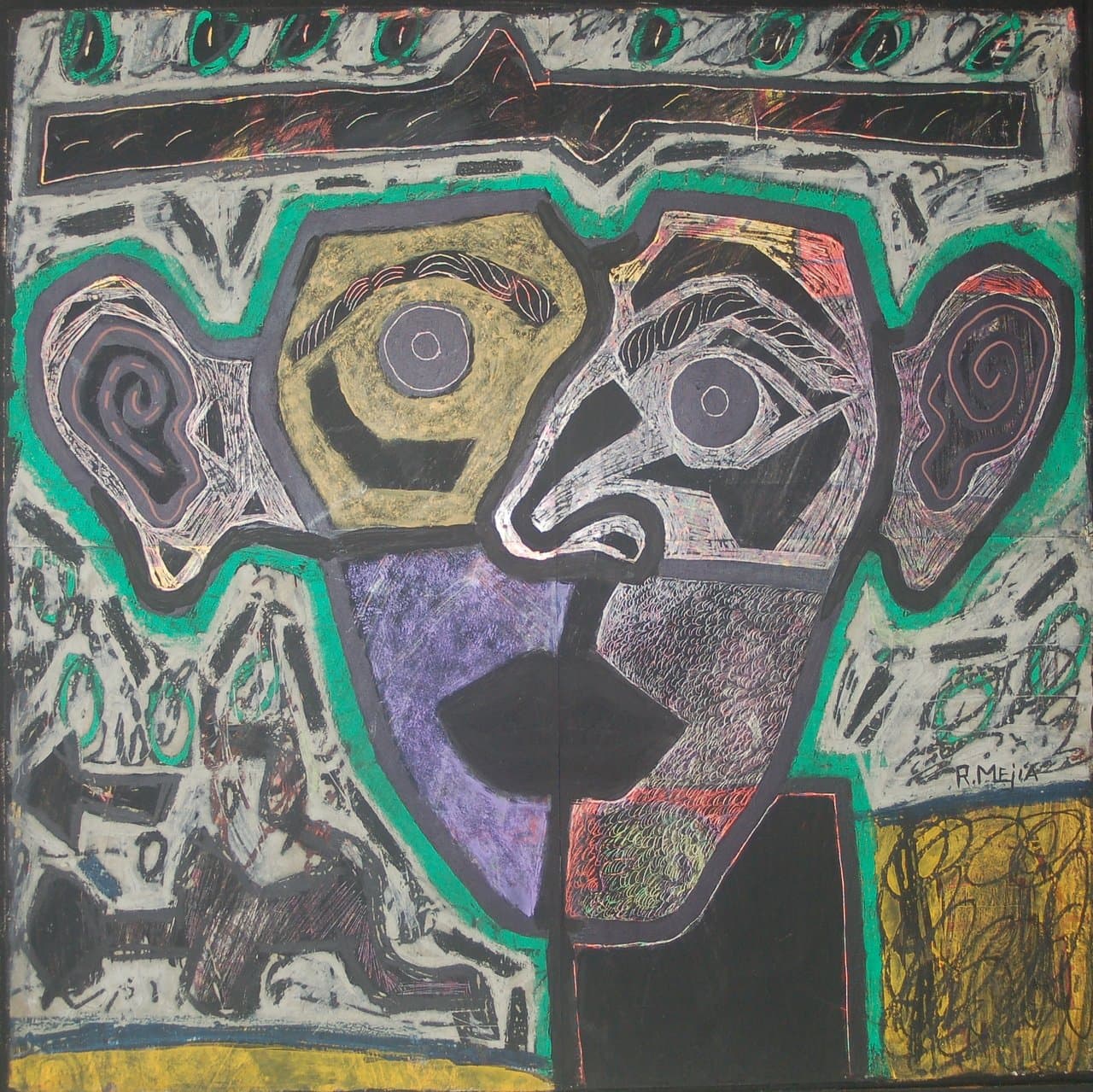
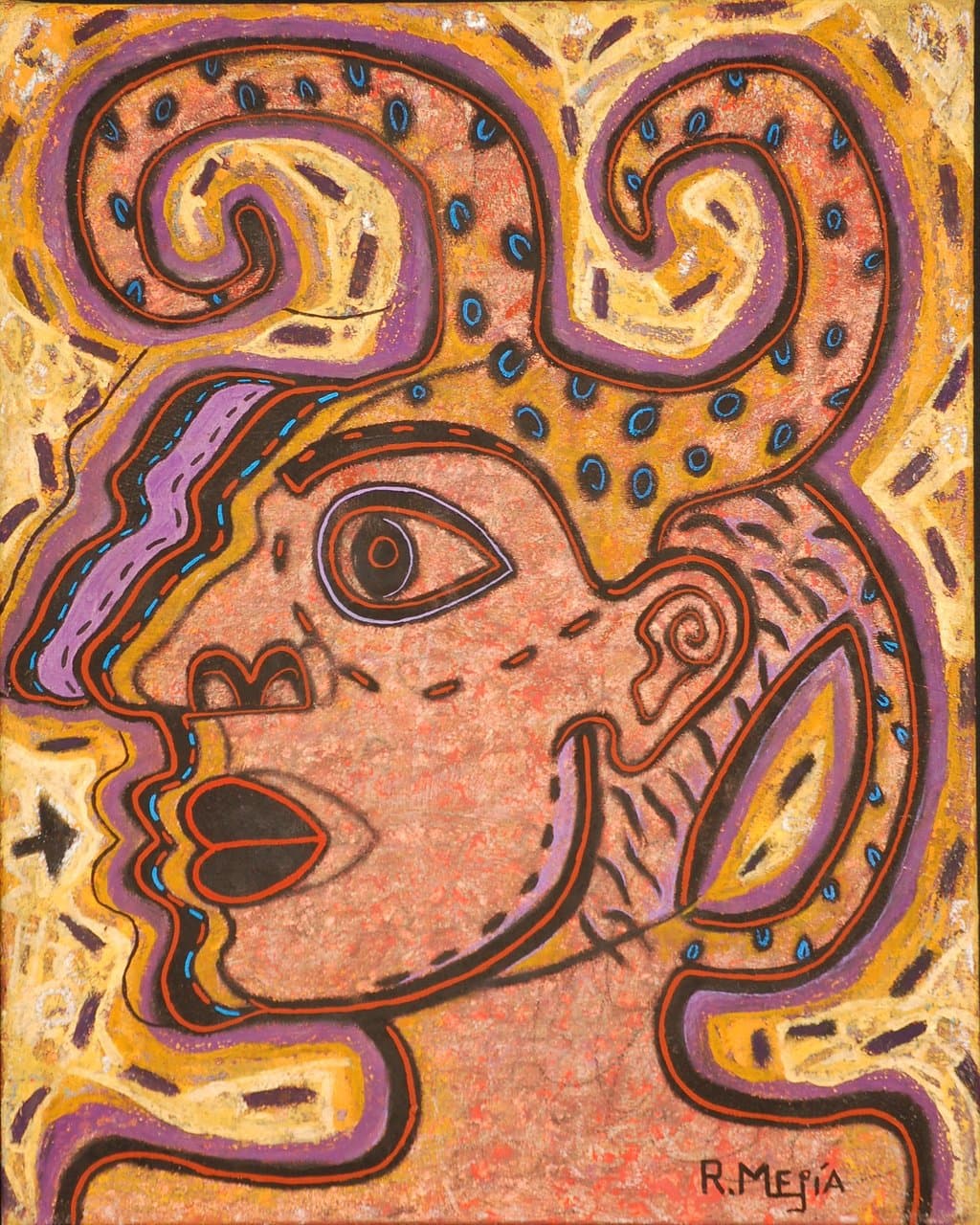
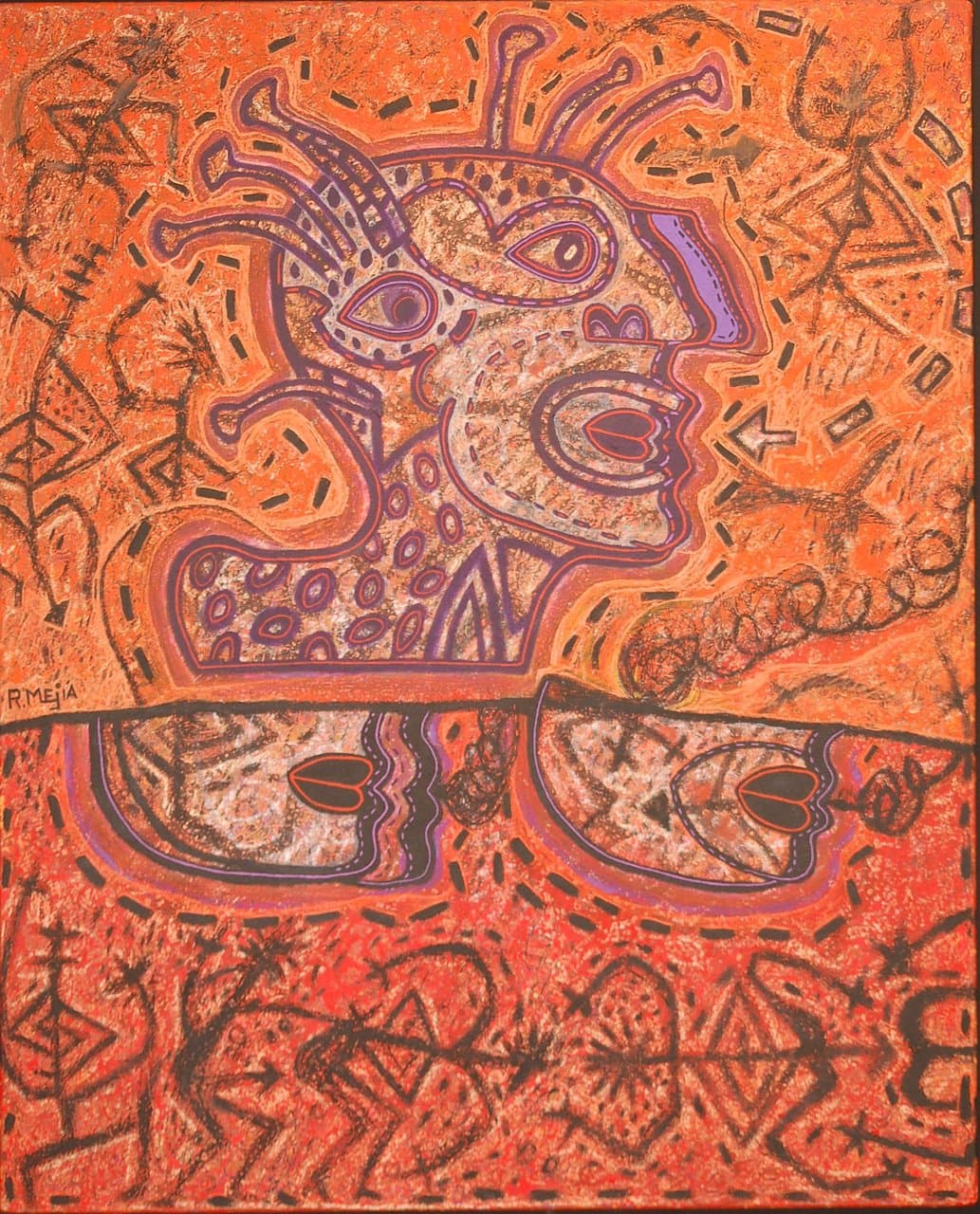
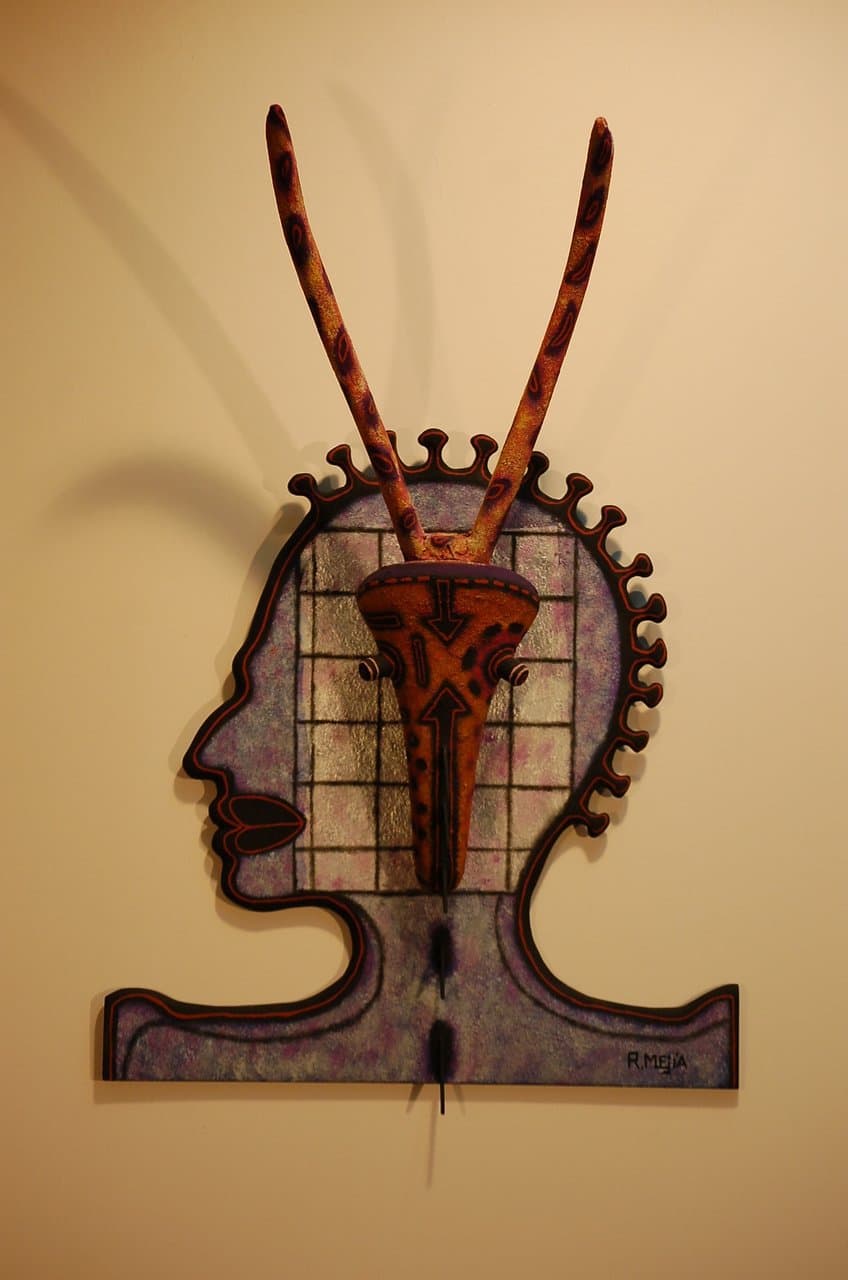
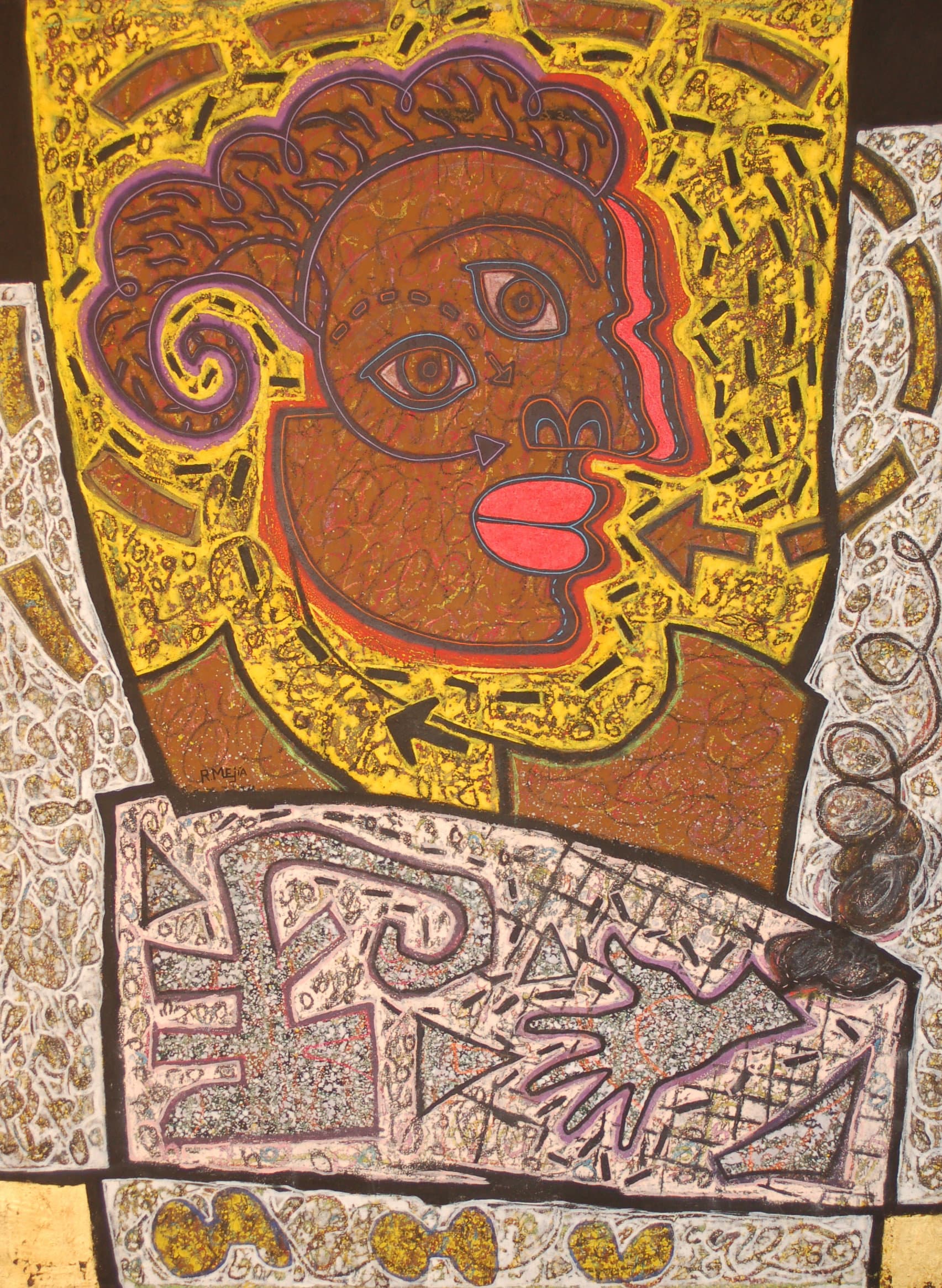
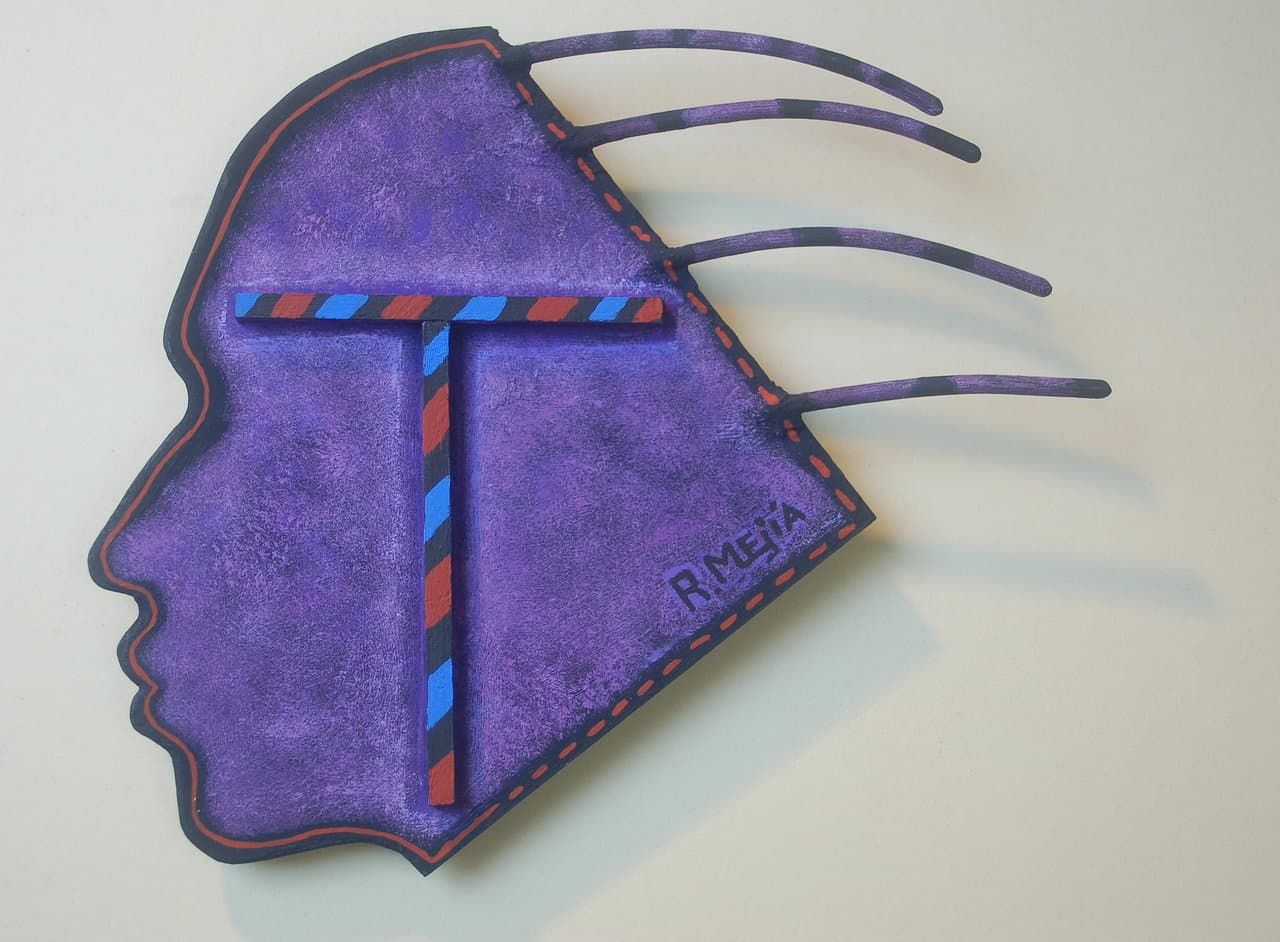
Painter - Sculptor Born in Santo Domingo Dominican Republic in 1960. He studied at the Escuela Nacional de Bellas Artes in Santo Domingo and Exole National Superieure des Beaux-Arts, Paris. By painting embodies a world of evoluing geometries that lead to provisional figures reminiscent of pre-values and archetypes. Mejia lives and works in Paris since 1985. In his more recent works, Radhames Mejia reveals a new aesthetic relationship. The plasticity of the materials, dense, faithful and febrile emits vibrations that surge forth like an unending echo of a cry, from the times of Antiquity. A cry, which is all the more prolonged and subtle as the seeing eye is missing. Absent and useless before an omnipresent sensuality. The aesthetic edifice of this painter is born of thick rounded forms whose enigma could but lead to their being split open, separated. Today Mejia imposes nuances. Nothing is left to hazard and even the smallest section is delicately limited. What in the past was a fetal mass or lunar brightness has become object or animal, to the extent of pressing the highest degree of metamorphosis into service, unfolded in careful sequences, so that the imaginary becomes one with the creative act. In a succession of ensembles his evolutive and synchronized geometries give form to the work and the mass in movement engenders the provisory shape. The roundness of the bird already announces the stretching of the fish. The instantaneous folding of the snail flattens out into salamander or scorpion: animated shapes moving surely forward to begetting the being. The being, still alive and blind, breathing on a red, fuchsia, orange, yellow or blue background, bright colours of life and the light in a world where shadow threatens truth. Mejia a language of plasticity and a technique in which the play of light softens the violence with copper, gold and silver pigments which can better project the reflection of the paint on the canvas. His work unfolds like a journey, which leads us from the closed to the open, from the reduced to the open, from the reduced to the enlarged. All the shapes undergo a transformation, which becomes progressively clearer, much in the way a silent movie does when speech is refound in the new version. The masses move like a procession of signs, becoming stems, fingers, adolescent penises on the roadway of wonder and amazement. The rounded shapes move towards coherency, the imperfect circle becoming the shell of a turtle and the apple, strangled in its mutation into the pear, become, without emphasis, a mask, a hood, and the face of the painter himself. It is a question of becoming, the dynamic of this artist who suggests the being that dwells in him and haunts him without ever revealing itself because it is not yet ready to be born: the triangle skull reigns and waits above organic elements. The stiff open hand hopes to join itself to the limb. More and more a triangle wanders, clearly outlined with slightly dotted lines, but kept within the space. Mejia builds up his sequences on a white background where a multitude of chaotic squares and rectangles enclose the subject, leaves or flowers, which represent precious sap. This ensemble of blended ensembles begets the earth in space of heaped bones in which simmers all fertility. This is portrayed simply by some figurative touches as if we were between dream and reality. The organic moistness of fecundation is experienced in an intimate temperature of warm haunting colours. All this working of materials, this mixing, this blending this emanation of substances, this profusion of chromatic sensuality, the result of all this experimentation, can only lead to ecstasy. Of this symbiosis the form will at last assume the mark of the human being until, finally, the artist becomes the master of his creation. Mejia has lived for several millennia in this magic alcove, like an Assyrian sage, a priest of Mesopotamia, but also like an untiring Ulysses, a visionary of space. To arrive at the decomposition and the reassembly of ensembles, Mejia has decided to reconstitute the subject. Man and woman appear on the stage of life, ambiguous figures taking on the appearance of Mejia, the sex carefully kept within the pubic triangle, tabernacle of secret pleasures. The artist continues his painting with a methodical awareness full of sensual delight and elements that come to add themselves to the original. Out of the sign, the code and the shape, the subject emerges, always the same becoming the other, softly, slowly in a long process in which the unconscious takes over from memory. This artist, a native of the Dominican Republic, has his rightful place in a contemporary art. If there is a world, then the “world” of Rahdames Mejia is certainly part of it. Some write or say of Mejia that he is a repository of primitive art, African and figurative art. Taking into consideration references which are always facile and dangerous, his works certainly do confirm that the human being is heir to a past and future. The artist is well embarked along the universal way; so the reference can only suggest that he is part of the inspired adventure of those beings that are imbued by the obsession to create. The twentieth century, privileged ground for all the audacities of contemporary and experimental art, has honored us with a new generation of painters who come from elsewhere, charged with words, noises, sounds, lights, pains and dreams. They constitute no school, nor do they publish treatises, but remain genuine and honest, bearers of a legend, a tale, but also of a history – their own, ever ready to move, to change, to answer the call, and, like their own lives constantly on the move, in search of mystery and secrets. This elsewhere is more distant than a simple geographical position, further off than a static landmark. An elsewhere of the unconscious, revealing itself little by little, and thus engendering the endless voyage. The intimate voyage of constantly confronted sensations and emotions, for the encounter, the shock of impact, are inevitable. It is from just such experience that the work of art is born, art bearing even more the mark of genius. Did Gris, Picasso, Braque, and so many others, who came from elsewhere, not leave their mark on this century ? The work of Radhames Mejia is profoundly essential in this stirring up of our senses, but also for all that it implies of life and energy, precisely in its capacity to shake up and provoke the abstract in all that it retains of death and inertia. The essential dynamic in the works of Radhames Mejia is already a necessary part in the Renaissance of contemporary art.
Represented By
Artworks by Radhames Mejia