José de Larrocha González
Spain, b. 1850, d. 1933
José de Larrocha González was a Spanish painter born on October 27, 1850, in Granada, and died on June 22, 1933, in Buenos Aires. He is recognized for his landscapes and costumbrista scenes, as well as for his role as a teacher to numerous artists. His work reflects a strong connection to place and tradition, combining careful observation with a structured approach to composition.
Larrocha González developed his artistic formation within the academic traditions of nineteenth century Spain, where drawing, perspective, and compositional balance were central to artistic practice. This foundation is evident in his paintings, which demonstrate clarity, organization, and a disciplined handling of form. His training allowed him to work confidently across different subjects while maintaining a consistent visual language.
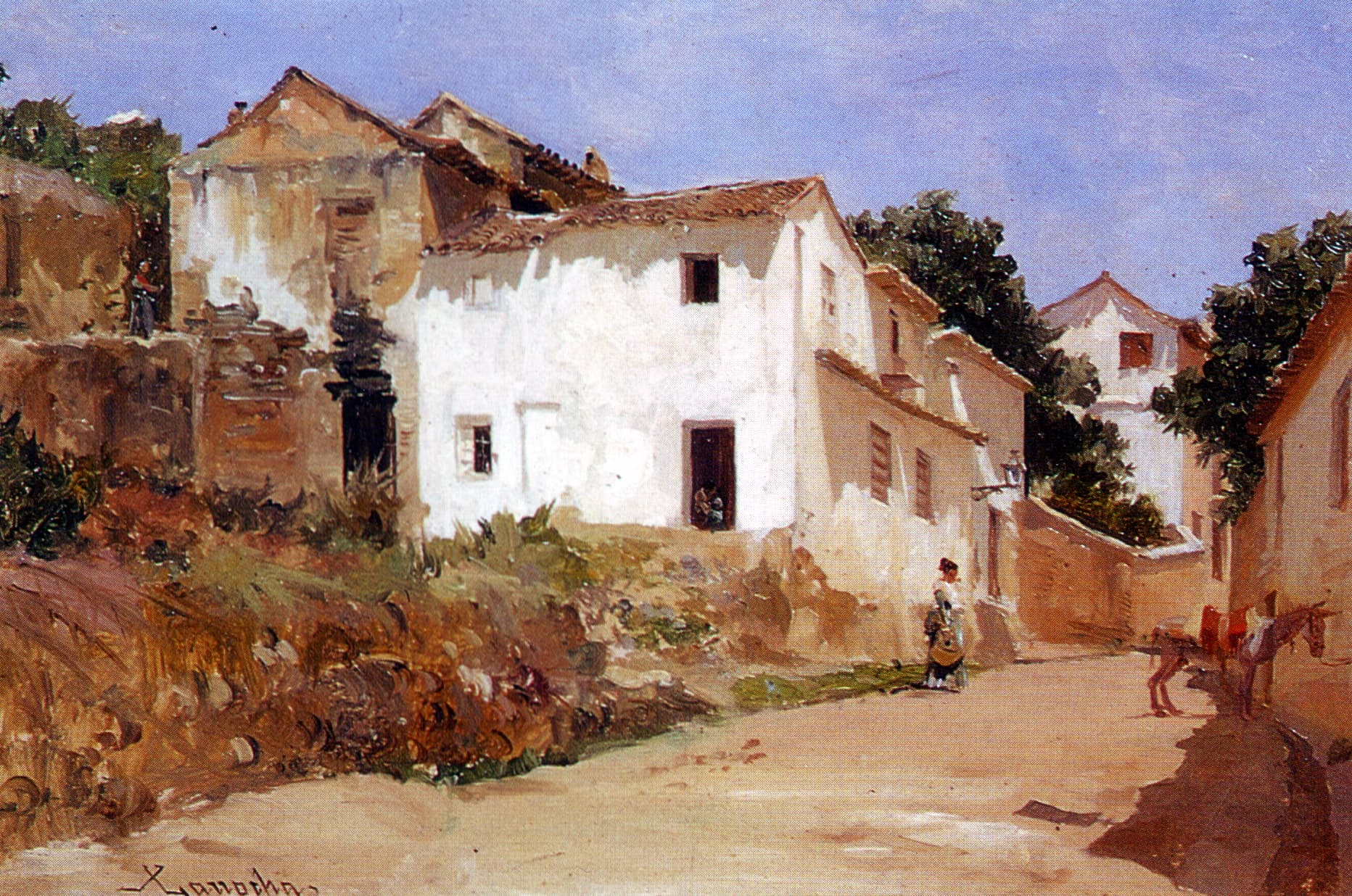
Landscape was one of the central themes in his work. He painted natural environments with attention to light, atmosphere, and spatial depth, often capturing the character of the terrain with a measured and observational approach. His landscapes are structured yet open, allowing the viewer to engage with both the physical and atmospheric qualities of the scene.
In addition to landscape, Larrocha González is known for costumbrista painting, a genre that depicts everyday life, customs, and social traditions. His scenes often portray figures in familiar settings, engaged in routine activities that reflect cultural identity. These compositions are presented with a sense of balance and restraint, emphasizing observation rather than dramatization. Through this work, he contributed to the visual documentation of social life during his time.
His use of color is generally naturalistic, supporting the realism of his subjects while contributing to the harmony of the composition. Light plays an important role in defining form and creating depth, whether in outdoor landscapes or scenes of daily life. This careful handling of light reinforces the overall sense of cohesion in his work.
As a teacher, Larrocha González had a significant influence on the development of other artists. His role in education extended his impact beyond his own paintings, helping to shape the artistic practices of those who studied under him. This contribution to artistic training is an important aspect of his legacy.
Later in life, he moved to Buenos Aires, where he continued his work and remained active within the artistic community. This geographic shift added an international dimension to his career, connecting Spanish artistic traditions with a broader Latin American context.
José de Larrocha González is remembered as a painter who combined technical discipline with a close engagement with landscape and everyday life. His work reflects both the traditions of Spanish academic painting and a sensitivity to cultural identity, while his influence as a teacher helped extend his legacy across generations.
Represented By
Artworks by José de Larrocha González