Jose Bernal
Cuba, b. 1945, d. 2010
José Bernal was a Cuban born painter and mixed media artist known for his richly layered surfaces, symbolic imagery, and exploration of memory, identity, and displacement. Born in Havana in 1945, he grew up during a period of major cultural and political change in Cuba, which shaped both his worldview and his artistic direction. Over the course of his career, he developed a distinctive visual language that blended abstraction and figuration, often incorporating texture, collage, and found materials to create works that feel both personal and historical.
Bernal received his formal training at the Escuela Nacional de Bellas Artes San Alejandro in Havana, one of Cuba’s most respected art institutions. While this education gave him a strong technical foundation, he quickly moved beyond traditional academic approaches.
Early in his career, he became interested in experimentation, particularly in how painting could extend beyond flat surfaces into something more physical and constructed. This curiosity led him to explore materials and processes that would become central to his mature work.
In 1980, Bernal left Cuba and relocated to the United States, eventually settling in Miami. This move marked a significant turning point in his life and career. Like many artists in exile, he faced the challenges of cultural transition, displacement, and rebuilding identity in a new environment. These experiences became key themes in his work. Rather than illustrating exile directly, Bernal expressed it through structure and material. His paintings often feel assembled, layered, and reworked, reflecting the fragmented nature of memory and the process of reconstructing a sense of self.
A defining feature of Bernal’s work is his use of mixed media. He frequently incorporated materials such as fabric, paper, wood, and found objects into his compositions. These elements were not simply decorative. They carried emotional and symbolic weight. Surfaces appear torn, stitched, or worn, suggesting the passage of time and the accumulation of lived experience. His works often resemble constructed artifacts, as if they hold traces of personal and cultural history embedded within them.
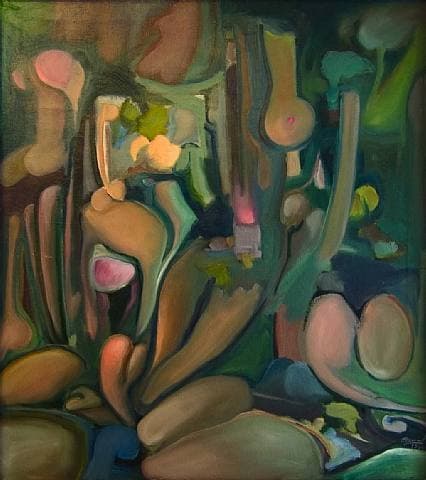
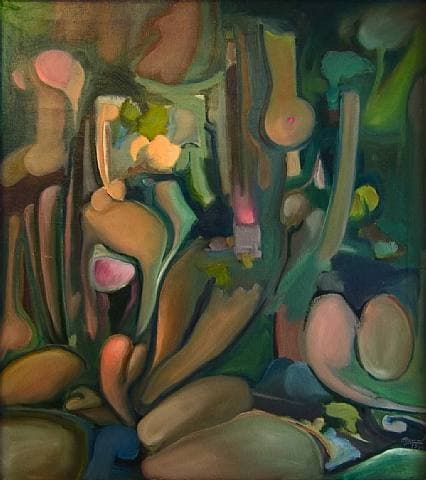
Visually, Bernal’s compositions balance abstraction with recognizable forms. Hints of the human figure, architectural shapes, and symbolic elements emerge and recede within layered fields. This creates a sense of ambiguity, inviting viewers to interpret rather than observe passively. His use of color tends toward earth tones and subdued palettes, occasionally punctuated by stronger accents. Color functions structurally in his work, reinforcing depth, mood, and rhythm rather than serving purely decorative purposes.
Bernal’s art reflects a broader dialogue between Cuban identity and the experience of the diaspora. While rooted in his origins, his work also engages with contemporary international art practices. He does not present a fixed narrative of identity. Instead, he allows multiple influences and histories to coexist within the same space. This openness gives his work a quiet complexity and depth.
Throughout his career, José Bernal exhibited widely in the United States, Latin America, and Europe. His work was included in museum collections and gallery exhibitions that highlighted both Cuban art and contemporary mixed media practices. He remained committed to a thoughtful, process driven approach, continually refining his techniques while exploring enduring themes of memory, loss, and transformation.
José Bernal died in 2010. Today, he is remembered as an important figure in Cuban American art. His work stands out for its material richness, emotional restraint, and layered meaning. Rather than offering direct answers, his paintings invite reflection, revealing the complexity of identity shaped by both place and displacement.
Represented By
Artworks by Jose Bernal