Joaquín Peinado
Spain, b. 1898, d. 1975
Joaquín Ruiz Peinado Vallejo was a Spanish painter born on July 19, 1898, in Ronda, and died on February 13, 1975, in Paris. He is recognized for his engagement with Cubism and for developing a body of work that reflects the influence of modern European movements while maintaining a clear sense of structure and composition. Over the course of his career, he contributed to the evolution of modern Spanish painting through a sustained exploration of form, geometry, and pictorial space.
Ruiz Peinado pursued artistic training in Spain before moving to Paris, where he became immersed in the artistic environment that defined much of twentieth century modernism. In Paris, he encountered the ideas and practices associated with Cubism, a movement that emphasized the fragmentation of form, multiple perspectives, and the construction of images through geometric elements. This exposure had a lasting impact on his work, shaping his approach to composition and representation.
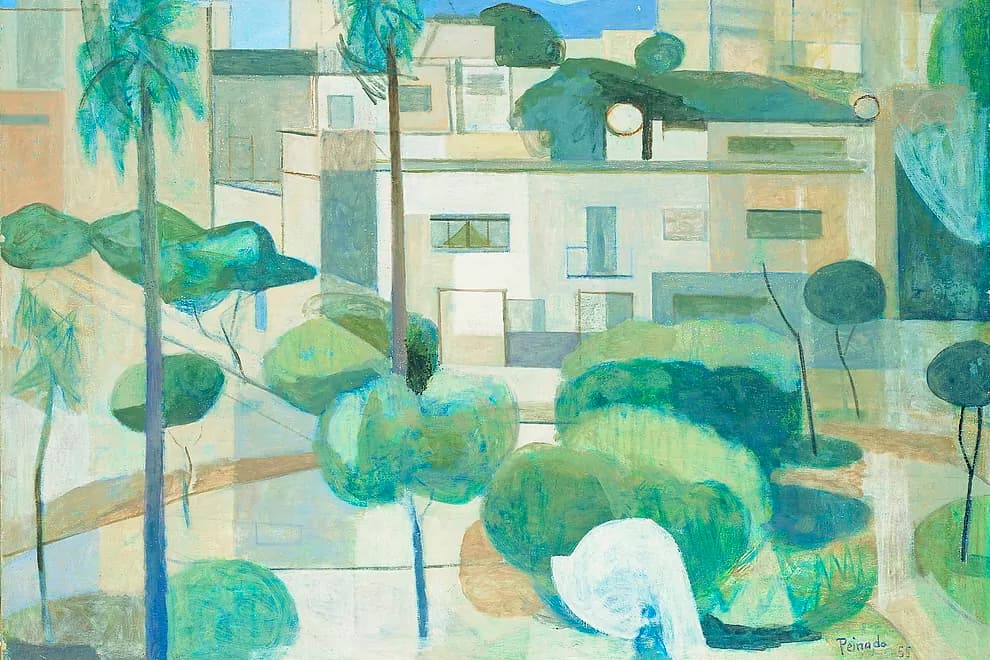
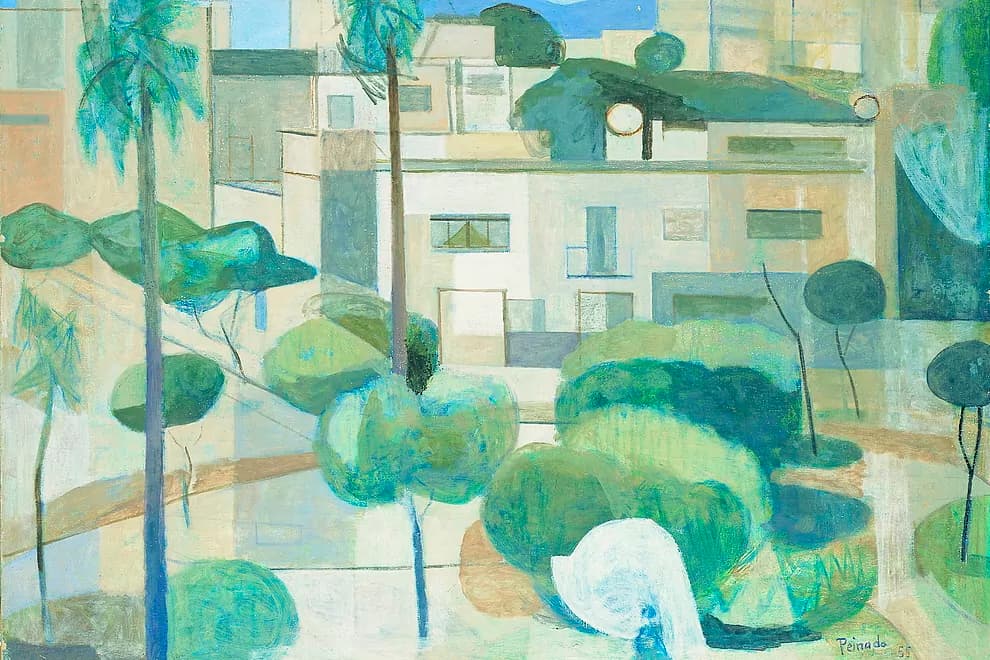
A defining characteristic of his painting is the use of geometric structure. Rather than depicting subjects through naturalistic representation, Ruiz Peinado often reduced forms to simplified shapes and planes. These elements are arranged to create compositions that emphasize balance, rhythm, and spatial organization. His work reflects the Cubist interest in analyzing and reconstructing reality, presenting objects and figures through a controlled and thoughtful arrangement of parts.
Color in his work is typically restrained and deliberate, supporting the structure of the composition rather than dominating it. He often worked within a limited palette, allowing tonal variations to create depth and cohesion. This measured use of color reinforces the clarity of his compositions and highlights the underlying geometry of the image.
His subject matter includes still lifes, figures, and interior scenes, all interpreted through the lens of Cubist principles. These works often present familiar objects in a restructured form, where perspective is fragmented and reassembled. Despite this abstraction, his paintings maintain a sense of order and coherence, reflecting his disciplined approach to composition.
Living and working in Paris for much of his career, Ruiz Peinado remained connected to the broader European avant garde while also contributing to the narrative of Spanish modern art. His work reflects a dialogue between these contexts, combining international influence with a personal interpretation of Cubist ideas. Joaquín Ruiz Peinado Vallejo died in Paris in 1975. He is remembered as a painter who embraced Cubist principles to explore new ways of constructing images, creating a body of work defined by structure, balance, and a thoughtful engagement with modern artistic language.
Represented By
Artworks by Joaquín Peinado