Hermann Guggiari
Panama, b. 1924, d. 2012
Hermann Guggiari was a Panamanian sculptor born in 1924 who became one of the most important figures in modern art in Panama. Known for his monumental works and his ability to merge abstraction with symbolic meaning, Guggiari developed a body of work that reflects themes of identity, freedom, and the human condition. Over several decades, he helped define the direction of sculpture in Panama, bringing international attention to the country’s artistic production.
Guggiari grew up in Panama City during a period of political and social transformation. From an early age, he showed an interest in art and pursued formal studies both locally and abroad. His education exposed him to a range of artistic movements, including modernism and abstraction, which would influence his later work. While he absorbed these ideas, he remained focused on creating art that was connected to the cultural and historical realities of Panama.
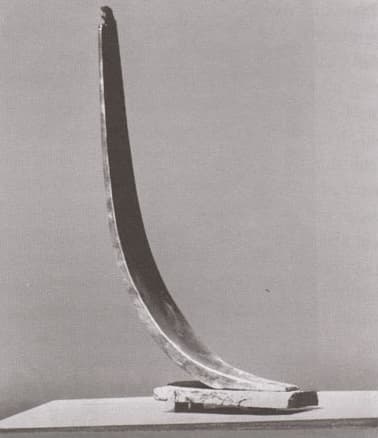
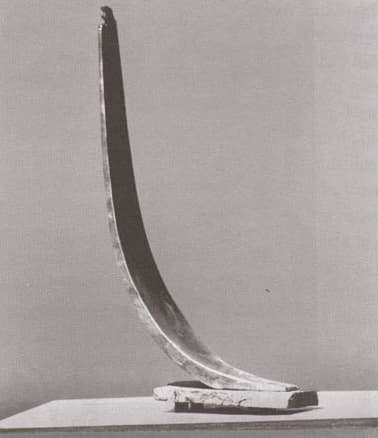
In the early stages of his career, Guggiari explored figurative sculpture, working with recognizable forms and traditional techniques. Over time, however, his work evolved toward abstraction. This shift allowed him to engage more directly with broader themes, using simplified forms to convey complex ideas. His sculptures often feature clean lines, geometric structures, and carefully balanced compositions, creating a sense of order and clarity.
A defining characteristic of Guggiari’s work is his use of materials. He frequently worked with metal, particularly steel and iron, which allowed him to create large scale works with strong physical presence. The durability of these materials also reinforced the themes he explored, such as resilience, strength, and permanence. At the same time, his handling of material shows sensitivity, with surfaces and forms carefully shaped to create rhythm and movement.
Many of Guggiari’s most important works are public sculptures installed in urban spaces. These pieces engage directly with their surroundings, becoming part of the architectural and social landscape. His sculptures often serve as landmarks, inviting viewers to interact with them physically and visually. Through these public works, he expanded the role of sculpture beyond the gallery, making it accessible to a wider audience.
His work frequently addresses themes related to freedom and national identity, reflecting Panama’s historical context and its ongoing search for self definition. Rather than presenting these ideas through literal representation, Guggiari used abstract forms to suggest movement, tension, and transformation. This approach allows his work to resonate on multiple levels, combining personal expression with collective meaning.
Guggiari also participated in international exhibitions and symposia, representing Panama on the global stage. His work was shown in various countries, contributing to a broader recognition of Panamanian art. Through these experiences, he engaged with artists from different backgrounds, further enriching his practice while maintaining a strong connection to his roots.
In addition to his work as a sculptor, Guggiari was involved in cultural initiatives and artistic exchange, supporting the development of the arts in Panama. His influence extended beyond his own creations, helping to shape the environment in which contemporary Panamanian art could grow.
Hermann Guggiari died in 2012. Today, he is remembered as a pioneering sculptor whose work transformed public space and expanded the possibilities of modern sculpture in Panama. His legacy lies in his ability to combine formal clarity with symbolic depth, creating works that continue to engage viewers and reflect the evolving identity of his country.
Represented By
Artworks by Hermann Guggiari