Ernesto Neto
Brazil, b. 1964
Ernesto Neto (born 1964 in Rio de Janeiro, Brazil) is a Brazilian contemporary artist known for immersive sculptures and installations that explore the relationship between the human body, space, nature, and sensory experience. He is considered an important figure in contemporary Brazilian art and has exhibited internationally since the 1990s.
Neto studied at the Escola de Artes Visuais do Parque Lage and the Museu de Arte Moderna in Rio de Janeiro. His practice developed from Brazil’s experimental artistic traditions, particularly the work of artists associated with Neo Concrete art, while establishing a highly recognizable visual language of his own.
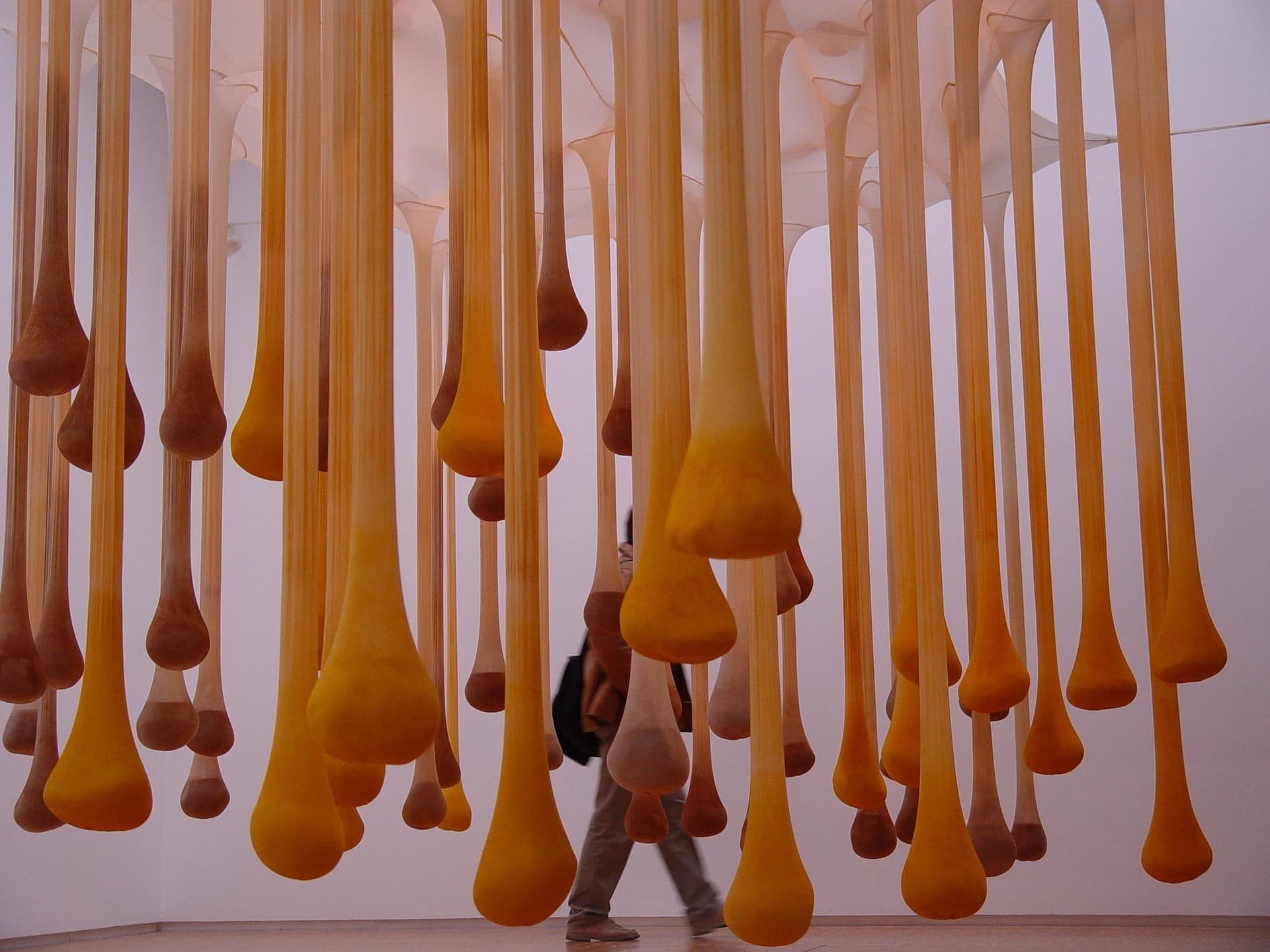
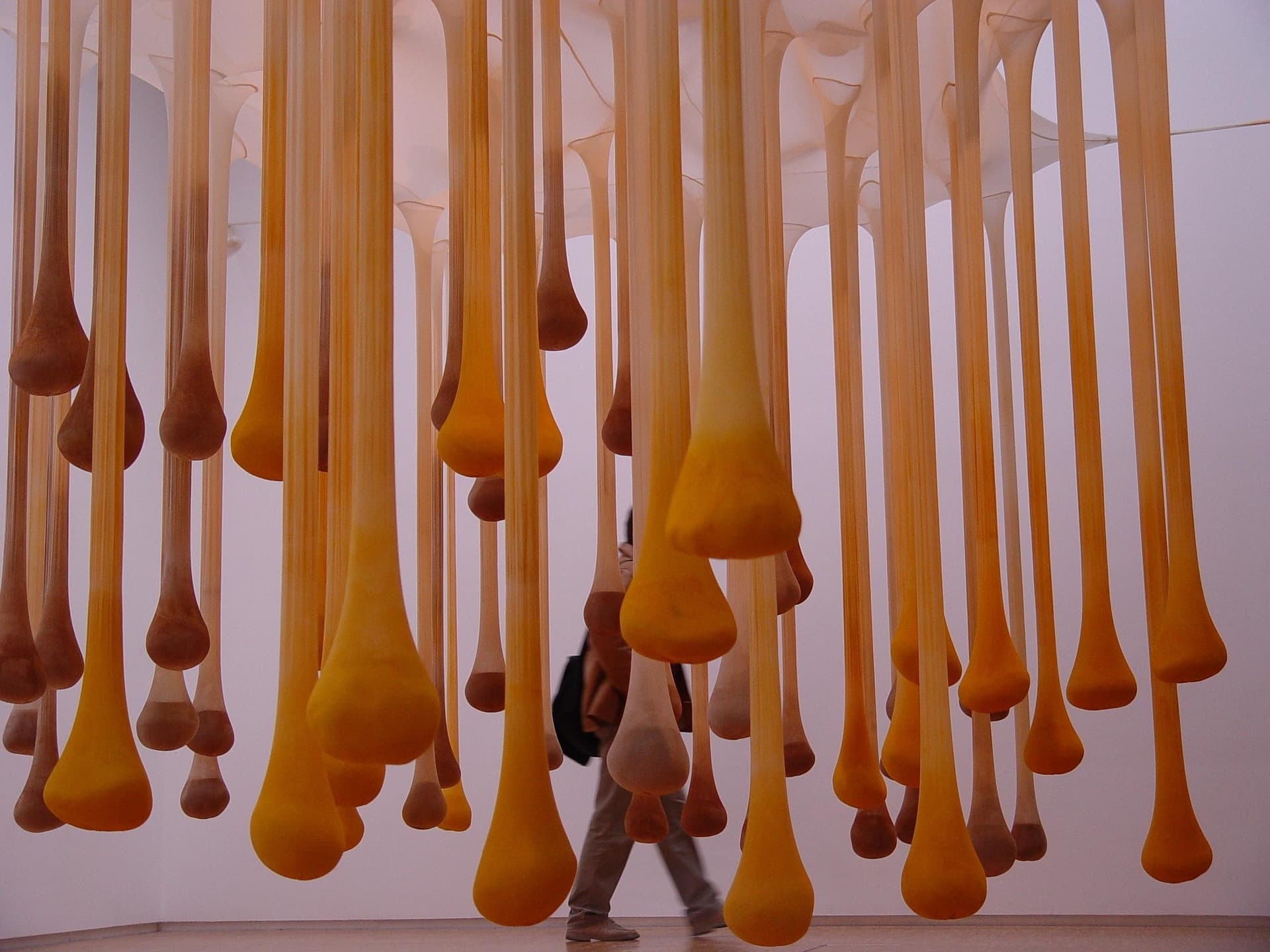
His installations often use flexible fabrics, nets, ropes, spices, sand, seeds, and other organic materials to create environments that visitors can enter, touch, smell, and experience physically. Suspended forms frequently stretch across exhibition spaces like membranes or organic structures, transforming architecture into environments that encourage interaction rather than distant observation.
The body is central to Neto’s work. Instead of treating sculpture as an isolated object, he explores how people move through space and experience materials through touch, weight, balance, scent, and scale. His work often emphasizes participation, community, and connections between people and the natural world.
Neto has also developed an ongoing dialogue with Indigenous communities in Brazil, particularly the Huni Kuin people of the Amazon, incorporating ideas about spirituality, ecology, collective experience, and relationships with nature into collaborative projects.
His work has been exhibited at major museums, galleries, and international exhibitions throughout the Americas, Europe, and Asia and is represented in prominent public and private collections. Neto continues to live and work in Rio de Janeiro, producing large scale installations that expand the possibilities of contemporary sculpture.
Represented By
Artworks by Ernesto Neto