Eduardo Alcoy Lazaro
Spain, b. 1930, d. 1987
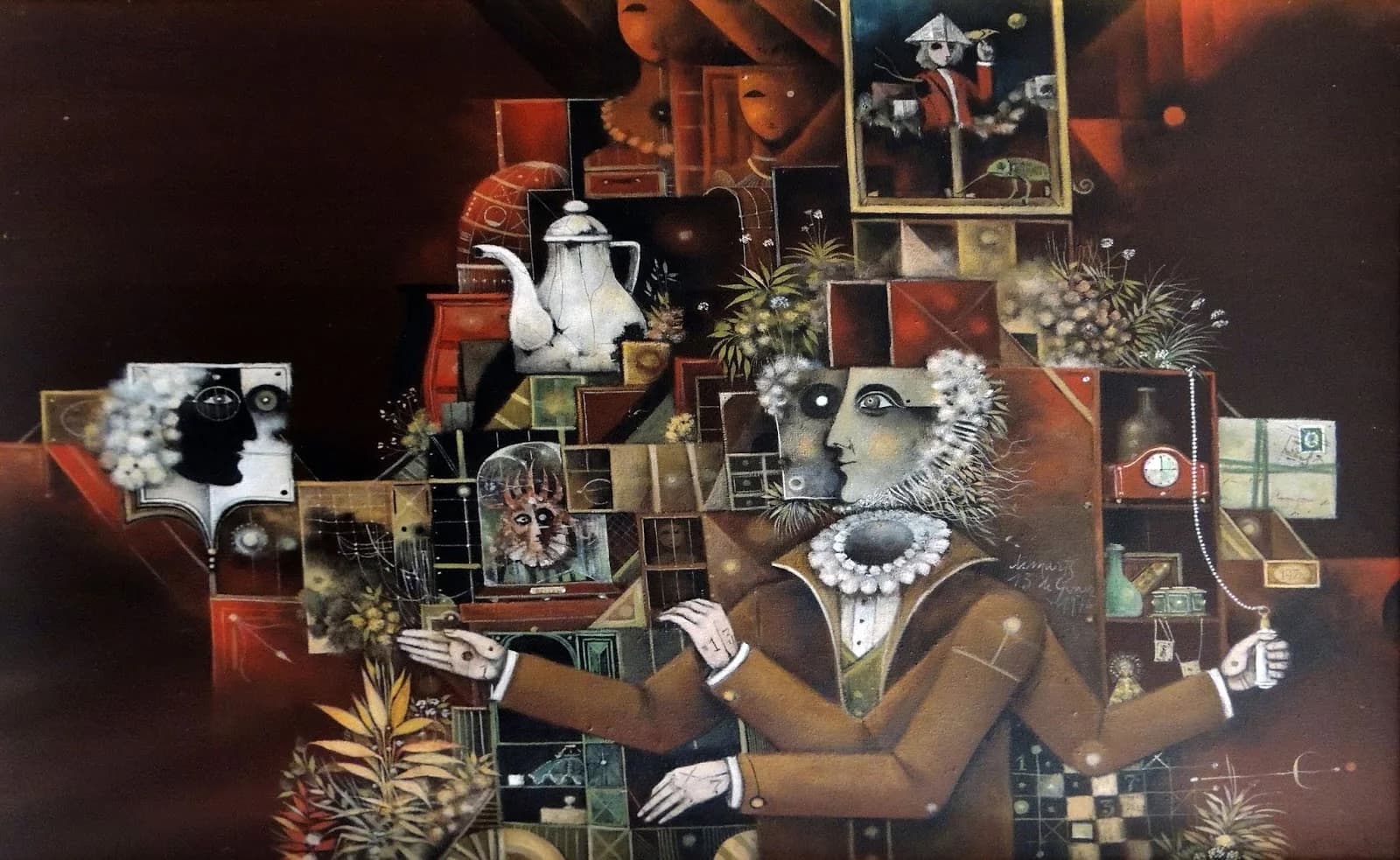
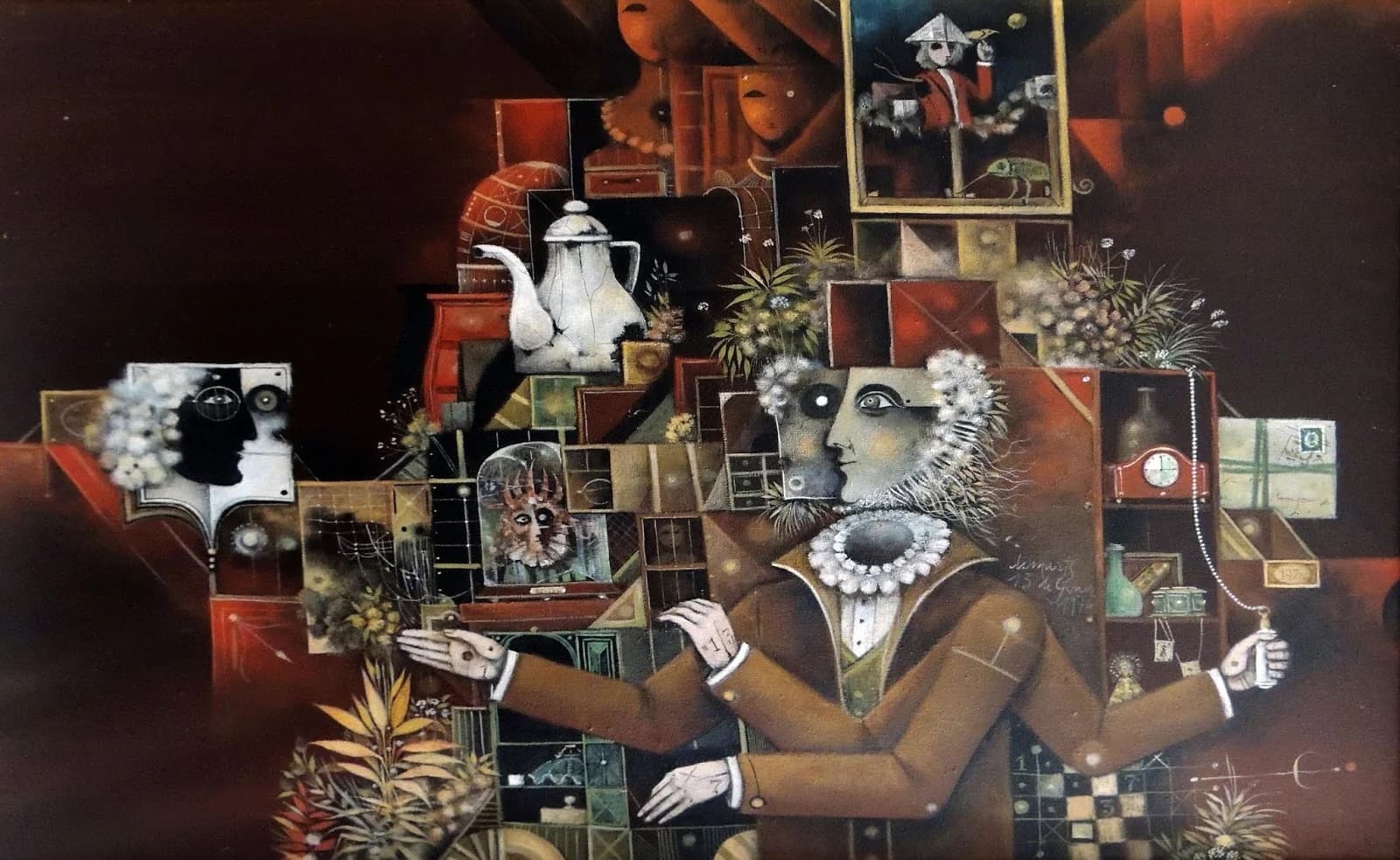
Eduardo Alcoy y Lázaro was a Spanish painter born in Barcelona in 1930 whose work became associated with the renewal of figurative painting in postwar Spain. Over the course of his career, he developed a distinctive visual language that combined elements of figuration, symbolism, and abstraction, often addressing themes related to human existence, social tension, and psychological complexity. His paintings are recognized for their expressive force, structured compositions, and the way they balance narrative suggestion with formal experimentation.
Alcoy came of age during a difficult period in Spain, shaped by the aftermath of the Civil War and the cultural constraints of the Franco era. In this environment, artists were often challenged to find ways of expressing themselves within limited institutional and political frameworks. Alcoy pursued his artistic training in Barcelona, where he developed a strong technical foundation while also becoming aware of emerging contemporary movements. Rather than adhering strictly to academic traditions, he became part of a generation seeking new forms of expression that could respond to the realities of their time.
He was closely associated with the group known as “Els Sílex,” formed in the late 1950s in Catalonia. This group of artists aimed to explore new approaches to painting, moving beyond conventional realism and engaging with more experimental forms. Within this context, Alcoy began to refine a style that incorporated both figurative and abstract elements. His early work shows an interest in structure and composition, as well as a desire to break down traditional representations of the human figure.
Throughout his career, Alcoy’s paintings often feature fragmented or stylized figures placed within carefully organized spaces. These figures are not always clearly defined, and they frequently appear as part of larger symbolic arrangements. His work suggests narratives without fully explaining them, leaving room for interpretation. This ambiguity is one of the defining qualities of his art, allowing viewers to engage with multiple layers of meaning.
Color plays an important role in Alcoy’s compositions. He often used a controlled palette, combining earthy tones with more vivid accents to create contrast and depth. His approach to color reinforces the emotional tone of his work, supporting themes of tension, introspection, and transformation. At the same time, his compositions remain structured, with a strong sense of balance that reflects his technical discipline.
Alcoy’s work also reflects an ongoing dialogue between tradition and modernity. While he engaged with contemporary movements, he maintained a connection to the history of European painting, particularly in his attention to composition and form. This balance allowed him to create work that feels both rooted and forward looking. His paintings do not reject tradition, but reinterpret it through a modern lens.
In addition to painting, Alcoy was involved in the broader artistic community in Catalonia, contributing to exhibitions and cultural discussions that helped shape the region’s postwar art scene. His work was exhibited in Spain and internationally, gaining recognition for its thoughtful and evolving approach.
Eduardo Alcoy y Lázaro died in 1987. Today, he is regarded as an important figure in Catalan and Spanish modern art. His legacy lies in his ability to navigate between figuration and abstraction, creating a body of work that reflects both personal expression and the broader conditions of his time. Through careful composition and symbolic imagery, he developed a visual language that continues to invite interpretation and reflection.
Represented By
Artworks by Eduardo Alcoy Lazaro