Félix Arauz
Ecuador, b. 1935 – d. 2024
Félix Arauz was an Ecuadorian Postwar and Contemporary artist born in 1935, recognized for a body of work that blends figuration and abstraction through expressive color, texture, and rhythm. Over the course of a long career, he developed a distinctive visual language rooted in the cultural identity, landscape, and social atmosphere of Ecuador, while also engaging with broader currents in Latin American modern art.
Arauz pursued formal training in the visual arts in Ecuador, where he developed a strong foundation in drawing and painting. His early work reflects an interest in figurative subjects, often depicting scenes connected to everyday life and the human figure. Over time, his approach evolved toward a more interpretive and expressive style, where forms became less defined and compositions emphasized movement, color, and structure rather than strict representation.
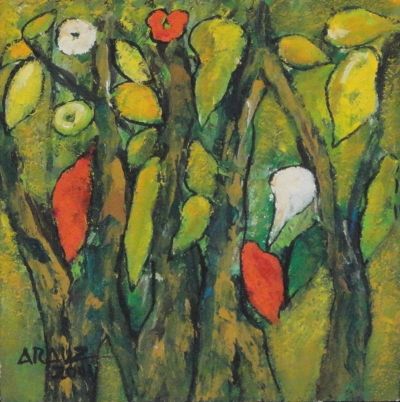
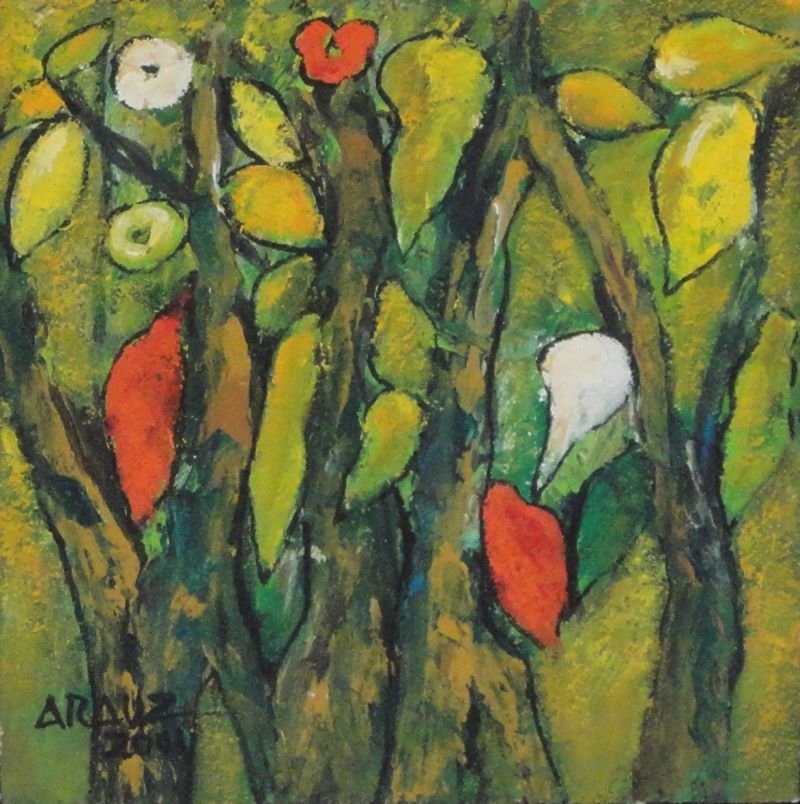
A defining characteristic of his work is his use of color. Arauz frequently employed vibrant palettes, combining warm and cool tones to create dynamic compositions. His use of color is both expressive and structural, shaping the rhythm of the painting and guiding the viewer’s eye. This approach gives his work a sense of energy and fluidity, where elements appear to shift and interact across the surface.
Texture also plays an important role in his paintings. Arauz often built his surfaces through layered applications of paint, creating depth and variation that enhance the physical presence of the work. These layered surfaces contribute to a sense of movement and transformation, reinforcing the expressive qualities of his compositions.
His work often suggests elements of landscape, environment, and human presence, though these references remain fluid rather than literal. Instead of depicting specific scenes, Arauz created visual environments that evoke atmosphere and emotion. This balance between figuration and abstraction allows his work to operate on multiple levels, inviting both recognition and interpretation.
Throughout his career, Arauz exhibited widely in Ecuador and internationally, gaining recognition as an important figure in contemporary Ecuadorian art. His work contributed to the development of a more expressive and experimental approach within the region, bridging traditional themes with modern techniques.
Félix Arauz died in 2024. He is remembered as an artist who brought color, movement, and emotional depth to his work, creating a body of paintings that reflect both personal expression and cultural context. His legacy lies in his ability to merge structure and spontaneity, producing compositions that remain visually engaging and open to interpretation.
Represented By
Artworks by Félix Arauz