Ricardo Elías
Cuba, b. 1969
Ricardo G. Elías is a Cuban photographer and artist born in Cuba in 1969. He is recognized for a body of work connected to photography, visual documentation, and artistic observation, with a career that includes both photojournalistic practice and participation in international exhibitions. His work reflects an interest in social themes, landscape, and the expressive possibilities of photography as both a documentary and artistic medium.
Elías’s formation as a photographer was shaped by his studies in photojournalism. In 1993, he graduated from the photojournalism program of the Unión de Periodistas de Cuba. This training gave him a foundation in observation, timing, composition, and narrative. Photojournalism requires more than technical skill with a camera. It demands attention to context, human behavior, atmosphere, and the small details that can communicate a larger story. These qualities became important to the way Elías approached photography as a creative practice.
His background in photojournalism also connects his work to the social world around him. Rather than treating photography only as a formal exercise, Elías’s images often engage with lived experience, public space, and the relationship between people and their surroundings. His work is known for exploring social themes, suggesting an interest in the realities, tensions, and conditions that shape daily life. Through the camera, he is able to record moments that may appear ordinary at first, but which carry deeper cultural, emotional, or symbolic weight.
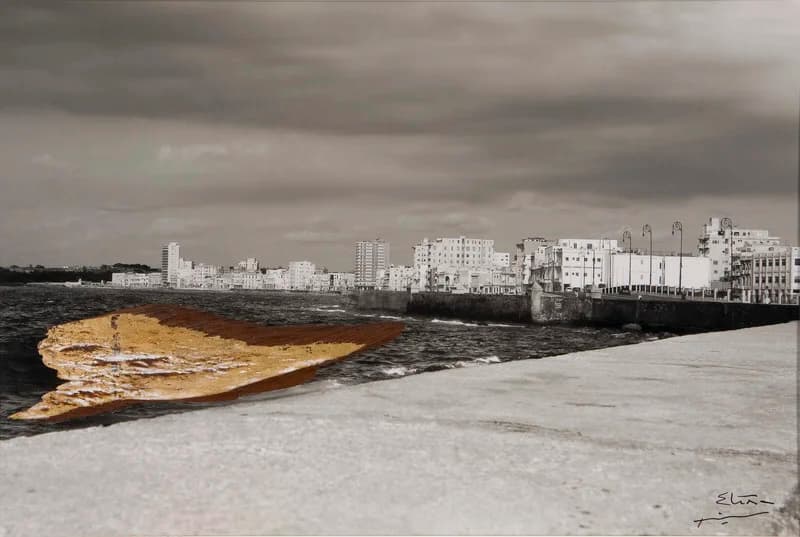
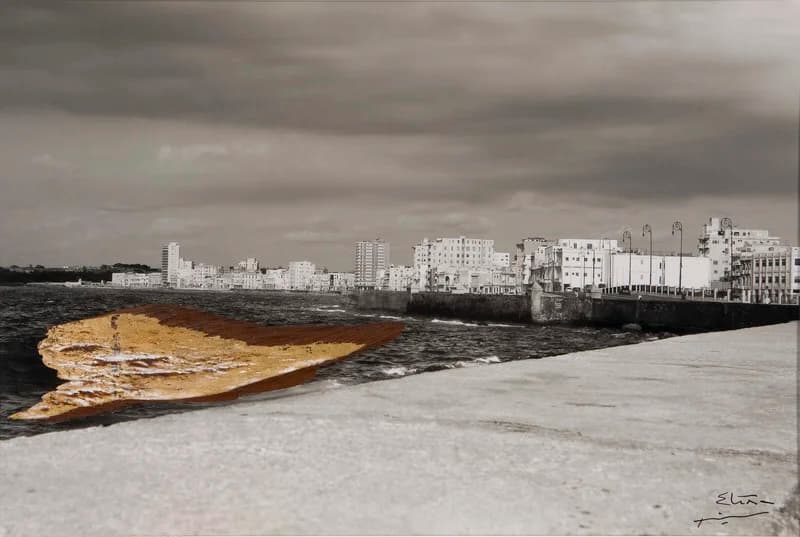
Landscape is another important aspect of his artistic vision. In photography, landscape can function in many ways. It can describe a place, preserve a memory, suggest isolation, or reveal the relationship between environment and identity. For a Cuban artist, landscape may also carry historical and cultural meaning, since the land itself is connected to ideas of belonging, change, endurance, and national memory. Elías’s interest in landscape places his work within a tradition of artists who see place not simply as background, but as an active subject.
What distinguishes Elías’s practice is the way it can move between documentation and interpretation. His training in photojournalism suggests a respect for reality and direct observation, while his identity as an artist allows him to shape images with a more personal and expressive sensibility. This balance gives his work a layered quality. His photographs may begin with the visible world, but they also invite reflection on what lies beneath the surface: social structure, emotional tone, history, and the passage of time.
Elías has also gained recognition through international exhibitions, which have helped place his work before audiences beyond Cuba. This international presence is significant because Cuban photography has long attracted attention for its ability to combine documentary strength with poetic and political complexity. Within that broader context, Elías contributes a perspective shaped by his own experience, education, and visual discipline.
Ricardo G. Elías stands as an important Cuban photographer whose work bridges journalism and art. His photographs are rooted in careful seeing, social awareness, and an interest in the spaces people inhabit. Through his attention to both human experience and landscape, he has developed a practice that reflects the power of photography to document, interpret, and transform the visible world into lasting visual testimony.
Represented By
Artworks by Ricardo Elías