
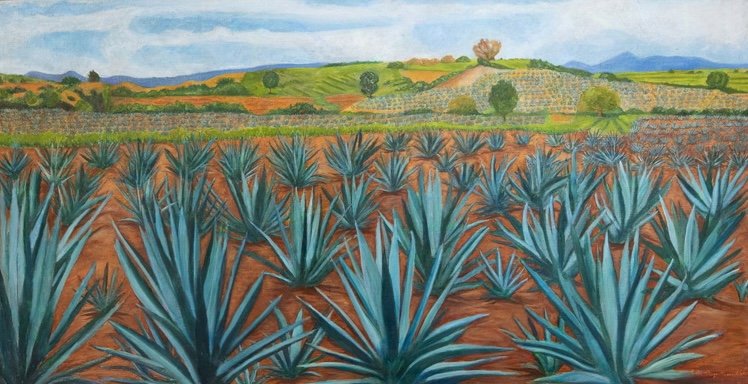
Pedro Diego Alvarado
Mexico, b. 1956
Pedro Diego Alvarado is a Mexican artist born in Mexico City in 1956, whose work reflects a rich formation shaped by academic study, international experience, and the influence of major artistic figures. His career developed through a combination of disciplined training and direct contact with artists whose approaches to image, structure, and visual sensitivity left a lasting impact on his practice. Over time, he built an artistic language informed by both Mexican and European traditions, grounded in strong technical foundations and a thoughtful engagement with form.
He began his studies in 1974 at La Escuela Nacional de Pintura y Escultura, where he was introduced to the discipline of formal artistic training. This early period provided him with a foundation in drawing, composition, and the study of visual structure, placing him within a long tradition of academic art education in Mexico. From the outset, his development was shaped by a close attention to technique and by an interest in refining his understanding of image making.
From 1976 to 1977, he continued his studies at La Academia de San Carlos, one of the most historic and influential art institutions in Mexico. This period helped deepen his knowledge of artistic methods while also expanding his connection to the broader tradition of Mexican art. The experience at San Carlos reinforced the importance of draftsmanship, composition, and disciplined observation, all of which would remain central to his work.
In 1978, Alvarado moved to France and continued his training at the École Nationale Supérieure des Beaux Arts. This transition marked a major turning point in his artistic formation. Studying in France exposed him to a different cultural and artistic environment, broadening his perspective and placing him in dialogue with European traditions and modern approaches. The move also deepened the international dimension of his career, allowing him to absorb new influences while maintaining a connection to his Mexican roots.
A particularly important aspect of his development was his apprenticeship with three renowned artists whom he considered equally influential in shaping his vision: Henri Cartier Bresson, Ricardo Martínez, and Armando Morales. Each of these figures offered a distinct example of artistic seriousness and visual intelligence. From Cartier Bresson, he would have encountered a refined sensitivity to composition, timing, and the power of the image. From Ricardo Martínez, one of Mexico’s major painters, he absorbed the weight of form and the importance of disciplined structure. From Armando Morales, he encountered a poetic and atmospheric approach that expanded the emotional and symbolic possibilities of visual art. Together, these influences helped shape an artist whose formation was both rigorous and wide ranging.
Alvarado’s work reflects this layered background. His practice carries the discipline of academic study, the refinement of international training, and the depth that comes from direct mentorship by major artists. Rather than belonging to a single narrow tradition, his work emerges from the intersection of these experiences, combining technical control with a broader sensitivity to image, form, and visual meaning.
Throughout his career, Alvarado has been defined by the seriousness of his formation and the breadth of his influences. His trajectory from Mexico City to France, and from formal institutions to apprenticeships with internationally respected figures, helped shape a practice rooted in observation, structure, and artistic continuity.
Alvarado is recognized as an artist whose development reflects both strong academic foundations and a rare range of formative influences. His work stands as the result of sustained study, cross cultural experience, and a deep engagement with the traditions that shaped him.
Artworks by Pedro Diego Alvarado
No artworks currently available.