Mathias Goeritz
Mexico, b. 1915, d. 1990
Mathias Goeritz was one of the most influential artists, architects, and theorists in twentieth century Mexico, even though he was not born there. Born in Danzig, then part of Germany, on April 4, 1915, he became a central figure in the development of modern art and public sculpture in Mexico after settling there in the late 1940s. His career moved across painting, sculpture, architecture, installation, poetry, and criticism, and he is remembered not only for the objects he made, but for the ideas he introduced. More than a conventional artist, Goeritz was a cultural force who argued that art should aspire to spiritual and emotional impact rather than remain trapped in pure function or cold formalism.
He studied in Europe during a period of enormous upheaval and intellectual change. His early formation exposed him to philosophy, art history, and the modernist debates that shaped the first half of the twentieth century. He spent time in Germany, Spain, and North Africa, and these experiences contributed to his wide ranging approach. He was interested in Romanesque art, medieval architecture, modern abstraction, and religious expression, all of which would later feed into his mature work. Unlike artists who stayed within one discipline, Goeritz moved restlessly between forms, always searching for ways to make art more powerful in human terms.
In 1949 he moved to Mexico, a decision that transformed his life and legacy. Mexico became the place where he would make his most important contributions, and where his ideas found fertile ground. At that time, Mexican art was still heavily shaped by the prestige of muralism and by political narratives tied to national identity. Goeritz brought a different sensibility. He believed art could communicate through scale, material, space, and silence, not only through storytelling or social realism. His presence helped widen the conversation around what modern art in Mexico could be.
One of his most important ideas was what he called “emotional architecture.” He argued that modern architecture had become too rational, too technical, and too stripped of spiritual force. For Goeritz, buildings and public spaces should move people emotionally. They should elevate the human spirit rather than simply solve practical problems. This idea made him unusual. He was not rejecting modernism altogether, but he was pushing back against its driest tendencies. He wanted abstraction to feel transcendent, not mechanical.
That philosophy shaped some of his best known works. Among the most famous are the Torres de Satélite, created in collaboration with architect Luis Barragán and others in the late 1950s near Mexico City. These tall, vividly colored sculptural towers became icons of modern Mexican urban design. Though abstract and minimal, they have a monumental and almost ceremonial presence. They show Goeritz’s gift for creating forms that are simple yet emotionally charged.
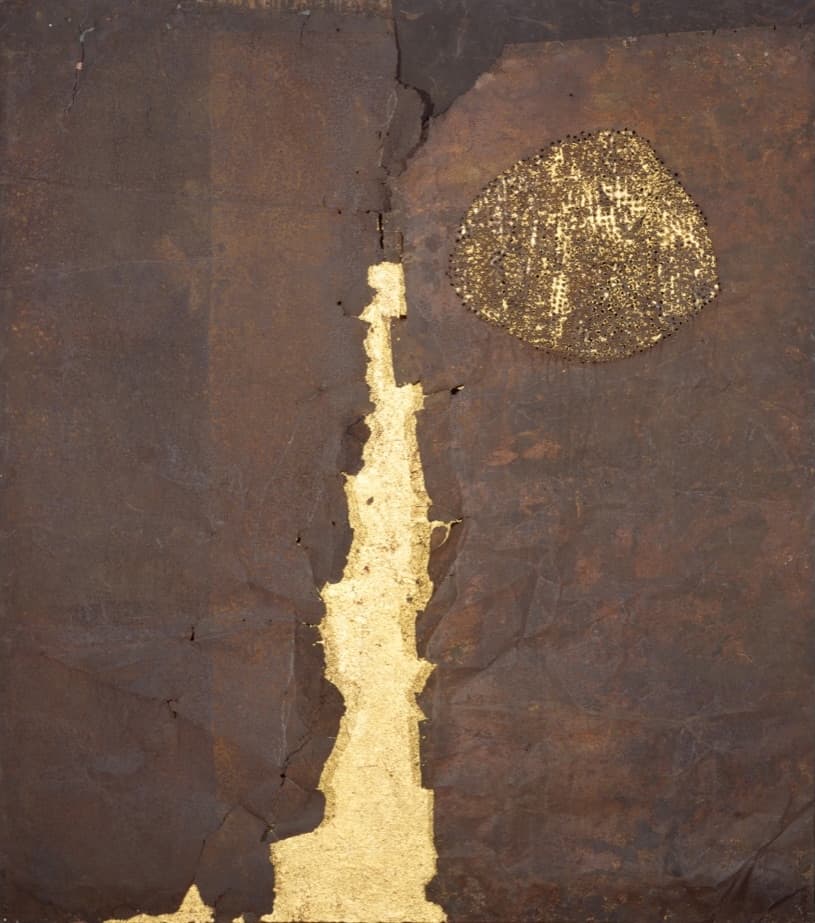
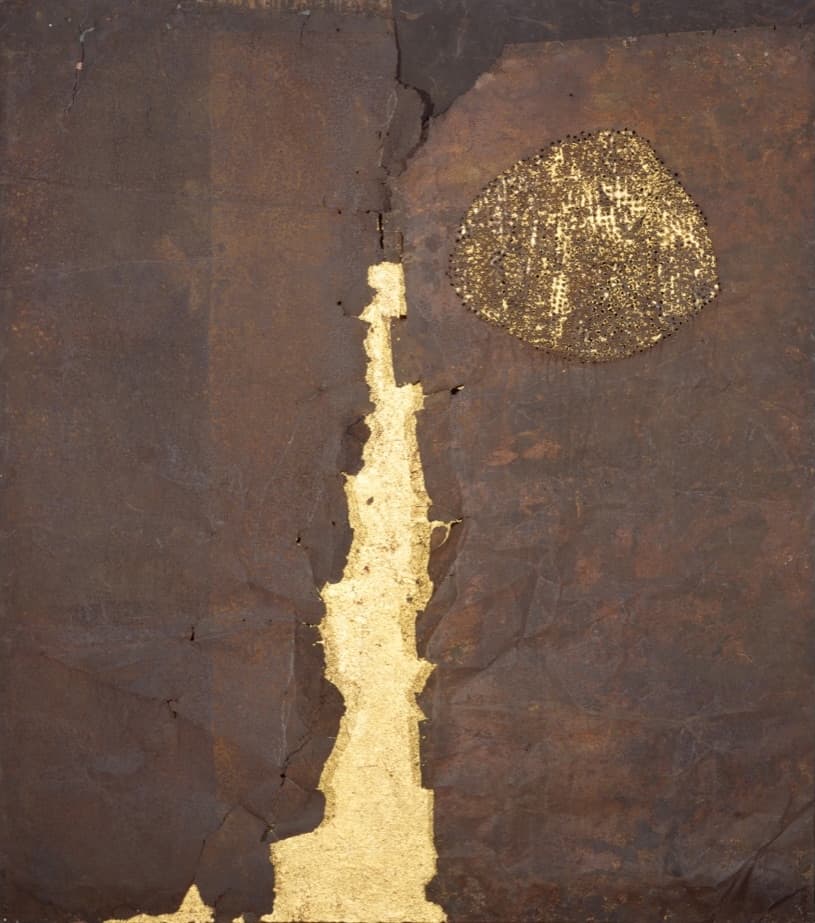
He was also known for his “Messages” series, gold leaf works, and sculptural environments that used repetition, surface, and light to create contemplative experiences. Gold became a particularly important material in his later work, not as decoration in a conventional sense, but as a way to evoke sacred space, mystery, and inward reflection. His art often carried a spiritual dimension without being narrowly religious.
Goeritz also worked as a teacher, curator, and writer. He played a major role in shaping artistic dialogue in Mexico and helped introduce new currents of abstraction and experimental art. He was sometimes controversial because of his strong opinions and his refusal to fit neatly into any camp. That edge was part of his impact. He challenged habits, pushed institutions, and insisted that art should aim higher.
Mathias Goeritz died in Mexico City in 1990. Today he is remembered as a major figure in modern Mexican culture and in international postwar art. His legacy lies in the way he merged sculpture, architecture, and philosophy into a single vision. He believed art should not merely decorate life, it should deepen it. That belief still gives his work its force.
Represented By
Artworks by Mathias Goeritz