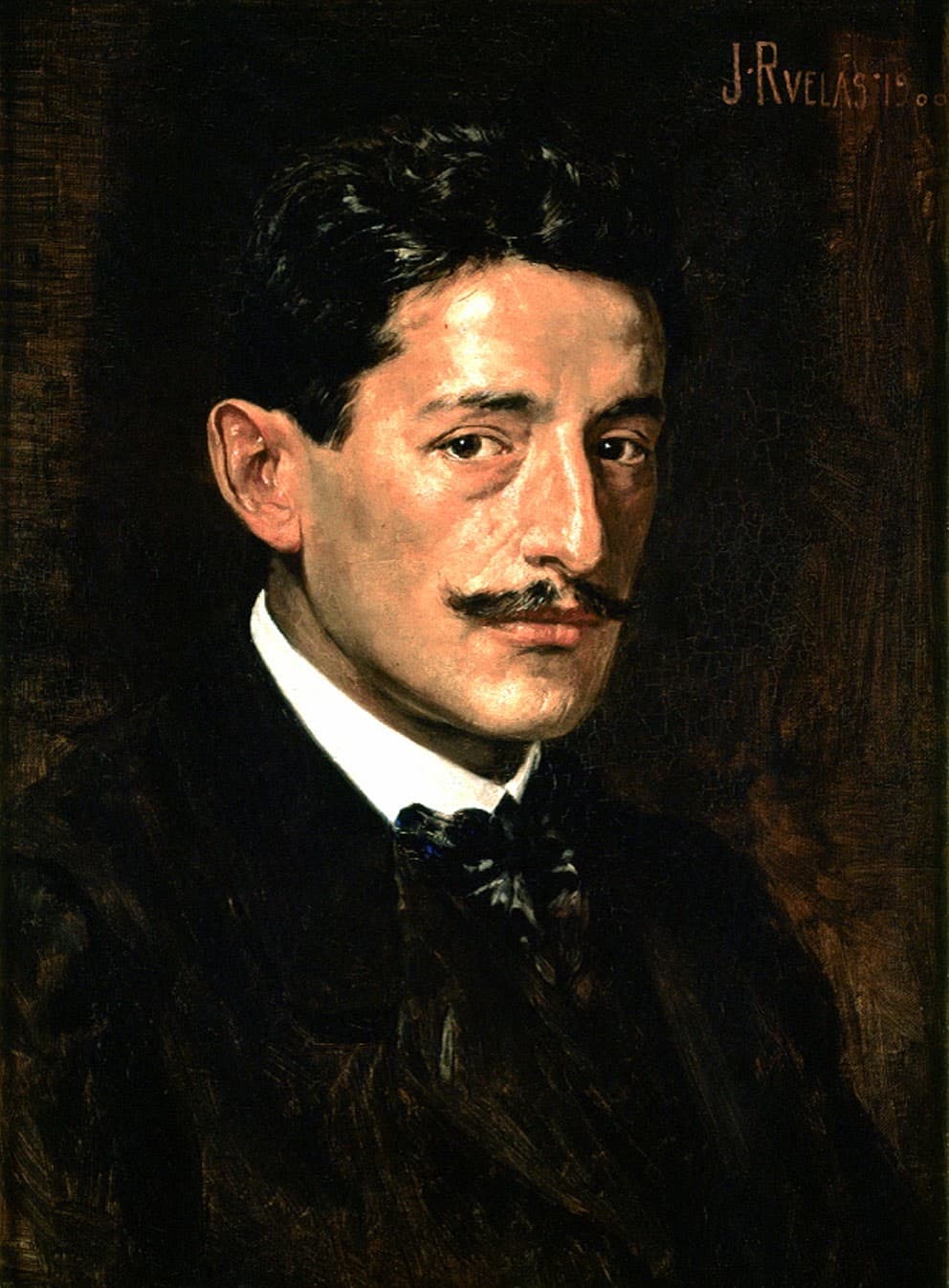
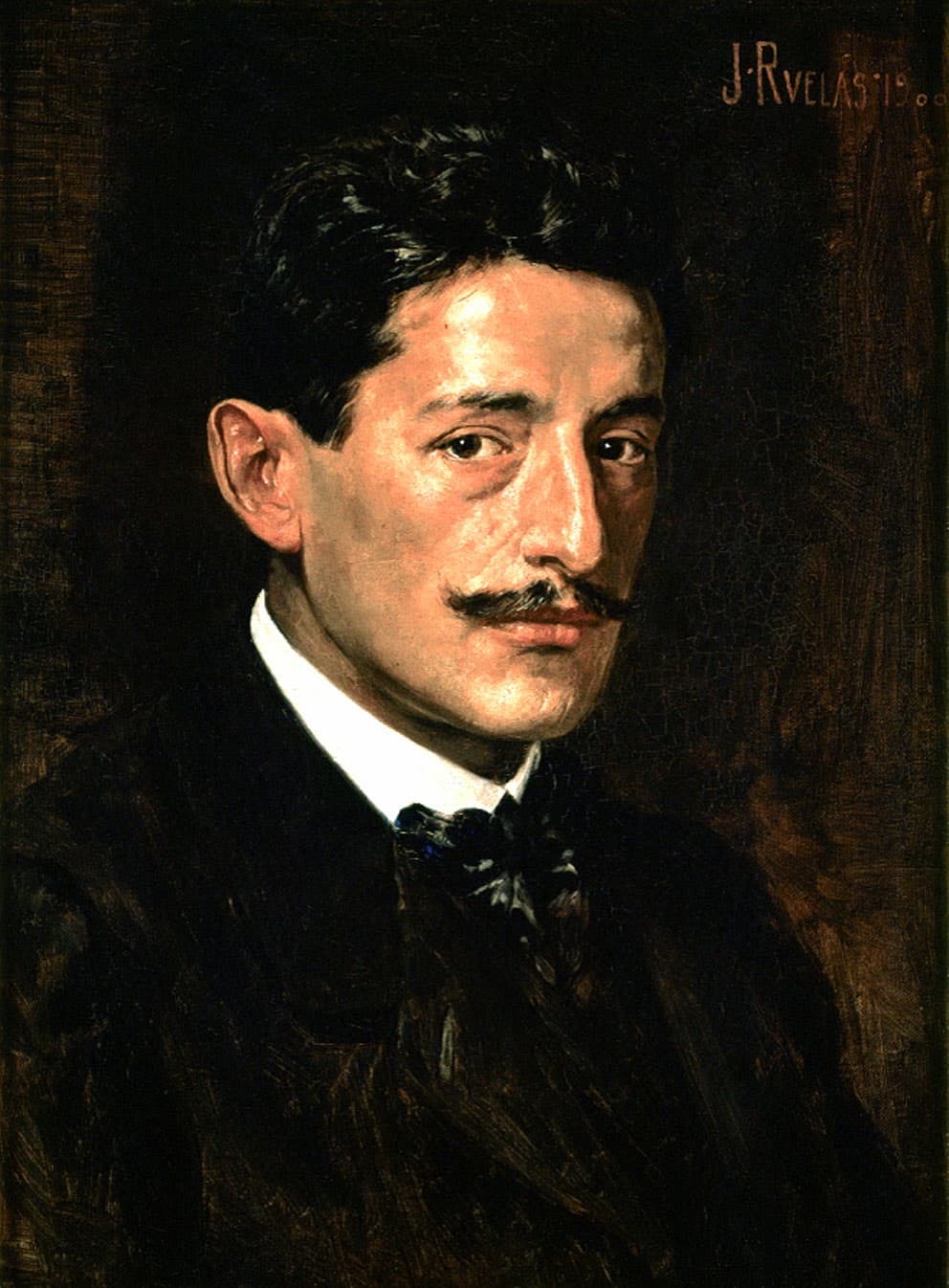
Julio Ruelas
Mexico, b. 1870, d. 1907
Julio Ruelas was a Mexican artist born in 1870 in Zacatecas who became one of the most important visual figures associated with the Symbolist movement in Mexico at the turn of the twentieth century. Though his life was short, ending in 1907, he produced a body of work that stands out for its dark imagination, technical precision, and exploration of themes such as death, desire, decadence, and the human psyche. His art marked a significant departure from academic traditions and anticipated many of the psychological and expressive concerns that would later emerge more fully in modern art.
Ruelas received formal training at the Academia de San Carlos in Mexico City, where he studied drawing, painting, and engraving. This academic foundation gave him strong technical skills, particularly in draftsmanship, which remained evident throughout his career. However, he was not content to remain within the limits of academic realism. Seeking broader influences, he traveled to Europe, where he studied in Germany and encountered the Symbolist movement, which was gaining momentum at the time. This exposure had a profound impact on his artistic direction.
Symbolism emphasized the expression of inner states, dreams, and metaphysical ideas rather than direct representation of the external world. Ruelas embraced this approach, developing imagery that is often fantastical, unsettling, and charged with symbolic meaning. His works frequently feature skeletal figures, hybrid creatures, and dreamlike scenes that blur the boundaries between reality and imagination. These elements reflect a fascination with mortality, transformation, and the darker aspects of human experience.
A significant part of Ruelas’s career was connected to the literary magazine Revista Moderna, one of the leading publications of Mexico’s modernista movement. Through his illustrations for the magazine, he became closely associated with writers and intellectuals who were exploring similar themes of decadence, beauty, and existential reflection. His images did not simply accompany the texts. They expanded on them, creating a visual counterpart to the literary exploration of mood, symbolism, and introspection.
Ruelas was particularly skilled in printmaking and illustration, media that allowed him to fully express his precise line work and intricate compositions. His drawings often display a remarkable attention to detail, with finely rendered forms that contrast with the surreal and often disturbing nature of the subject matter. This combination of technical control and imaginative intensity is one of the defining qualities of his work. His imagery frequently engages with themes of femininity, temptation, and the tension between beauty and decay. Female figures in his work often appear as both alluring and dangerous, reflecting broader Symbolist concerns with duality and the complexity of desire. At the same time, his use of skeletal and grotesque forms underscores an ongoing meditation on mortality. These recurring motifs create a body of work that feels cohesive, unified by a consistent exploration of existential themes.
Although Ruelas spent time in Europe, his work remained connected to Mexico’s cultural context, particularly through his involvement with modernismo. He helped introduce and adapt Symbolist ideas within a Mexican framework, contributing to a shift away from purely academic art toward more expressive and introspective forms.
Julio Ruelas died in 1907 at a relatively young age, leaving behind a body of work that, while limited in quantity, had a lasting impact. He is remembered as a pioneering figure who brought Symbolist aesthetics into Mexican art, opening the door for later developments in modernism.
Today, Ruelas is regarded as a key artist of his era, valued for his ability to merge technical mastery with imaginative depth. His work continues to stand as an early exploration of psychological and symbolic themes in Mexican art, offering a vision that is both haunting and intellectually rich.
Represented By
Artworks by Julio Ruelas