Hector Hyppolite
Haiti, b. 1894, d. 1948
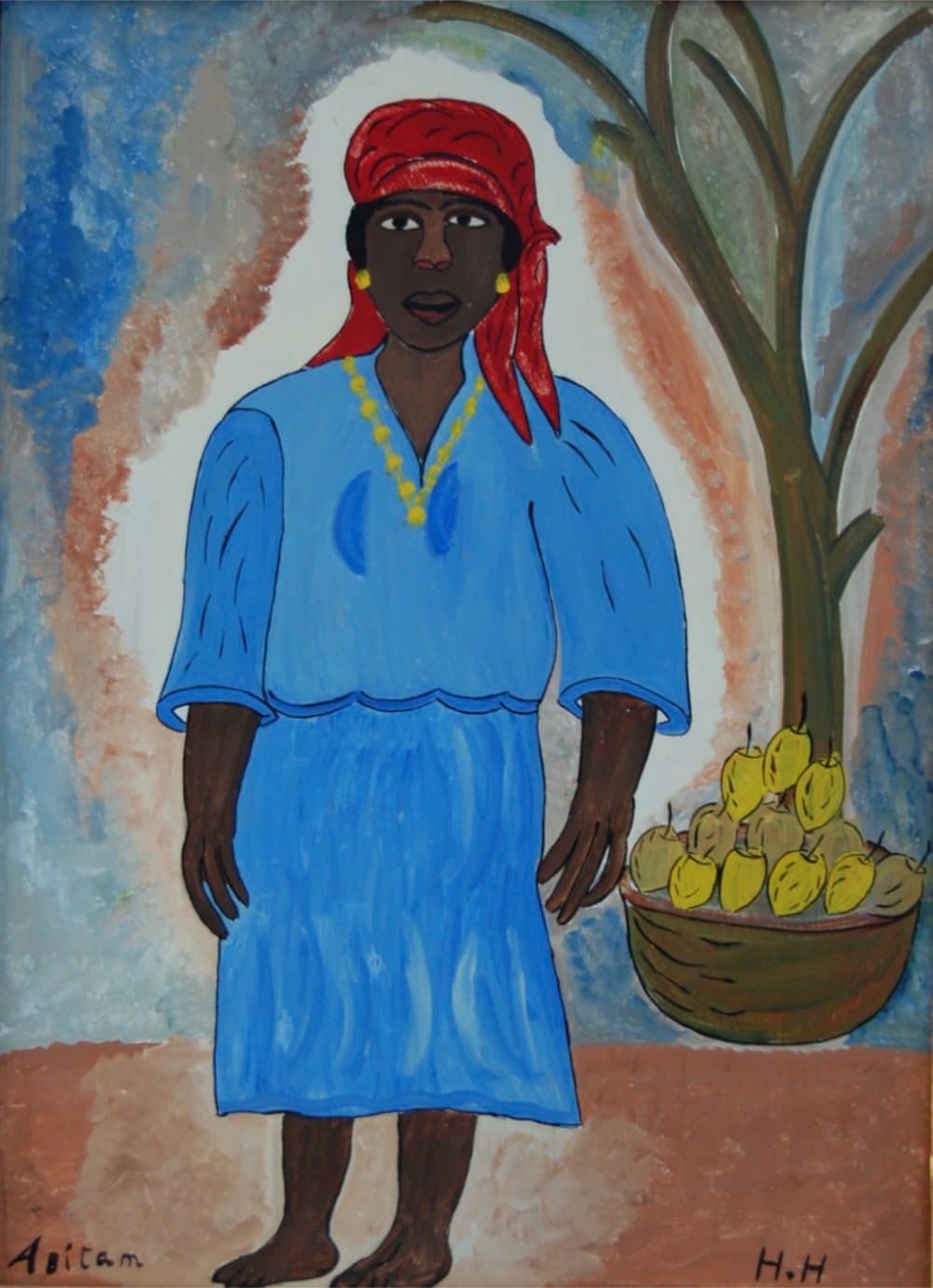
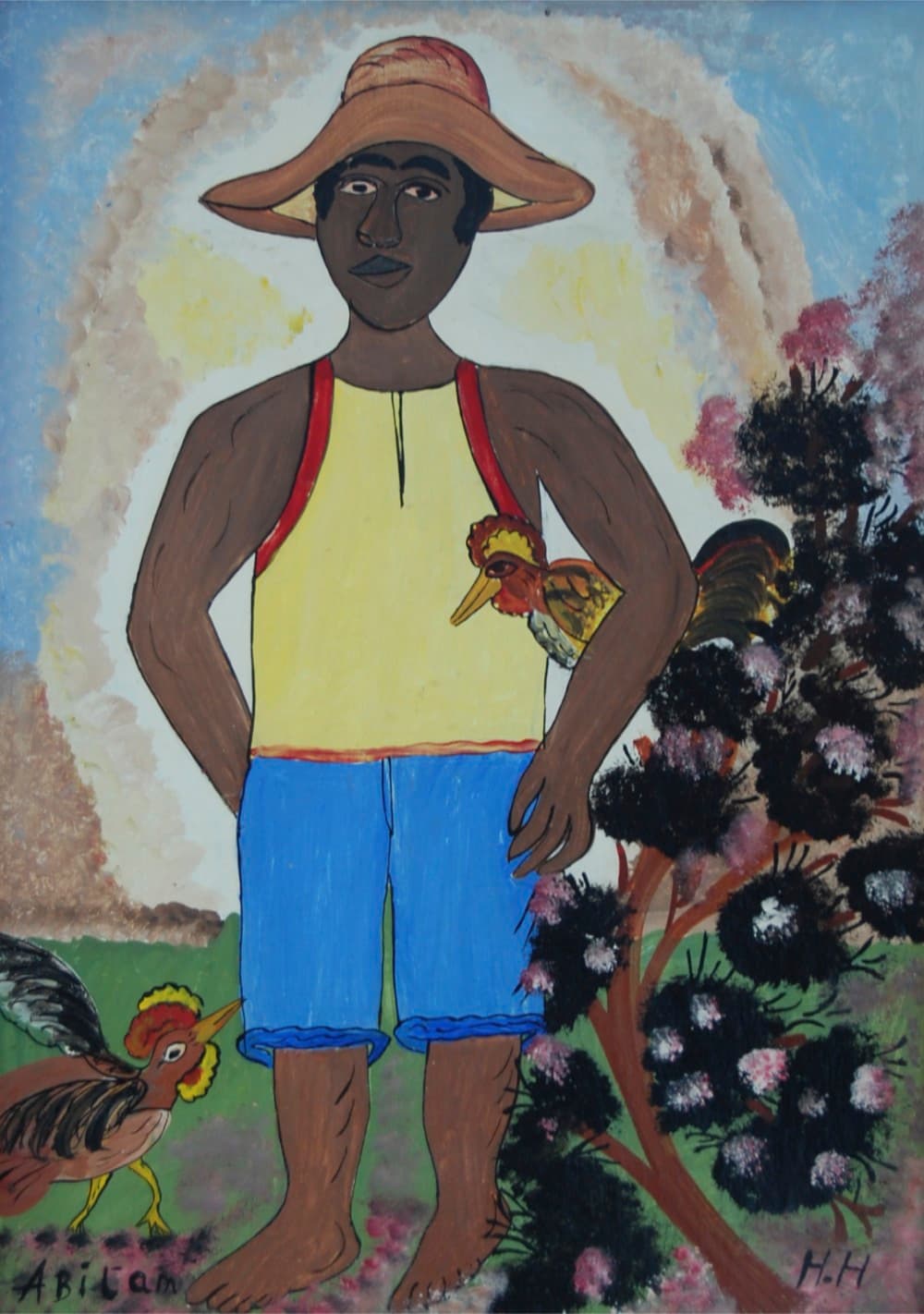
Hector Hyppolite was one of the most important Haitian painters of the twentieth century and remains one of the best known artists associated with Haitian art worldwide. Born in Haiti in 1894, most likely in Saint Marc, he became celebrated for paintings that combined spiritual intensity, vivid color, and direct, imaginative storytelling. He is often described as a self taught artist, but that label can be misleading if it is taken to mean unsophisticated. Hyppolite developed a highly personal style that drew from Vodou belief, local religious imagery, daily life, and the visual culture of Haiti. His work feels immediate and unpolished in the best sense, alive with conviction rather than academic polish.
Relatively little is known with certainty about every detail of his early life, which is part of why Hyppolite has taken on an almost legendary status. He is believed to have come from a modest background and to have worked at different times as a shoemaker, house painter, and sign painter before gaining recognition as an artist. These experiences mattered. They gave him a familiarity with practical materials and a direct, functional approach to image making. He did not emerge from formal academies or elite artistic circles. Instead, he built his visual language from lived experience, local tradition, and spiritual practice.
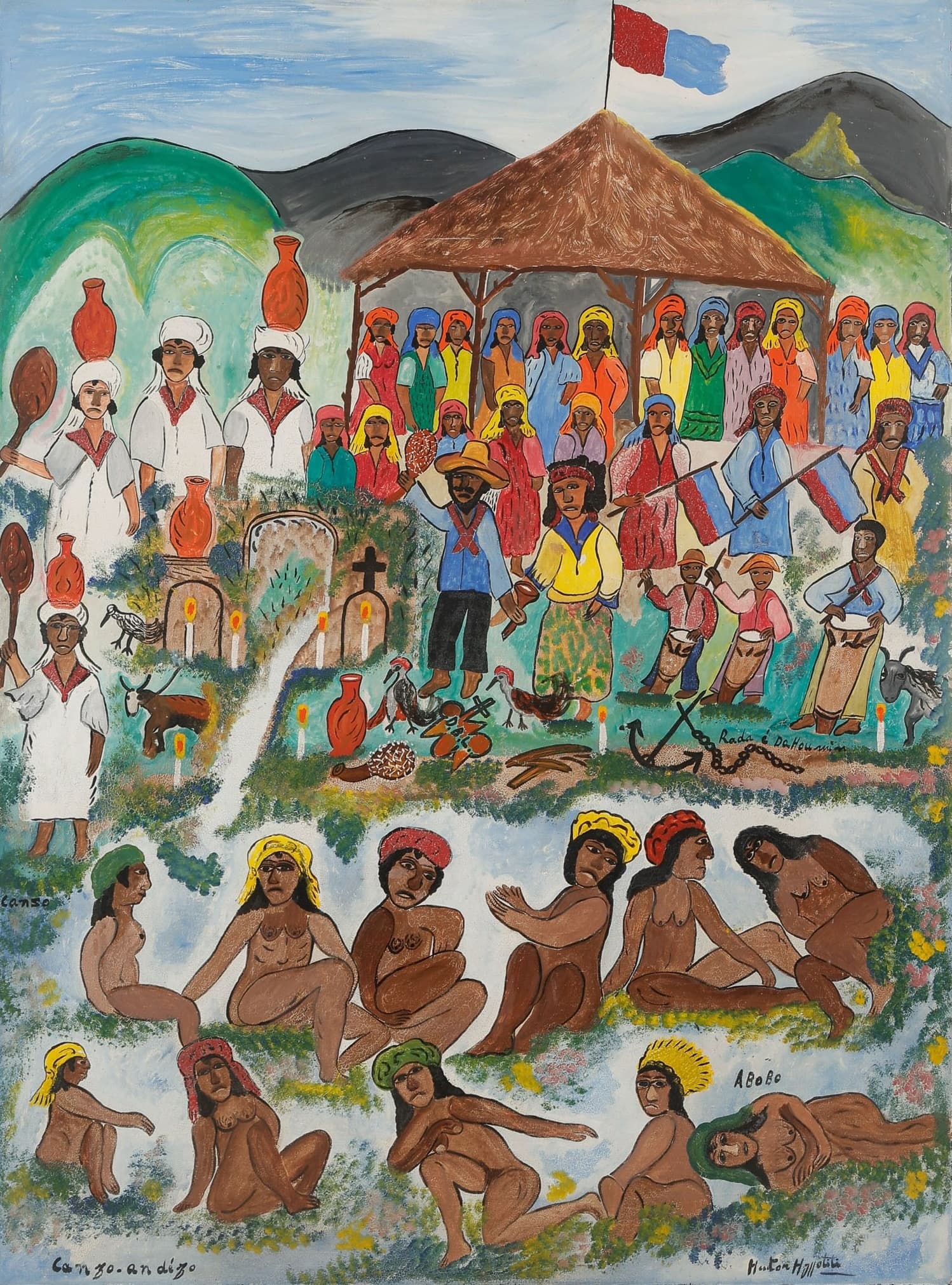
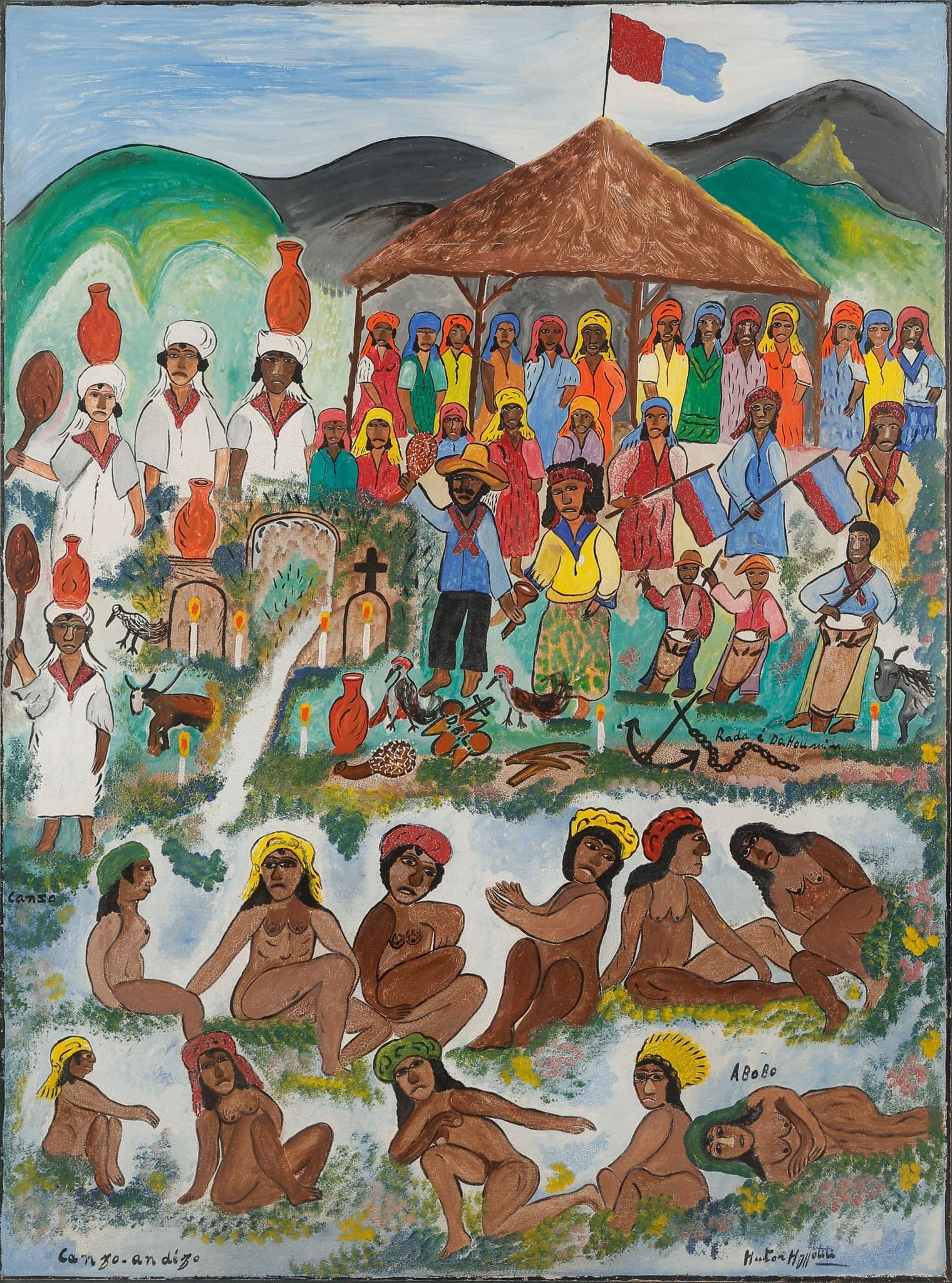
Hyppolite was deeply connected to Haitian Vodou, and this connection stands at the center of his art. He is often described as a Vodou priest, or at least as someone closely involved in religious ceremony and belief. Many of his paintings depict lwa, or spirits, as well as saints, ritual symbols, sacred animals, and scenes that seem to move between the earthly and the supernatural. In Haiti, religious life often developed through a layered relationship between African belief systems and Catholic imagery, and Hyppolite’s paintings reflect that world naturally rather than academically. His works do not feel like illustrations made from the outside. They feel like expressions from within a living spiritual system.
His art began attracting wider attention in the 1940s, especially after the founding of the Centre d’Art in Port au Prince in 1944. The Centre d’Art played a major role in identifying and promoting Haitian artists, including painters who had not received formal academic training. Hyppolite quickly became one of the movement’s most striking figures. His paintings stood out for their raw force, unusual compositions, and sense of revelation. He often painted on found materials, including doors, pieces of wood, and other available surfaces, which added to the tactile and grounded quality of the work.
A turning point came when the Cuban French writer and intellectual André Breton visited Haiti and encountered Hyppolite’s work. Breton, one of the founders of Surrealism, was deeply impressed. He saw in Hyppolite’s paintings a genuine visionary force, something he believed connected strongly with Surrealist ideas about dream, spirit, and the unconscious. Breton’s admiration helped draw international attention to Hyppolite, though Hyppolite’s work was never simply an extension of European Surrealism. That framing can be useful up to a point, but it can also flatten what made him original. His imagery did not arise from Parisian theory. It came from Haitian religion, Haitian experience, and his own imagination.
Hyppolite painted women, animals, saints, tropical plants, and spirits with a distinctive sense of pattern and presence. His figures often appear frontal, iconic, and charged with symbolic energy. There is a dreamlike quality in many of his compositions, but there is also clarity. He was not trying to create visual puzzles for intellectual effect. He was painting a world in which the visible and invisible constantly overlap.
He died in 1948, not long after gaining broad recognition, which makes his career feel both brilliant and tragically brief. Even so, his influence was enormous. Hector Hyppolite helped define international understanding of Haitian painting and opened the door for later generations of artists from Haiti to be taken seriously on the world stage. Today he is remembered not as a curiosity, but as a major modern artist whose work carried spiritual depth, cultural specificity, and unmistakable power.
Represented By
Artworks by Hector Hyppolite