Guillermo Olguín
Mexico, b. 1969
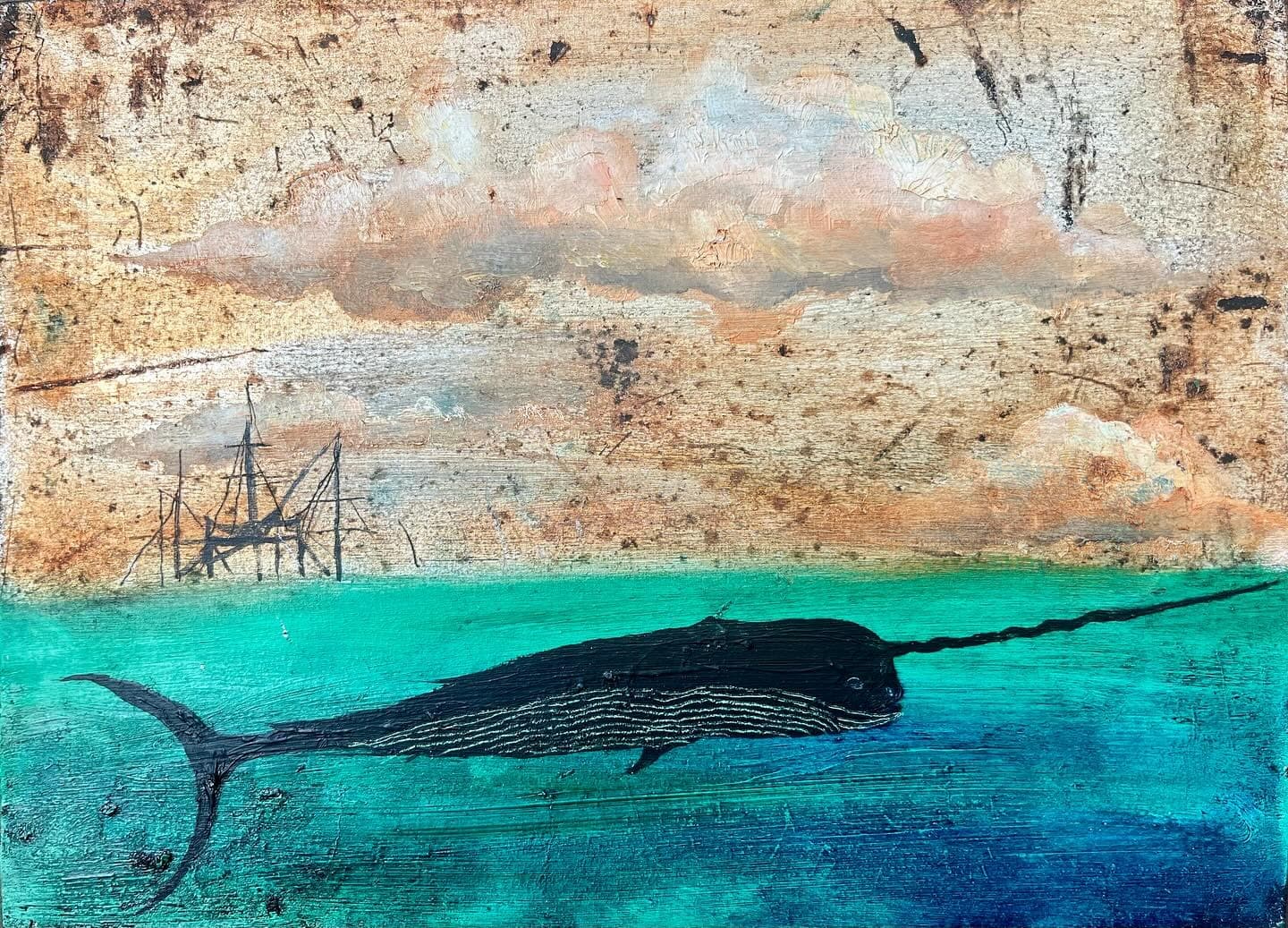
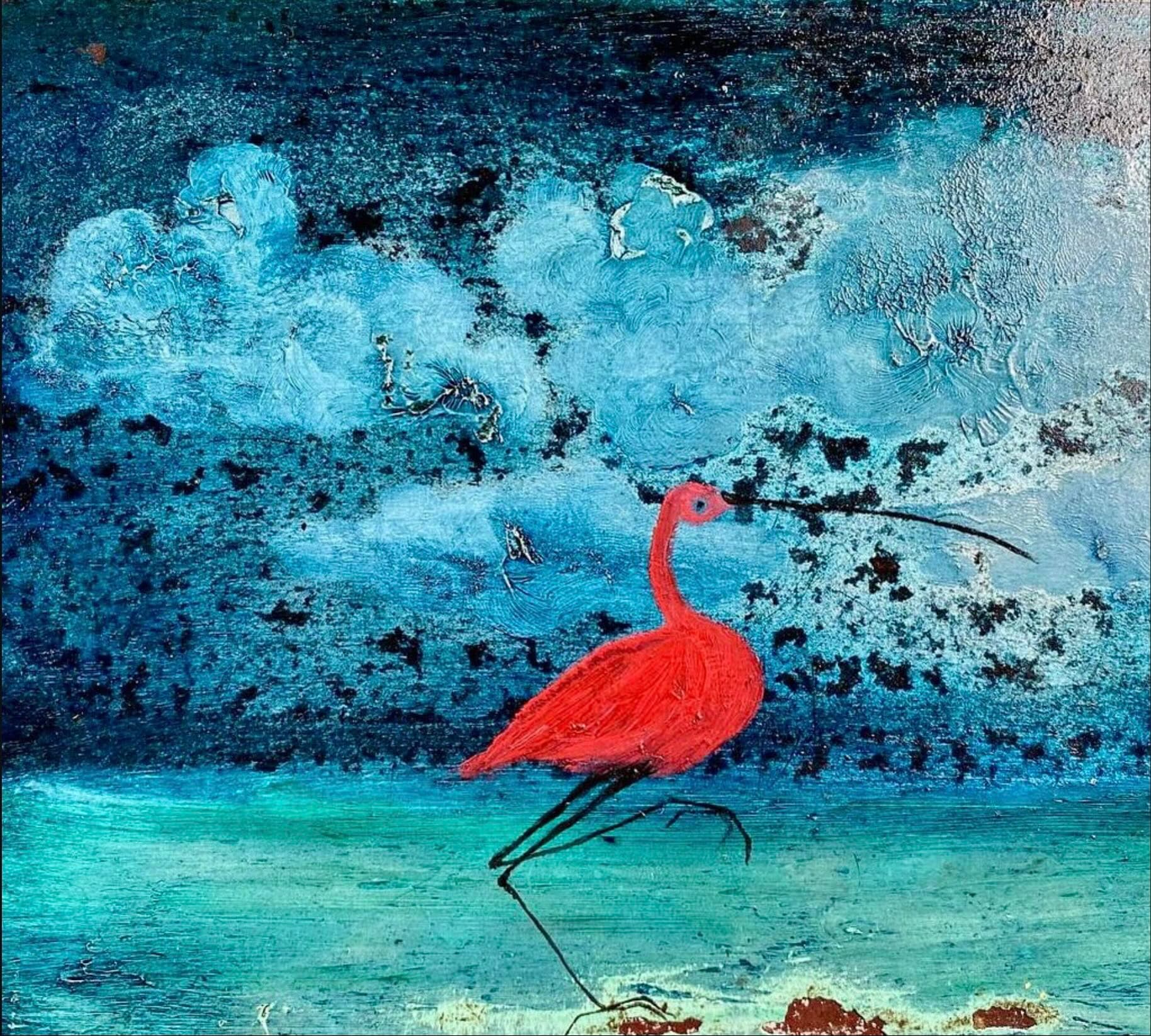
Guillermo Olguín Mitchell, better known as Guillermo Olguín, is a Mexican artist born in Mexico City in 1969. His work stands out for its emotional intensity, symbolic depth, and unmistakably personal visual language. Although he works across photography, video, graphic art, and drawing, he is primarily recognized for his painting. His art draws from mythology, pagan ritual, poetry, and the visual traditions of Mexico, with a particularly strong connection to the culture and artistic heritage of Oaxaca.
Olguín completed his professional studies at the Cornish School of the Arts in Seattle, Washington, and later pursued postgraduate studies at the Hungarian University of Fine Arts in Budapest. This international training exposed him to a broad range of artistic traditions and helped shape a practice that combines contemporary sensibility with older, more timeless currents of human experience. Rather than representing the world in a literal or documentary manner, he creates images charged with memory, mystery, ritual, and psychological tension.
Born into a generation of artists working after the major nationalist mural movements that defined much of twentieth-century Mexican art, Olguín developed a more intimate and introspective approach. While the muralists often emphasized public history, collective identity, and political narrative, his work turns inward toward emotion, symbolic relationships, and states of consciousness. His paintings frequently suggest unseen forces and buried histories through encounters between people, animals, objects, and imagined spaces.
A defining quality of Olguín’s work is the expressive force of his imagery. His paintings are neither passive nor purely decorative. They often create a tension between beauty and unease, ritual and spontaneity, and the familiar and the dreamlike. This emotional complexity gives the work a persistent presence and allows it to remain in the viewer’s mind long after the initial encounter.
Mythology plays a central role in his visual language. Rather than simply illustrating traditional stories, Olguín uses myth as a way to address fundamental human experiences such as fear, transformation, desire, sacrifice, memory, and renewal. His paintings explore the emotional and spiritual residue that myth continues to carry within contemporary life. This gives his work an atmosphere that often seems to exist outside ordinary time.
The presence of pagan ritual adds another layer to his practice. Ritual introduces gesture, repetition, symbolism, and the transformation of ordinary actions into something charged with meaning. In Olguín’s paintings, this ceremonial quality emerges through pose, composition, recurring motifs, and the relationships between figures and forms. His works can feel less like conventional scenes and more like events whose full meaning remains deliberately unresolved.
Poetry is equally important to understanding his art. Like a poem, his work often communicates through rhythm, image, mood, association, and suggestion rather than direct explanation. Olguín leaves space for interpretation, allowing viewers to respond emotionally before attempting to understand intellectually. His imagery does not insist on a single reading. Instead, it opens a field of possible meanings that may shift with each encounter.
Oaxaca has had a particularly strong influence on his work. The state’s indigenous traditions, ritual practices, craft heritage, and distinctive visual culture appear to inform both the atmosphere and symbolic vocabulary of his paintings. This influence does not result in simple quotation or imitation. Instead, Olguín absorbs these references into a personal language that reflects his engagement with Mexican history, landscape, spirituality, and cultural memory.
His work has been exhibited extensively in Mexico and internationally, including presentations in the United States, Cuba, Paraguay, Brazil, Argentina, Hungary, Italy, the United Kingdom, Germany, Spain, Portugal, France, Finland, and Japan. This broad exhibition history reflects the international reach of his practice and the ability of his imagery to resonate across cultural contexts. Olguín’s work is held by private collectors throughout the Americas and Europe. It is also represented in institutional collections, including the Museo de Arte Contemporáneo de Oaxaca and the Instituto de Artes Gráficas de Oaxaca. These collections affirm his importance within Mexican contemporary art and his connection to Oaxaca’s influential artistic community.
His position within Mexican contemporary art is especially notable because of the country’s complex and deeply rooted visual traditions. Olguín does not fit neatly within a single movement or category. Instead, he draws selectively from symbolic painting, expressionism, mythology, ritual, and contemporary practice while maintaining a distinct individual voice. His work is aware of history without being constrained by it.
Atmosphere is as important to his paintings as subject matter. Through color, gesture, texture, and composition, he creates self-contained worlds that viewers enter rather than simply observe. His paintings can feel haunting, lyrical, ceremonial, or enigmatic, often combining several of these qualities at once.
For viewers and collectors, Guillermo Olguín represents the kind of artist whose work rewards sustained attention. His paintings do not reveal everything immediately. They unfold gradually through mood, symbolism, association, and visual tension. His art occupies a compelling space between the ancient and the contemporary, the personal and the collective, and the visible world and the forces that seem to exist beneath it.
Through mythology, pagan ritual, poetry, and the visual traditions of Mexico, Guillermo Olguín has created a body of work that is emotionally resonant, visually distinct, and spiritually charged. His practice invites viewers to look slowly, feel deeply, and remain open to meanings that cannot always be expressed directly in words.
Represented By
Artworks by Guillermo Olguín
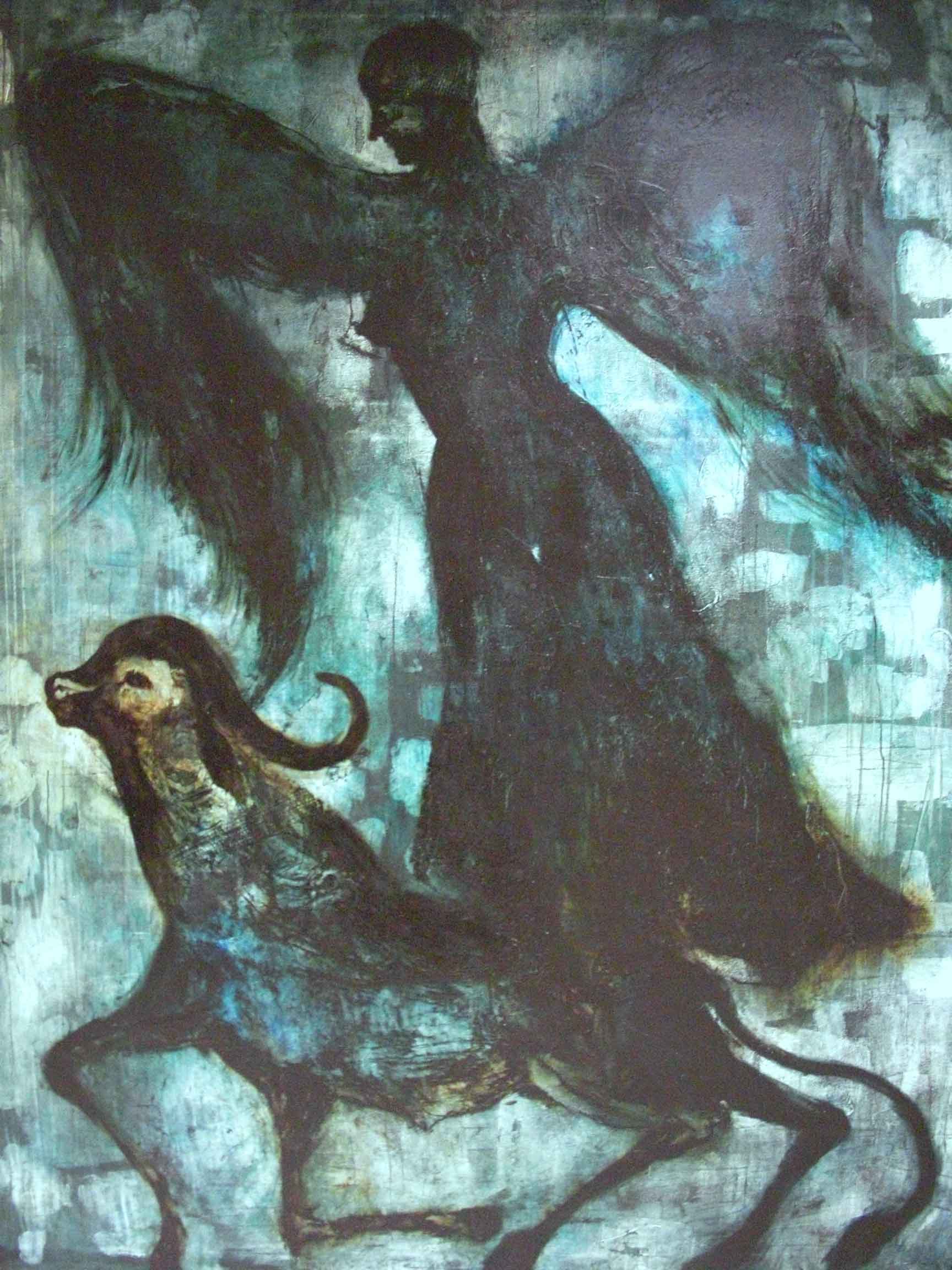
Editorial about Guillermo Olguín
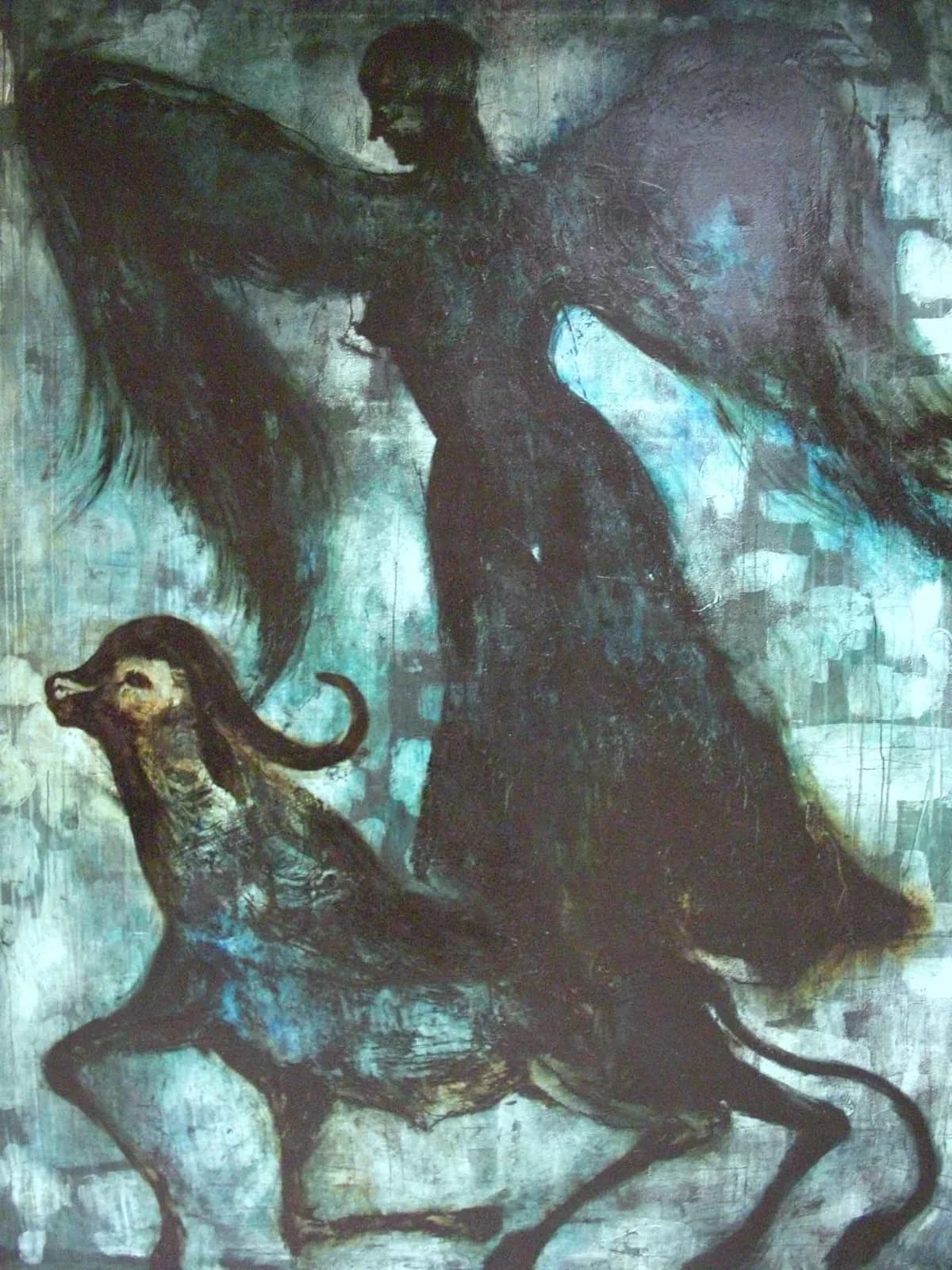
Artist Spotlight: Guillermo Olguín
Guillermo Olguín turns travel, memory, ritual and the visual culture of Oaxaca into richly layered paintings, prints and photographs. His work moves between deeply personal...
Lorenza Santos · September 5, 2026
Read article