Adolfo Guiard Larrauri
Spain, b. 1960, d. 1916
Adolfo Guiard Larrauri was a Spanish painter born on April 10, 1860, in Bilbao, and is considered one of the most emblematic artists of modern painting in the Basque Country. His work played a key role in the introduction of Impressionist ideas to northern Spain, combining academic training with a more modern sensitivity to light, color, and everyday life. Through his paintings, he helped shift Spanish art toward a more open and observational approach.
Guiard began his artistic training in Bilbao before continuing his studies abroad. He spent time in Paris, where he was exposed to Impressionism and other contemporary movements that were redefining painting at the end of the nineteenth century. This experience had a lasting impact on his work, encouraging him to move away from rigid academic conventions and toward a more fluid and atmospheric style.
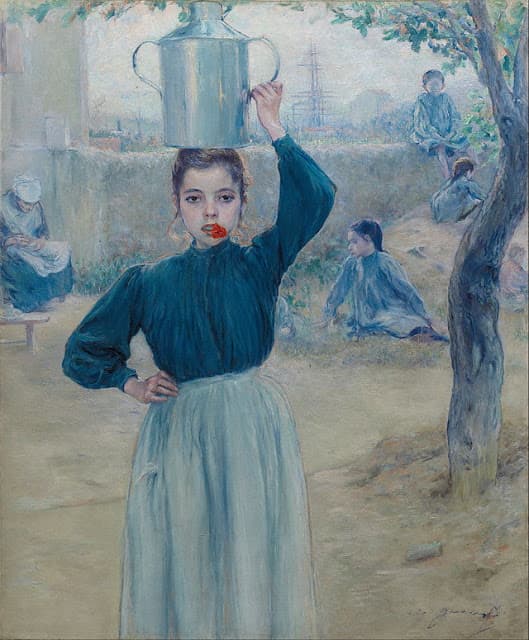
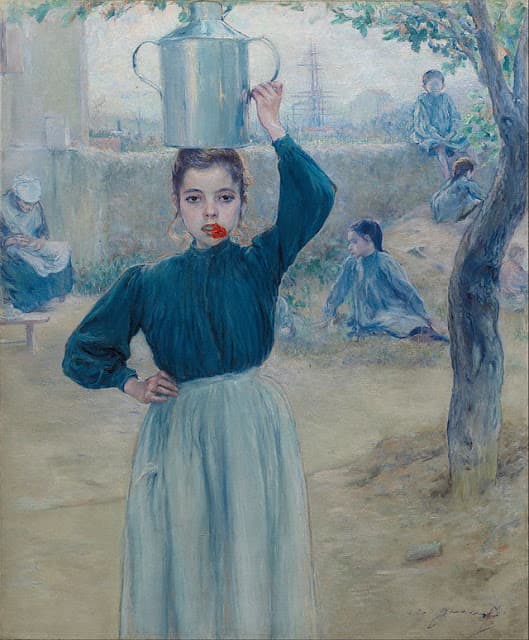
A defining feature of Guiard’s painting is his attention to light and color. He often worked with a lighter palette, using soft tones and subtle contrasts to capture the effects of natural light. His brushwork became more relaxed and responsive, allowing him to convey the changing qualities of outdoor scenes. This approach reflects the influence of Impressionism, though his work retains a sense of structure and clarity.
His subject matter frequently includes scenes of daily life, particularly in rural and coastal settings. Guiard painted figures in gardens, fields, and landscapes, presenting them in moments of quiet activity or rest. These compositions are characterized by a sense of calm and balance, where figures and environment are integrated into a unified whole. Rather than focusing on dramatic narratives, he emphasized observation and atmosphere.
Landscape played an important role in his work. He captured the environment of the Basque region with sensitivity, paying attention to its distinctive light and natural forms. His landscapes are carefully composed, with a clear sense of depth and spatial organization, while still maintaining the spontaneity associated with plein air painting.
Throughout his career, Guiard exhibited his work and gained recognition for his contribution to modern Spanish painting. He is particularly valued for his role in bringing new artistic ideas to Bilbao and the surrounding region, influencing later generations of artists. His work represents a transition between academic tradition and modern experimentation.
Adolfo Guiard Larrauri died on March 8, 1916, in Bilbao. He is remembered as a painter who helped introduce Impressionist sensibilities to Spanish art, combining careful observation with a refined use of light and color. His legacy lies in his ability to adapt international influences to a local context, contributing to the development of modern painting in the Basque Country.
Represented By
Artworks by Adolfo Guiard Larrauri