Tonel Antonio Eligio Fernandez
Cuba, b. 1958
Tonel, the professional name of Antonio Eligio Fernández, is a Cuban artist, critic, curator, and educator whose work has played an important role in the development of contemporary Cuban art since the late twentieth century. Born in Havana in 1958, he emerged as part of a generation of artists that pushed Cuban art in more conceptually ambitious, ironic, and intellectually layered directions. While many artists become known mainly for a single medium, Tonel has built a broader identity. He is not only a maker of images and installations, but also a writer and thinker whose commentary on art and culture has shaped how Cuban art is understood both inside and outside the island.
Unlike many artists trained primarily in studio practice, Tonel studied art history at the University of Havana, earning his degree in 1982. That background matters because his work often shows the mind of someone who is not only making art, but also reflecting on how images function socially, politically, and historically. His art tends to be sharp, intelligent, and self aware. He has long been interested in systems of power, language, ideology, memory, and the absurd contradictions of Cuban life.
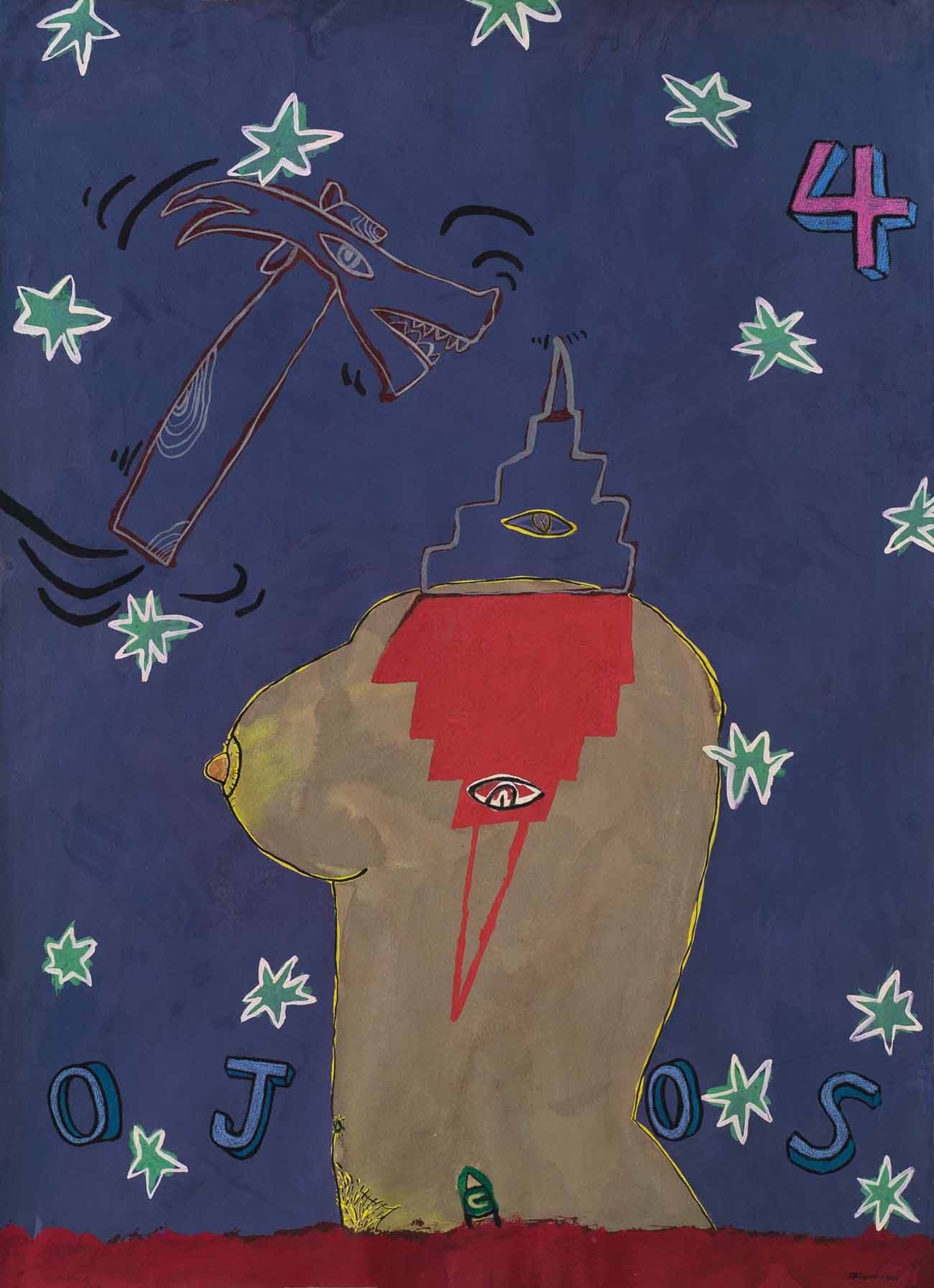
Rather than relying on direct slogans or heavy handed political statements, he often works through wit, metaphor, visual play, and conceptual tension. Tonel came to prominence in the early 1980s, a key period for Cuban art. This was a moment when a younger generation began challenging official cultural norms and expanding the language of art beyond more traditional revolutionary imagery. He became associated with that broader shift, and his early work drew attention for its use of caricature, satire, and critical observation.
Humor became one of his great tools. In Tonel’s hands, humor is never lightweight. It exposes contradictions, destabilizes certainty, and allows difficult subjects to be approached indirectly but effectively.
Over the years, Tonel has worked across drawing, painting, installation, and conceptual art. His imagery often includes maps, diagrams, texts, fragments of architecture, and symbols that point to larger questions about territory, isolation, global politics, and identity.
Cuba itself appears frequently in his work, sometimes literally, sometimes as an idea under pressure. He has examined the island as a physical place, a political symbol, and a psychological condition. This gives his art a layered quality. It can be visually spare, even playful, while carrying serious intellectual and historical weight. Tonel is also significant because he has worked as a critic and curator, not just as an exhibiting artist. He has written extensively on Cuban and contemporary art, helping frame debates around culture, censorship, artistic freedom, and the changing role of the artist. That double position, artist and critic, gives him unusual depth. He understands art from the inside as a maker, but also from the outside as someone able to analyze institutions, trends, and ideology.
His career has extended well beyond Cuba. He has exhibited internationally and participated in major biennials, including Havana, São Paulo, Berlin, and Venice.
He has also taught abroad, including at the San Francisco Art Institute, Stanford University, and the University of British Columbia in Vancouver. These experiences helped place him in a broader global conversation while preserving the distinctly Cuban focus of much of his work. He has lived in Canada and continued to develop projects that connect personal reflection, political thought, and visual experimentation.
Today, Tonel is regarded as one of the most intellectually important figures in contemporary Cuban art. His achievement lies not in spectacle, but in precision. He has shown that art can be critical without becoming blunt, political without becoming predictable, and humorous without losing seriousness. Through his images, writing, and curatorial work, Antonio Eligio Fernández has helped define a more questioning, complex, and mature vision of Cuban contemporary culture.
Represented By
Artworks by Tonel Antonio Eligio Fernandez