Tarsila Do Amaral
Brazil, b. 1886, d. 1973
Tarsila do Amaral was a Brazilian painter, draftswoman, and translator born on September 1, 1886, and died on January 17, 1973. She is widely regarded as one of the leading figures of Latin American modernism and as a central force in shaping a distinctly Brazilian visual identity within a modern artistic framework. Her work represents a synthesis of European avant garde influences and Brazilian cultural themes, creating a body of art that is both innovative and deeply rooted in national expression.
Tarsila was born into a wealthy family in São Paulo, which allowed her to pursue artistic studies both in Brazil and abroad. She trained in São Paulo before continuing her education in Paris, where she was exposed to major modern movements such as Cubism. In Paris, she studied with influential artists and absorbed new approaches to form, color, and composition. These experiences were critical in shaping her artistic language, providing the tools she would later adapt to her own cultural context.
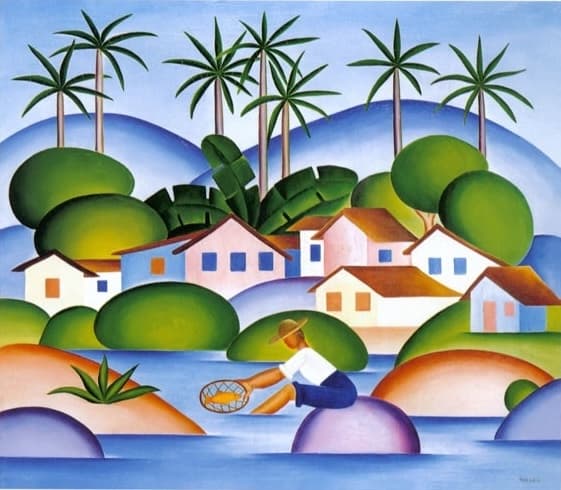
Upon returning to Brazil, Tarsila became a key member of a group of modernist writers and artists who sought to redefine Brazilian culture. This group emphasized the importance of creating art that reflected local identity rather than relying solely on European models. Within this context, Tarsila developed a style that combined simplified forms, bold color, and imaginative compositions inspired by Brazilian landscapes, folklore, and everyday life.
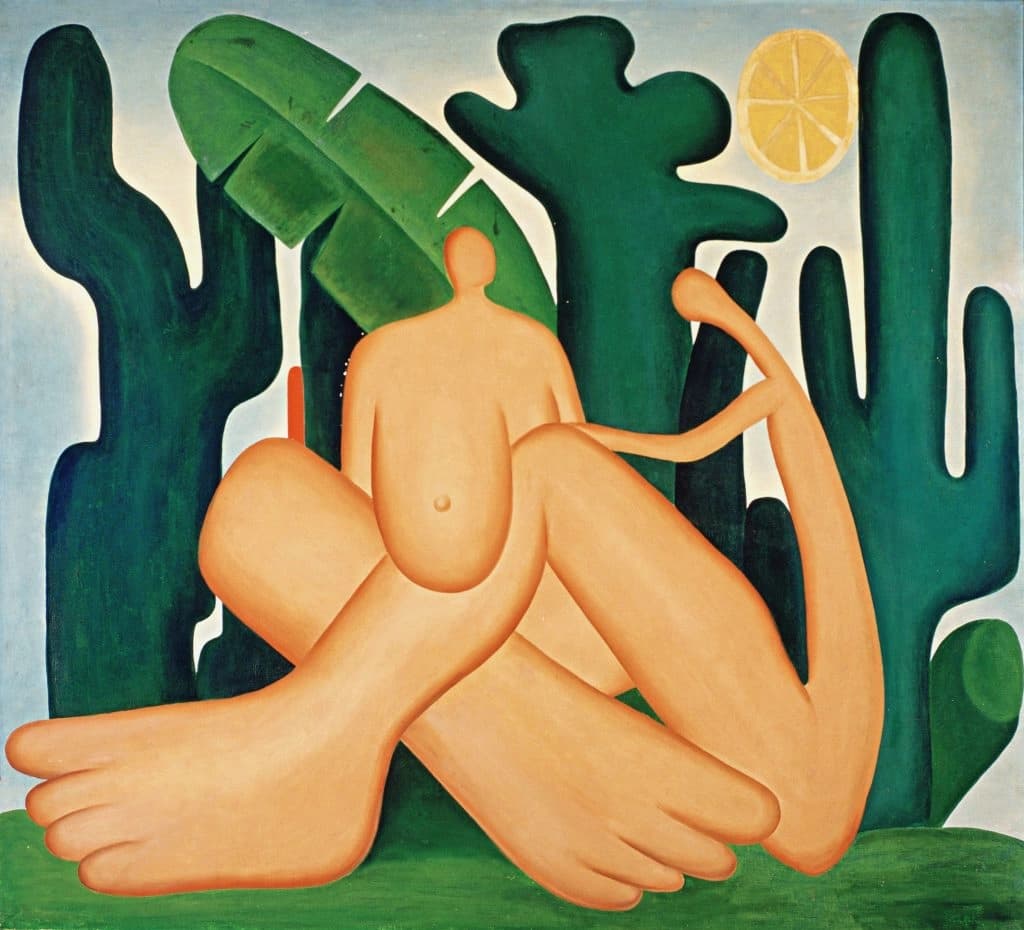
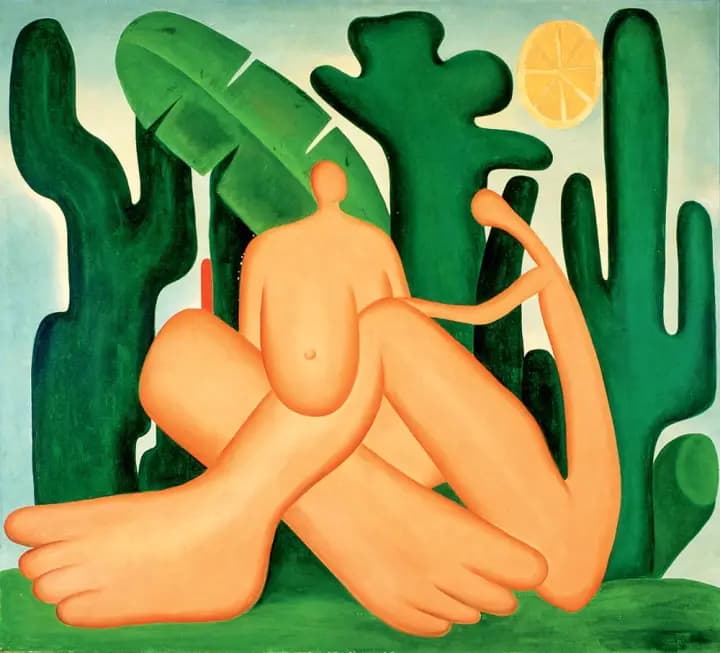
A defining characteristic of her work is her use of vibrant color and stylized forms. Her compositions often feature rounded shapes, flattened perspectives, and a sense of playful distortion. These elements give her work a distinctive visual identity while also aligning it with broader modernist principles. At the same time, her imagery is deeply connected to Brazil, drawing from rural scenes, tropical environments, and cultural symbolism. One of her most important contributions to modern art is her role in the development of the Anthropophagic movement, which proposed that Brazilian culture could absorb and transform external influences into something uniquely its own. This idea is reflected in her work, where European techniques are reinterpreted through a Brazilian lens. Her paintings from this period are among her most recognized, combining innovation with a strong sense of cultural identity.
Throughout her career, Tarsila’s work evolved in response to changing social and artistic contexts. While her early works emphasize formal experimentation and national identity, later works engage more directly with social themes. Despite these shifts, her commitment to clarity, composition, and the expressive power of color remained consistent.
Tarsila do Amaral exhibited her work internationally and gained recognition as a major figure in modern art. Her paintings are included in important museum collections and continue to be studied for their role in defining Brazilian modernism.
Tarsila do Amaral is remembered as an artist who successfully bridged international modernism and national identity. Through her innovative use of form and color, she created a visual language that expressed Brazilian culture in a modern way, leaving a lasting legacy in Latin American and global art history.
Represented By
Artworks by Tarsila Do Amaral