Ramiro Llona
Peru, b. 1947
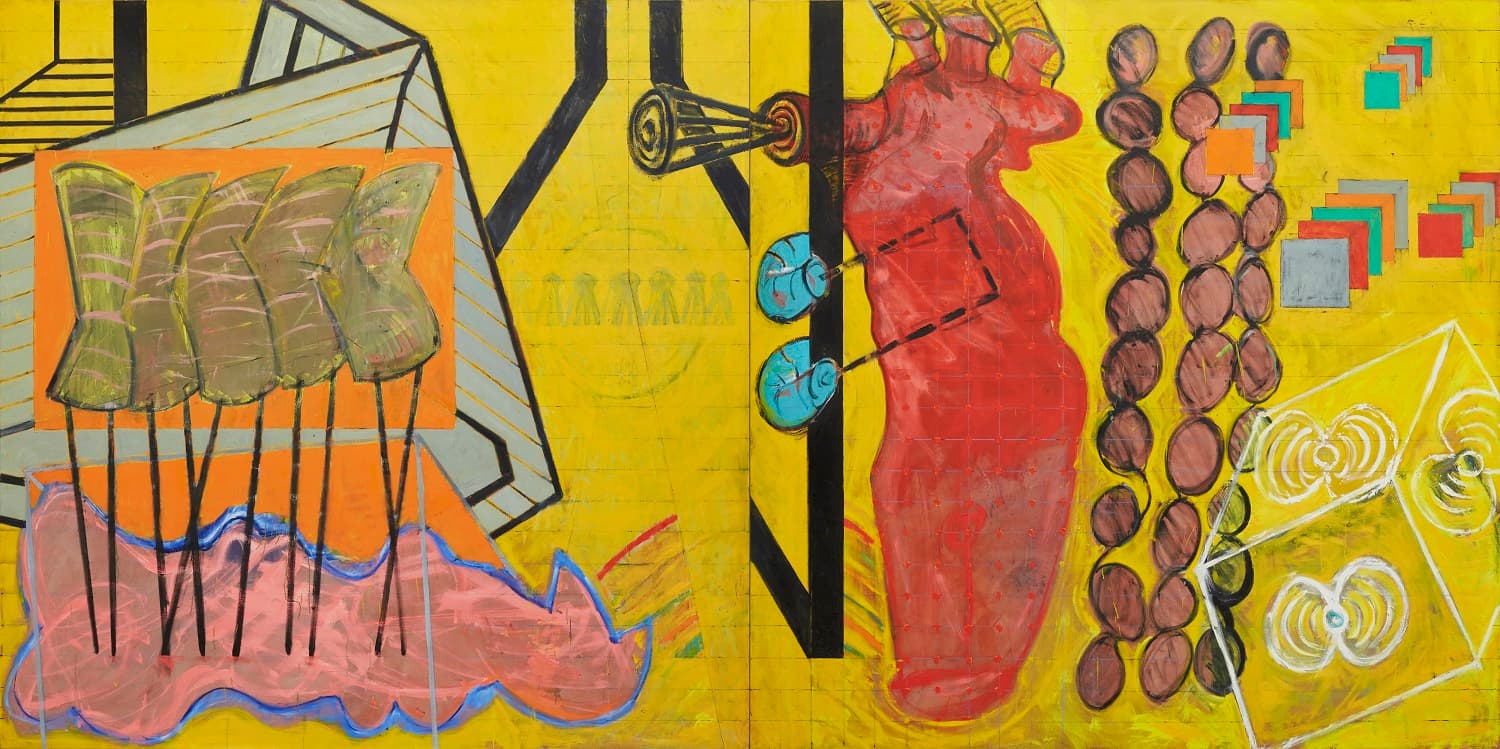
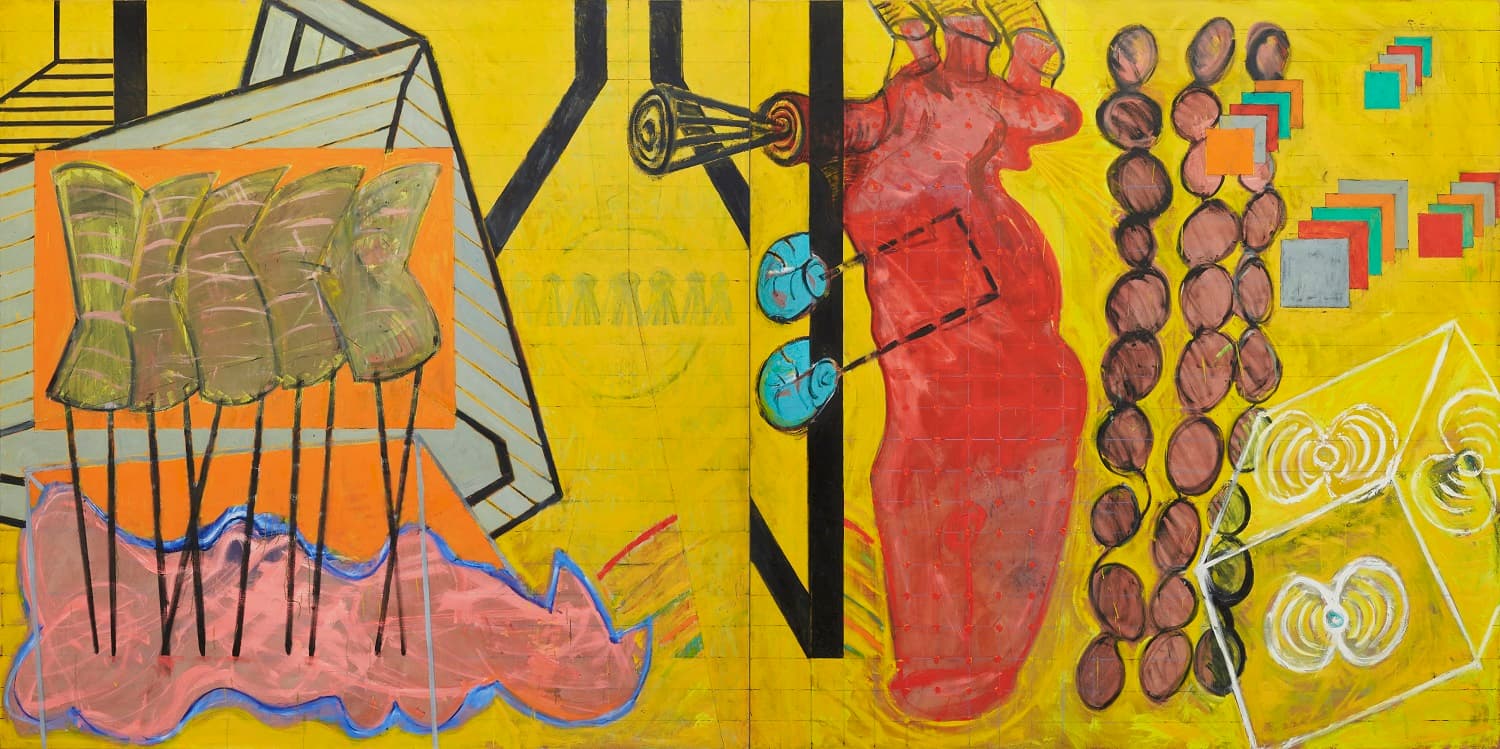
Ramiro Llona is a Peruvian abstract expressionist painter born in 1947. He is recognized for a body of work in which color functions as the central expressive force. Rather than using color as a secondary element or decorative surface, Llona makes it the fundamental principle of his painting. His vivid palette gives emotional intensity to his compositions and allows line, structure, and spatial depth to emerge with clarity and force.
Llona’s work belongs to the broader language of abstraction, but it is not detached from human experience. His paintings often use abstract forms to investigate inner states, emotional conflict, and the fragile relationships between people. Through color, line, and spatial organization, he explores questions of existential crisis, connection, tension, desire, and emotional uncertainty. His art does not rely on direct narrative or recognizable figures. Instead, it creates visual fields where feeling and structure exist together.
One of the defining qualities of Llona’s painting is the relationship between color and structure. His compositions often include linearly defined and carefully distributed forms that stand out against planes of depth and atmosphere. These structures give order to the intensity of the color, while the color gives energy and emotional charge to the structure. This balance between control and expression is central to his artistic identity. His paintings can feel spontaneous and deeply emotional, but they are also built with discipline, placement, and compositional intelligence.
As an abstract expressionist, Llona uses abstraction as a way to move beyond literal description. His paintings are not meant to simply represent the visible world. They are meant to suggest what is felt, remembered, desired, or unresolved. In this sense, his work connects to the emotional ambition of abstract expressionism, where gesture, surface, color, and form become vehicles for psychological and existential meaning. Yet Llona’s work remains distinctly his own, shaped by his Peruvian identity, personal vision, and sustained interest in the emotional complexity of human relationships.
The idea of connection is especially important in his work. Llona’s paintings often suggest that relationships are not static or simple. They are formed through tensions, closeness, distance, attraction, separation, and shared emotion. His abstract forms can be read as visual equivalents of these forces. They seem to approach, overlap, resist, or balance one another within the painted space. This gives his work a human dimension even when no human figure is present.
His use of vivid color also contributes to this emotional language. Strong color can create urgency, warmth, instability, conflict, or sensuality. In Llona’s paintings, color is not neutral. It carries psychological weight. It opens space, creates rhythm, and gives each composition its emotional temperature. This makes his work both visually powerful and introspective.
Llona currently lives and works in Peru, where he continues to be associated with contemporary Peruvian painting and Latin American abstraction. His career reflects the importance of abstraction as a serious and deeply human artistic language. Through color, line, and form, Ramiro Llona has developed a body of work that examines the emotional structures beneath human life. His paintings invite viewers to enter a space where crisis, desire, tension, and connection are not explained directly, but felt through the force of color and composition.
Represented By
Artworks by Ramiro Llona