Juan O'Gorman
Mexico, b. 1905, d. 1982
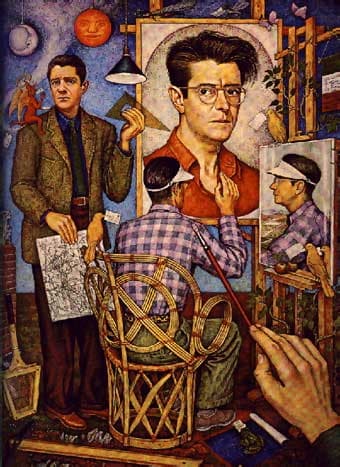
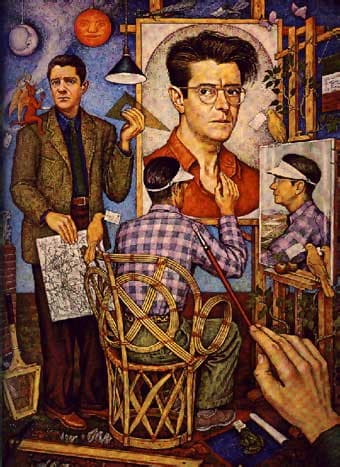
Juan O’Gorman was one of the most original and multifaceted figures in twentieth century Mexican art and architecture. Born in Mexico City on July 6, 1905, he built an unusual career that moved between functionalist architecture, mural painting, mosaic design, and deeply personal, symbolically rich visual art. He is remembered both as a pioneering modern architect and as an important painter tied to Mexico’s post revolutionary cultural identity. What makes O’Gorman especially compelling is that he did not remain fixed in one mode. Over the course of his life, he shifted dramatically, first embracing strict modern efficiency in architecture, then turning toward a more expressive and historically charged visual language in painting and mural work.
He was born into an intellectually active family. His father was the Irish born painter and engineer Cecil Crawford O’Gorman, and this mixed cultural background exposed him early to both technical thinking and artistic practice.
He studied architecture at the National Autonomous University of Mexico and came of age at a time when Mexico was redefining itself politically and culturally after the Revolution. Like many ambitious young creatives of his generation, he was drawn to the idea that art and architecture could serve society and help shape a new national identity.
Early in his career, O’Gorman became one of the strongest advocates of functionalist architecture in Mexico. Influenced by modern European ideas, especially those associated with Le Corbusier, he believed buildings should be practical, honest, and stripped of unnecessary ornament. In the late 1920s and early 1930s, he designed some of the first truly modernist houses in Mexico. Among the best known were the studio houses for Diego Rivera and Frida Kahlo in San Ángel, completed in 1932. These buildings became landmarks of Mexican modern architecture, with clean lines, exposed materials, and an emphasis on utility over decoration. They marked a sharp break from older academic and colonial styles and showed O’Gorman’s willingness to challenge convention.
He also designed schools and public buildings, believing architecture should be accessible and socially useful. This part of his career reflected a broader left leaning commitment shared by many Mexican intellectuals and artists of the period. He was not interested in architecture as luxury alone. He saw it as a tool for public improvement. Still, over time, O’Gorman grew dissatisfied with pure functionalism. He came to feel that strict modernism could become too cold and detached from local history, landscape, and culture.
That change in outlook led him increasingly toward painting and muralism. Although he had painted earlier in life, he became more deeply involved in visual art as the years passed. In his murals and large scale works, he embraced a far richer and more detailed style than the architecture of his early years might suggest. His paintings often combined history, politics, religion, science, and fantasy in dense, carefully constructed compositions. He was interested in Mexico’s past, especially its Indigenous roots, colonial history, and revolutionary struggles, and he sought to place those themes into broad symbolic narratives.
One of his greatest achievements was his mosaic decoration for the Central Library at the National Autonomous University of Mexico, completed in the 1950s. The building’s exterior is covered with monumental mosaic imagery made from colored stone gathered from different parts of Mexico. The vast composition presents an ambitious vision of Mexican history and culture, linking pre Hispanic civilization, colonial transformation, the modern world, and the university’s intellectual mission. It remains one of the most iconic works of public art in Mexico and a defining example of the integration of architecture and visual storytelling.
In his later years, O’Gorman’s work became increasingly introspective and imaginative. His home, which he designed as an organic, highly personal environment, reflected his shift away from rigid modernism toward a more emotional and symbolic approach. He became a figure who embodied contradiction in a productive way, rational and visionary, technical and poetic, modern and deeply historical.
Juan O’Gorman died in 1982. Today he is remembered as both an architectural pioneer and a major Mexican muralist. His legacy endures because he refused to stay in one lane. He pushed modern architecture forward, then challenged its limitations, and in doing so helped create a body of work that remains central to the story of Mexican art and design.
Represented By
Artworks by Juan O'Gorman