Gabriel Fernández Ledesma
Mexico, b. 1900, d. 1983
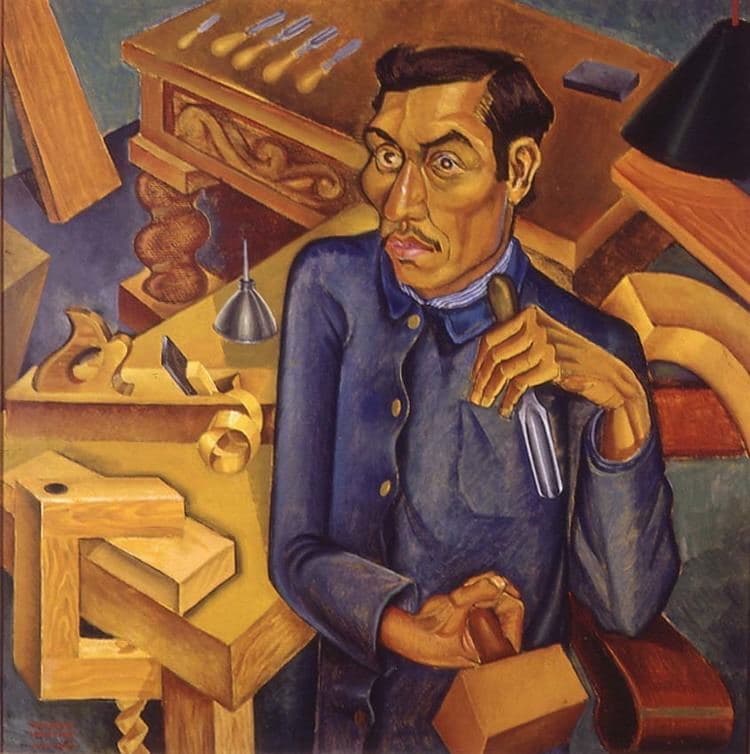
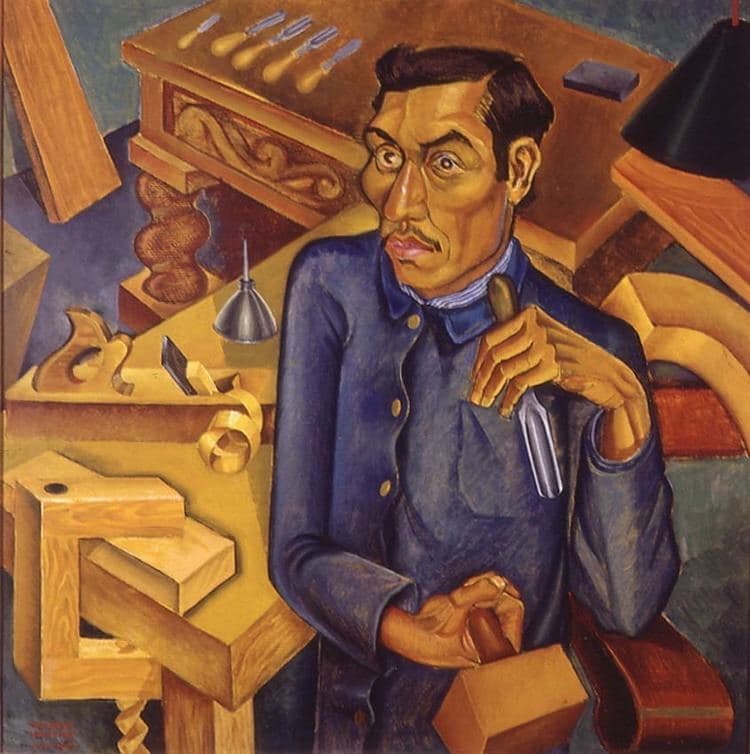
Gabriel Fernández Ledesma was a Mexican painter, printmaker, sculptor, graphic artist, writer, and teacher born on May 30, 1900, and recognized as a significant cultural figure in twentieth century Mexico. His career extended across multiple disciplines, reflecting a broad commitment not only to artistic production but also to education, publishing, and the promotion of Mexican visual culture. He belongs to a generation of artists who helped define modern Mexican art after the Revolution, yet his contribution is distinctive for the breadth of his interests and the range of his activity.
Fernández Ledesma began his artistic career working with Roberto Montenegro, an important painter and designer associated with post revolutionary Mexican culture. This early experience placed him in a rich artistic environment at a formative moment, when artists were rethinking the role of art in public life and in the construction of national identity. Through this connection, he gained practical and intellectual exposure to the decorative arts, graphic design, and the broader cultural movement that sought to integrate art into education and everyday experience.
From the beginning, his work reflected a strong interest in Mexican popular traditions, craft, and visual heritage. Rather than separating fine art from folk art or design, Fernández Ledesma treated them as interconnected fields. This perspective became central to his career and helped distinguish him from artists whose work remained confined to a single medium. He moved fluidly between painting, printmaking, sculpture, and graphic work, always maintaining a strong sense of structure and visual clarity.
As a painter and graphic artist, he developed compositions shaped by careful design and an awareness of the communicative power of images. His printmaking and graphic work, in particular, reflect a disciplined approach to line, contrast, and composition. These qualities made him well suited to publishing and editorial work, where visual organization and accessibility were essential. His involvement in publishing allowed him to contribute to a broader circulation of art and ideas, extending his impact beyond studio production.
Education was another major dimension of his career. Fernández Ledesma believed strongly in the role of art in public life and in the importance of visual education. He worked in teaching and cultural administration, helping to shape how Mexican art and design were studied, understood, and shared. His educational efforts were closely tied to his interest in national culture, especially in promoting appreciation for popular arts, traditional crafts, and the visual richness of Mexico’s regional identities.
He also wrote about art and culture, reinforcing his role as both practitioner and intellectual. This ability to move between making, teaching, organizing, and writing made him an important mediator within Mexican cultural life. He did not simply produce objects, he contributed to the framework through which art was interpreted and valued.
Throughout his career, Fernández Ledesma remained committed to the idea that art should be connected to society. His work reflects the broader ideals of Mexican modernism, but often through graphic, educational, and cultural channels rather than only through monumental painting. That makes his legacy especially important. He helped build the infrastructure of modern Mexican art, not just its imagery.
Gabriel Fernández Ledesma died on August 26, 1983. He is remembered as a versatile and influential figure whose work bridged art, design, publishing, and education. His legacy lies in the way he helped shape modern Mexican visual culture through both creation and cultural leadership, leaving behind a body of work and a broader contribution that remain important to the history of Mexican art.
Represented By
Artworks by Gabriel Fernández Ledesma