Frida Kahlo
Mexico, b. 1907, d. 1954
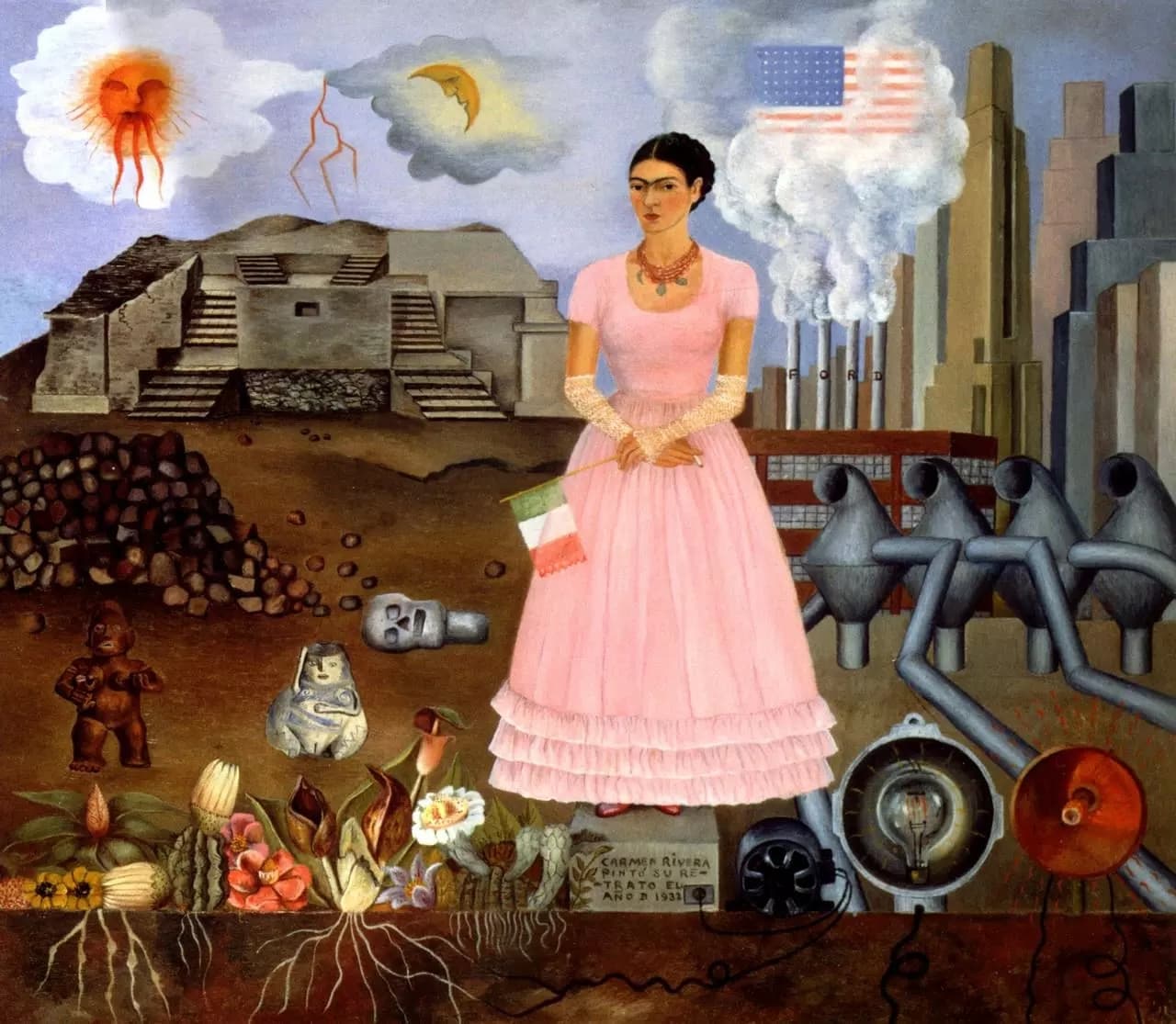
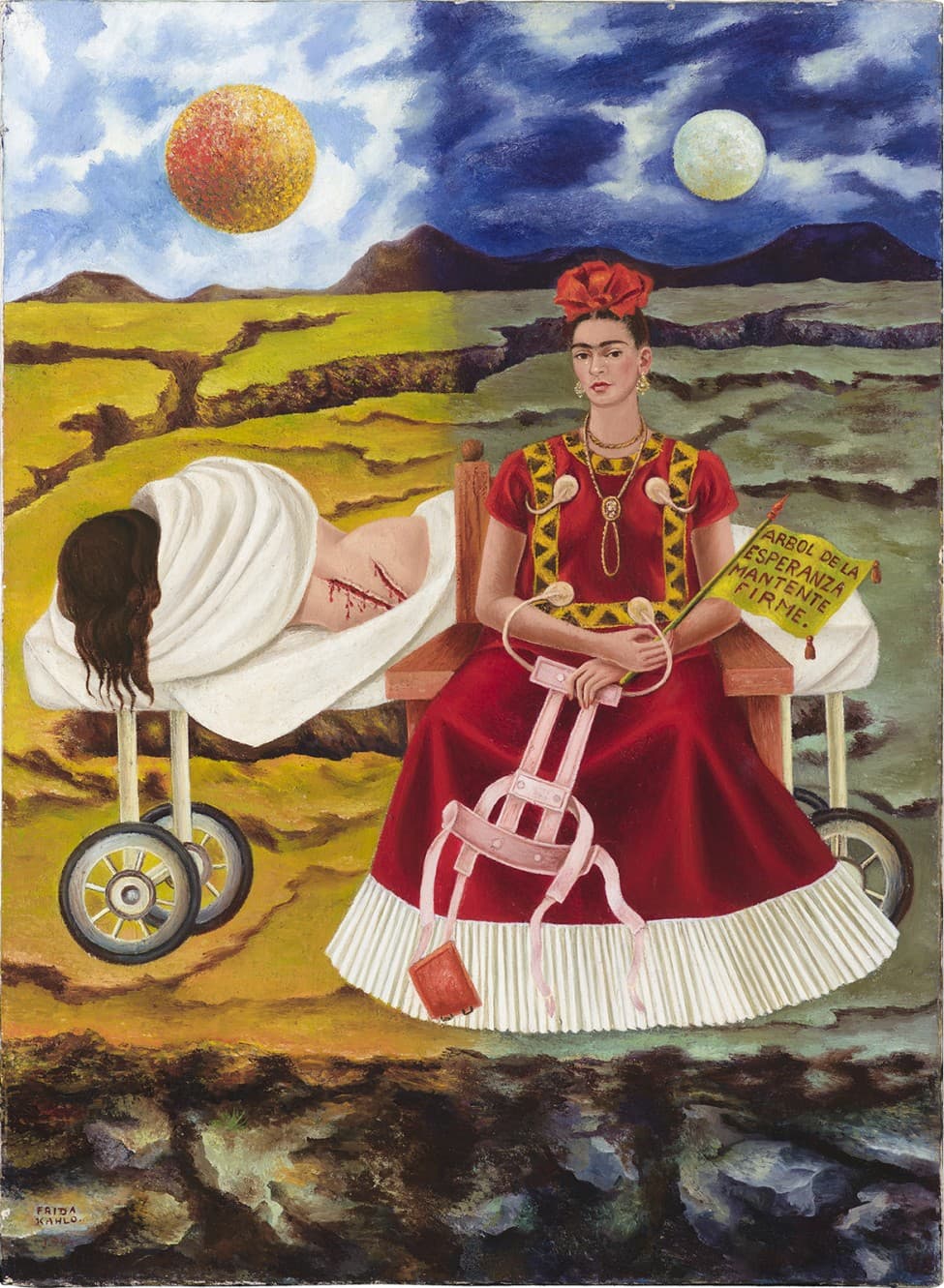
Frida Kahlo was a Mexican artist born in 1907 in Coyoacán, Mexico City, widely recognized for her deeply personal and symbolic paintings. Her work is known for its direct emotional intensity, vivid imagery, and exploration of identity, the body, and cultural heritage. Although often associated with Surrealism, Kahlo rejected the label, insisting that she painted her own reality rather than dreams or fantasies.
Kahlo’s life was marked by physical hardship that profoundly shaped her art. As a child, she contracted polio, which left her with lasting physical effects. At the age of eighteen, she was involved in a severe bus accident that caused multiple injuries, including fractures to her spine and pelvis. During her long recovery, she began painting while confined to bed, using a mirror to create self portraits. This experience established a lifelong focus on the self as a central subject.
Her paintings frequently depict her own image, but they go beyond traditional portraiture. Kahlo used her likeness as a means of exploring pain, resilience, and transformation. Her work often includes symbolic elements drawn from Mexican culture, indigenous traditions, and the natural world. Plants, animals, and hybrid forms appear alongside personal references, creating compositions that are both intimate and complex.
Kahlo’s relationship with Mexican identity is a defining aspect of her work. She embraced indigenous clothing, traditions, and imagery, incorporating them into both her life and her art. This connection is reflected in her use of color, pattern, and symbolism, which often draw from folk art and pre Hispanic visual culture. Her paintings convey a strong sense of place, rooted in the cultural and historical context of Mexico.
In addition to personal themes, Kahlo’s work also touches on broader social and political issues. She was engaged with leftist politics and maintained connections with intellectual and artistic circles that shaped cultural discourse in Mexico during her lifetime. While her paintings are often introspective, they also reflect an awareness of social conditions and historical context.
Kahlo married the Mexican muralist Diego Rivera, and their relationship was both influential and complex. Rivera supported her artistic development and encouraged her to continue painting, while their partnership placed her within a larger artistic community. Despite this connection, Kahlo established a distinct voice that set her apart from the dominant movements of her time.
Throughout her career, Kahlo exhibited her work in Mexico and internationally, though recognition during her lifetime was limited compared to her later fame. In the decades following her death, her work gained widespread attention, and she became one of the most celebrated artists of the twentieth century. Her paintings are now held in major museum collections and continue to resonate with audiences around the world.
Frida Kahlo died in 1954. She is remembered as an artist who transformed personal experience into powerful visual expression. Her legacy lies in her ability to confront themes of pain, identity, and resilience with honesty and intensity, creating a body of work that remains both deeply individual and universally impactful.
Represented By
Artworks by Frida Kahlo