Francisco Farreras
Spain, b. 1927, d. 2021
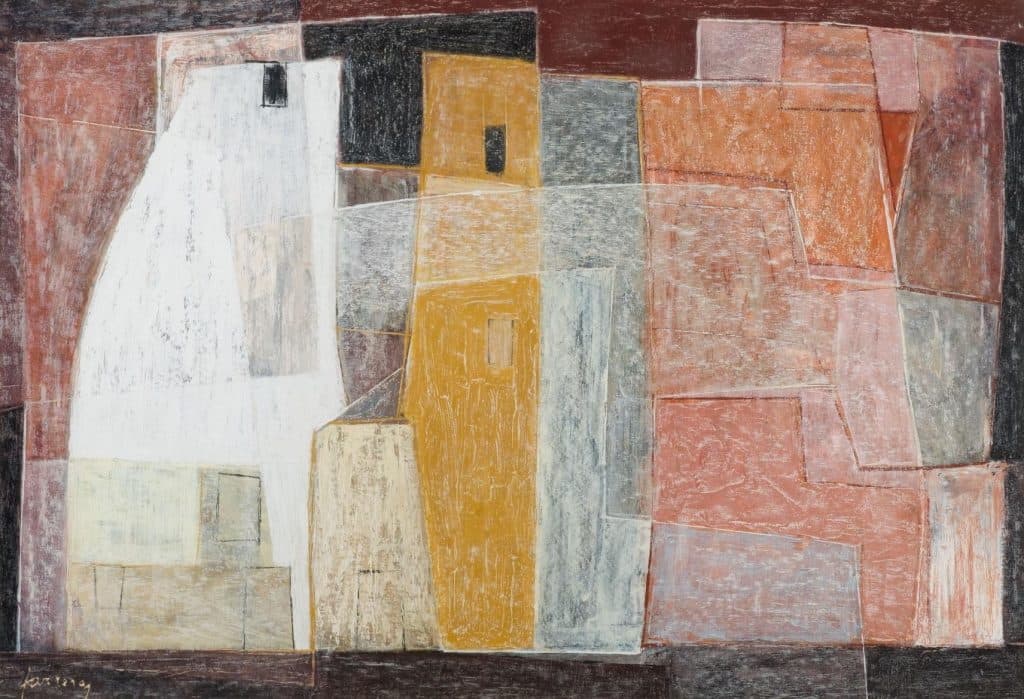
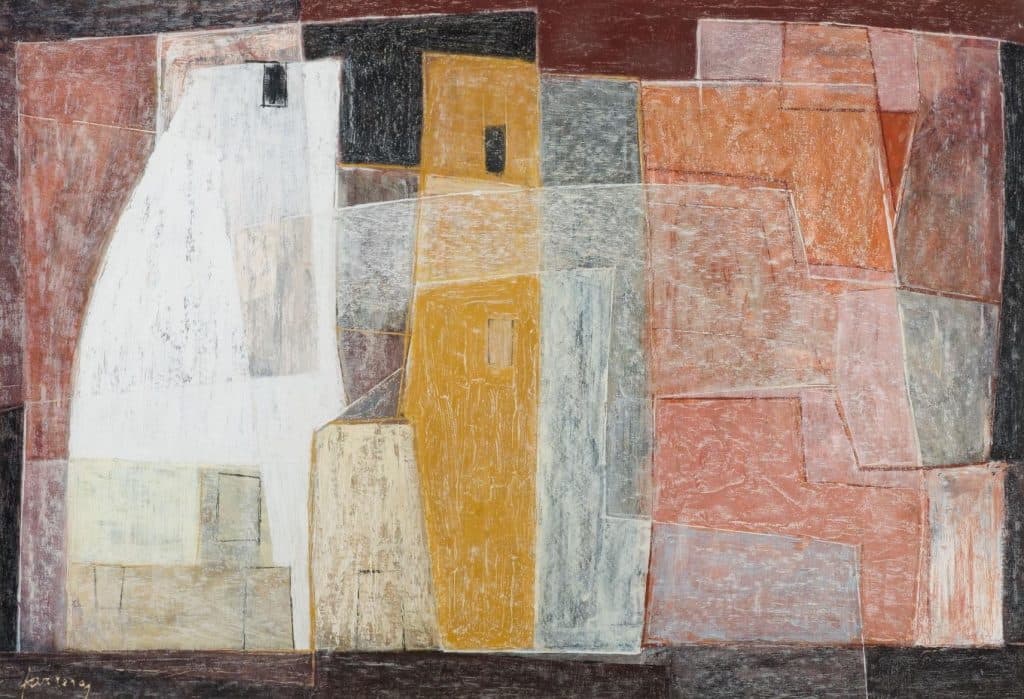
Francisco Farreras was a Spanish abstract artist born in Barcelona on September 7, 1927. He died in Madrid on September 16, 2021, leaving behind a long and deeply personal body of work that resists simple classification. Although his art has often been associated with geometric abstraction, abstract expressionism, and informalism, Farreras never fit neatly into a single movement. His work developed through discipline, experimentation, and a sustained commitment to the possibilities of abstraction.
Farreras belonged to a generation of Spanish artists who came of age during a complex period in the country’s cultural history. In the decades after the Spanish Civil War, many artists searched for new visual languages that could move beyond academic convention and traditional representation. Abstraction became one of the most important paths for this search. It allowed artists to explore matter, form, rhythm, texture, and inner experience without relying on direct narrative. Farreras found his own place within this broader transformation, but he did so with unusual independence.
His work is difficult to categorize because it brings together different tendencies without being limited by any of them. Elements of geometric abstraction can be seen in his concern for structure, balance, composition, and spatial order. At the same time, his work also connects to abstract expressionism through its emotional force and sense of gesture. Informalism, with its emphasis on texture, material, and the expressive power of the surface, is also present in the way his compositions often appear built, layered, and physically worked.
This combination gave Farreras’s art a distinctive identity. His compositions were not purely cold or mathematical, even when they suggested geometry. They were also not purely spontaneous, even when they carried emotional intensity. Instead, his work often seemed to exist between control and instinct. The surface, the arrangement of forms, and the relationship between materials created a quiet tension. His art invited close looking rather than immediate explanation.
Some observers have described Farreras’s work in terms of “ensimismamiento, sensibilidad y discreción,” words that suggest introspection, sensitivity, and discretion. These qualities help explain the emotional tone of his art. His abstraction did not depend on spectacle or excess. It often suggested concentration, restraint, and inwardness. There is a meditative quality in the way his works appear to hold energy within the composition rather than release it outward dramatically.
Farreras himself, however, offered a more direct explanation. Where others saw introspection and subtlety, he saw “mucho trabajo,” a great deal of work. This statement reveals something important about his artistic character. For Farreras, art was not only a matter of inspiration or interpretation. It was the result of labor, persistence, and repeated engagement with materials and form. His practice depended on making, revising, organizing, and refining until the image reached its own internal balance.
Throughout his career, Francisco Farreras remained committed to abstraction as a field of serious exploration. His work stands as part of the broader history of Spanish modern art, but it also maintains a private and independent voice. Rather than belonging completely to one school, he moved through several visual languages and transformed them into something personal. His legacy is that of an artist who used abstraction not as a formula, but as a disciplined space for thought, feeling, and material discovery.
Represented By
Artworks by Francisco Farreras