Enrique Lobo
Venezuela, b. 1958
Enrique Lobo is a Venezuelan artist born in 1958, known for a practice that moves between figurative and abstract art. His work reflects a sustained interest in form, space, and visual rhythm, shaped by both his artistic sensibility and his academic background in architecture. This combination gives his work a strong structural foundation while allowing room for expressive freedom and interpretation.
Lobo earned a degree in Architecture from the University of Los Andes in Mérida, Venezuela. This training has had an important influence on his artistic development, especially in his attention to composition, balance, and spatial organization. Even when his work moves toward abstraction, there is often an underlying architectural logic in the way forms are arranged and how space is constructed within the image.
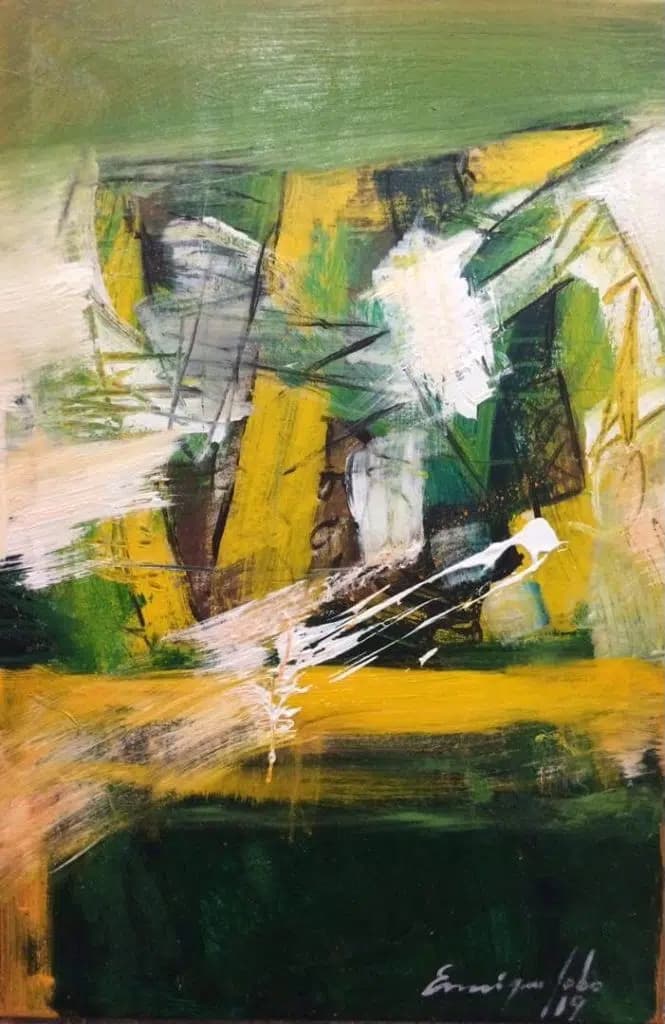
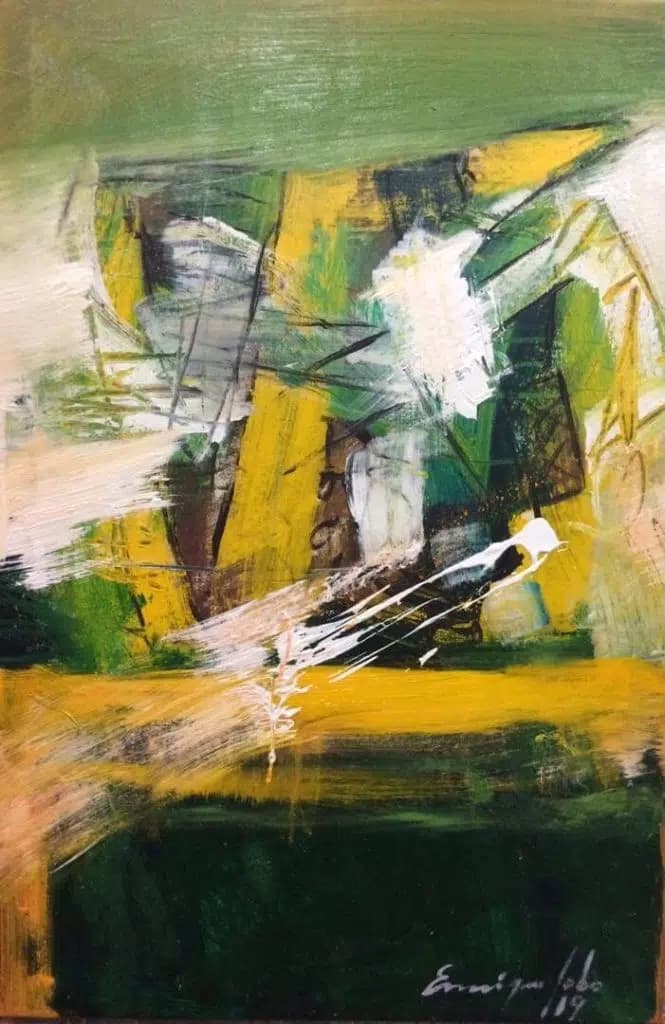
His paintings often move between recognizable references and abstract structures. Figures, landscapes, or symbolic elements may appear, but they are frequently transformed through color, line, and composition. This balance allows his work to suggest meaning without becoming overly literal. The viewer is invited to move through the image visually, discovering relationships between forms rather than receiving a fixed narrative.
Color plays a central role in his practice. Lobo uses it to create movement, depth, and emotional tone, often allowing contrasts and layered tones to shape the rhythm of the composition. His handling of color supports the tension between figuration and abstraction, giving his work both visual energy and structural coherence.
Surface and texture are also important in his paintings. Through layering and controlled gestures, he builds compositions that feel physically present and visually active. This material quality reinforces the sense that each work is constructed through both planning and intuition.
As a Venezuelan artist trained in architecture, Enrique Lobo brings a distinctive perspective to contemporary painting. His work reflects a dialogue between discipline and freedom, structure and emotion, figuration and abstraction. Through this balance, he has developed a body of work that speaks to the continuing possibilities of painting as a space for visual exploration and personal expression.
Represented By
Artworks by Enrique Lobo