Carlos Rosero
Ecuador, b. 1952
Carlos Rosero is an Ecuadorian painter born in 1952 whose work is recognized for its expressive intensity, symbolic imagery, and strong connection to landscape and cultural identity. Over the course of his career, he has developed a distinctive visual language that blends figuration and abstraction, often focusing on themes related to nature, memory, and the human experience.
His paintings are known for their rich textures, layered compositions, and a sense of atmosphere that reflects both physical environment and emotional depth. Rosero was born in Ecuador, a country marked by diverse geography, from Andean highlands to coastal regions, and this varied landscape has had a lasting influence on his work. From an early stage, he showed an interest in art and pursued formal training, building a strong technical foundation in drawing and painting. His education exposed him to both traditional techniques and contemporary approaches, allowing him to explore different directions before establishing his own style.
In his early work, Rosero explored figurative subjects, often incorporating elements of daily life and human presence. Over time, however, his paintings evolved toward a more interpretive approach. Forms became less defined, and compositions began to emphasize structure, color, and texture over literal representation. This shift allowed him to move beyond narrative and focus on the sensory and emotional qualities of his subjects.
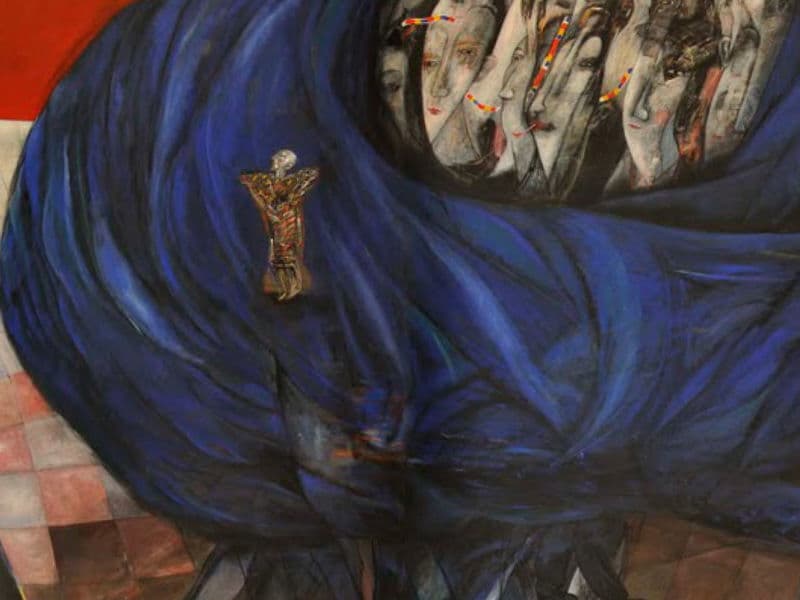
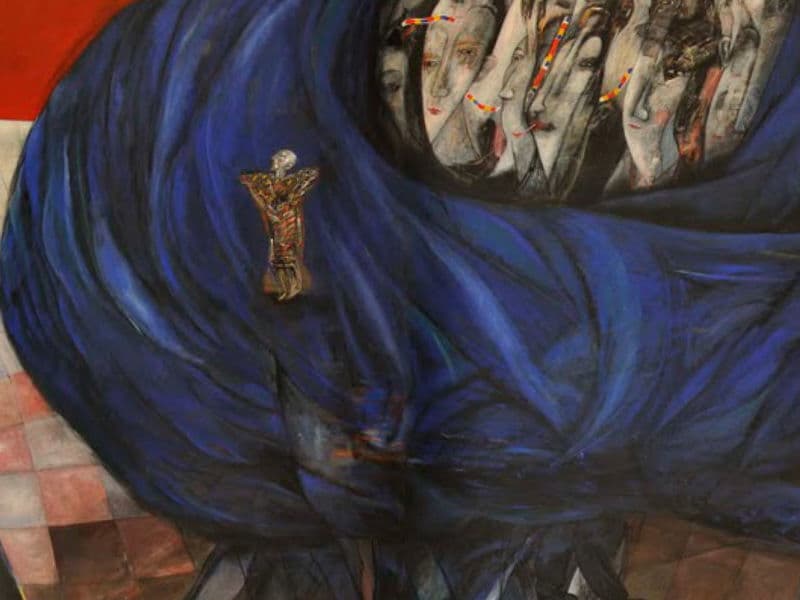
A defining characteristic of Rosero’s work is his treatment of surface. He frequently builds up layers of paint, creating textures that give the work a tactile presence. These surfaces often appear weathered or organic, suggesting erosion, growth, and the passage of time. This approach reinforces his connection to landscape, not just as a visual subject, but as a process shaped by natural forces.
Color plays a central role in his paintings. Rosero often works with earthy tones, deep reds, browns, ochres, and muted blues, arranged in a way that reflects the natural environment. At the same time, he uses color expressively, allowing it to shape mood and movement within the composition. Subtle transitions and contrasts create a sense of depth, drawing the viewer into the work.
His compositions often suggest elements of landscape such as mountains, terrain, and horizon lines, but these are not depicted directly. Instead, they emerge through abstracted forms and spatial relationships. This balance between recognition and ambiguity is one of the strengths of his work. It allows viewers to connect with the imagery while also engaging with it on a more interpretive level.
Throughout his career, Rosero has exhibited in Ecuador and internationally, gaining recognition for his thoughtful and consistent approach to painting. His work has been included in exhibitions that highlight contemporary Latin American art, contributing to a broader understanding of the region’s artistic diversity. While his work may not be overtly political, it reflects a deep engagement with place and identity, offering a personal interpretation of Ecuador’s cultural and natural landscape.
Today, Carlos Rosero is regarded as an important figure in Ecuadorian contemporary painting. His work demonstrates how landscape can be explored through abstraction, using color, texture, and composition to convey both physical presence and emotional resonance. Through his evolving practice, he has created a body of work that invites reflection and emphasizes the enduring relationship between environment and perception.
Represented By
Artworks by Carlos Rosero