Augusto Torres
Uruguay, b. 1913, d. 1992
Augusto Torres was a Uruguayan painter and muralist of Spanish origin, born on June 19, 1913, in Terrassa, Barcelona. He was the second son of the influential artist Joaquín Torres García and Manolita Piña, and his early life was shaped by close exposure to one of the most important figures in modern Latin American art. This environment played a decisive role in his artistic formation, placing him within a lineage that emphasized structure, order, and the integration of art with broader cultural ideas.
Torres grew up between Europe and Latin America, following his family’s movements and absorbing a range of artistic influences. Under the guidance of his father, he became closely associated with the principles of Constructivism, a movement that sought to organize visual elements through geometry, proportion, and a sense of universal order. This foundation became central to his work, shaping both his approach to composition and his understanding of artistic purpose.
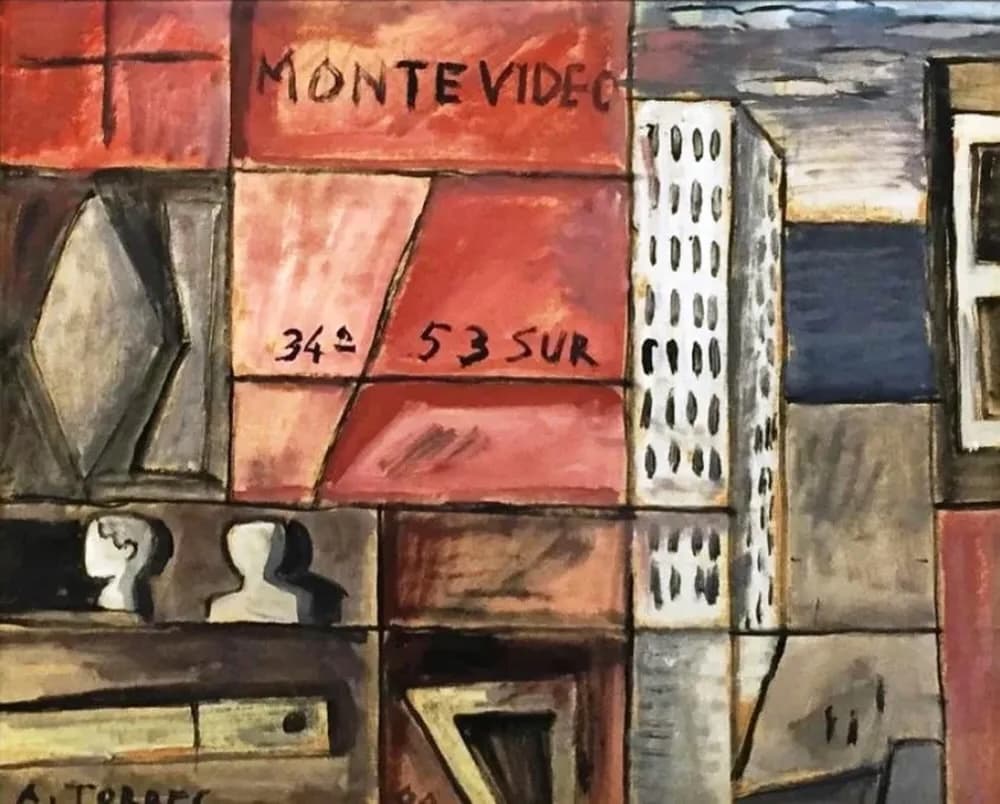
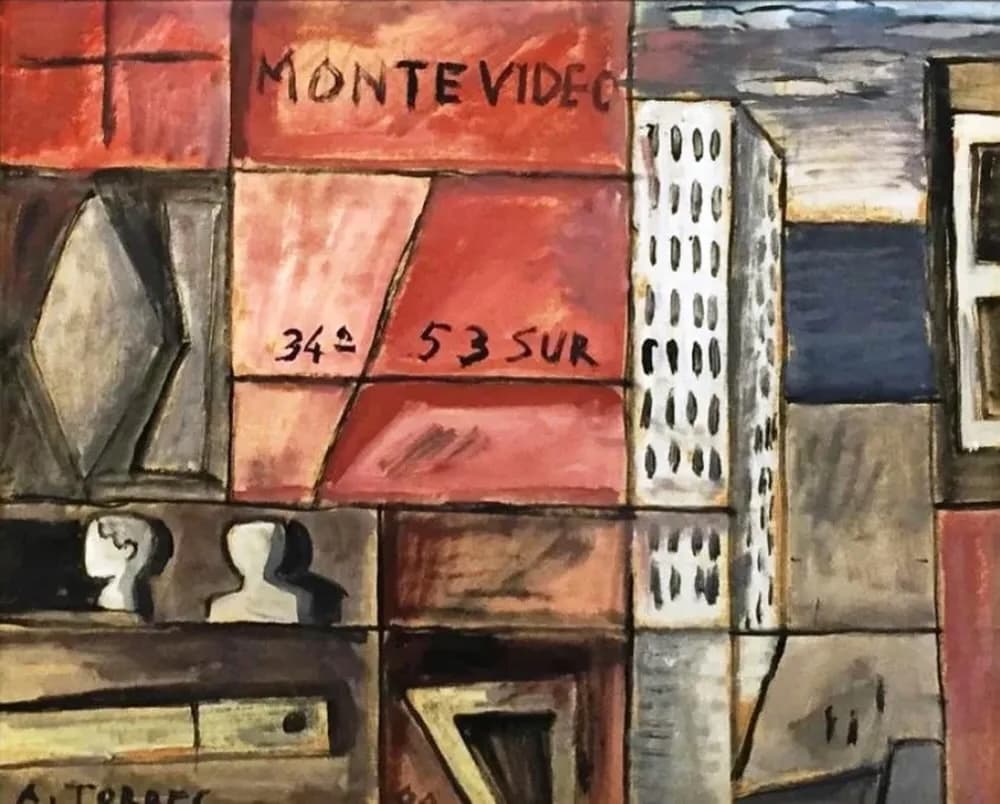
A defining characteristic of Augusto Torres’s work is his use of geometric structure. His paintings and murals often feature carefully arranged grids, symbolic forms, and simplified figures, all organized within a balanced and harmonious framework. This approach reflects the influence of Constructivist ideas, where the composition is built through the relationship of its elements rather than through naturalistic representation.
Color in his work is typically restrained and deliberate, used to reinforce the structure of the composition. He often worked with muted tones or limited palettes, allowing the organization of form to take precedence. This controlled use of color contributes to the clarity and cohesion of his images.
In addition to painting, Torres worked as a muralist, extending his visual language into architectural spaces. His murals reflect the same principles found in his easel paintings, emphasizing order, proportion, and integration with the surrounding environment. This connection between art and architecture aligns with the broader goals of Constructivism, where art is seen as part of a unified visual and cultural system.
Throughout his career, Torres remained closely connected to the legacy of his father while also developing his own interpretation of Constructivist ideas. His work reflects both continuity and individual expression, contributing to the development of modern art in Uruguay and beyond.
Augusto Torres died on March 13, 1992, in Barcelona. He is remembered as an artist who carried forward the principles of Constructivism through a disciplined and thoughtful practice, creating works that emphasize structure, balance, and the enduring relationship between art and geometry.
Represented By
Artworks by Augusto Torres